The True Cost of a First RV: Budget Beyond the Purchase Price
Part 3 of 8 in the First-Time Camper Owner Series.
A monthly payment can make two RVs look easy to compare while hiding the costs that begin before the first campground stay. A better budget separates the purchase, startup equipment and recurring ownership costs.
Start with the written out-the-door figure
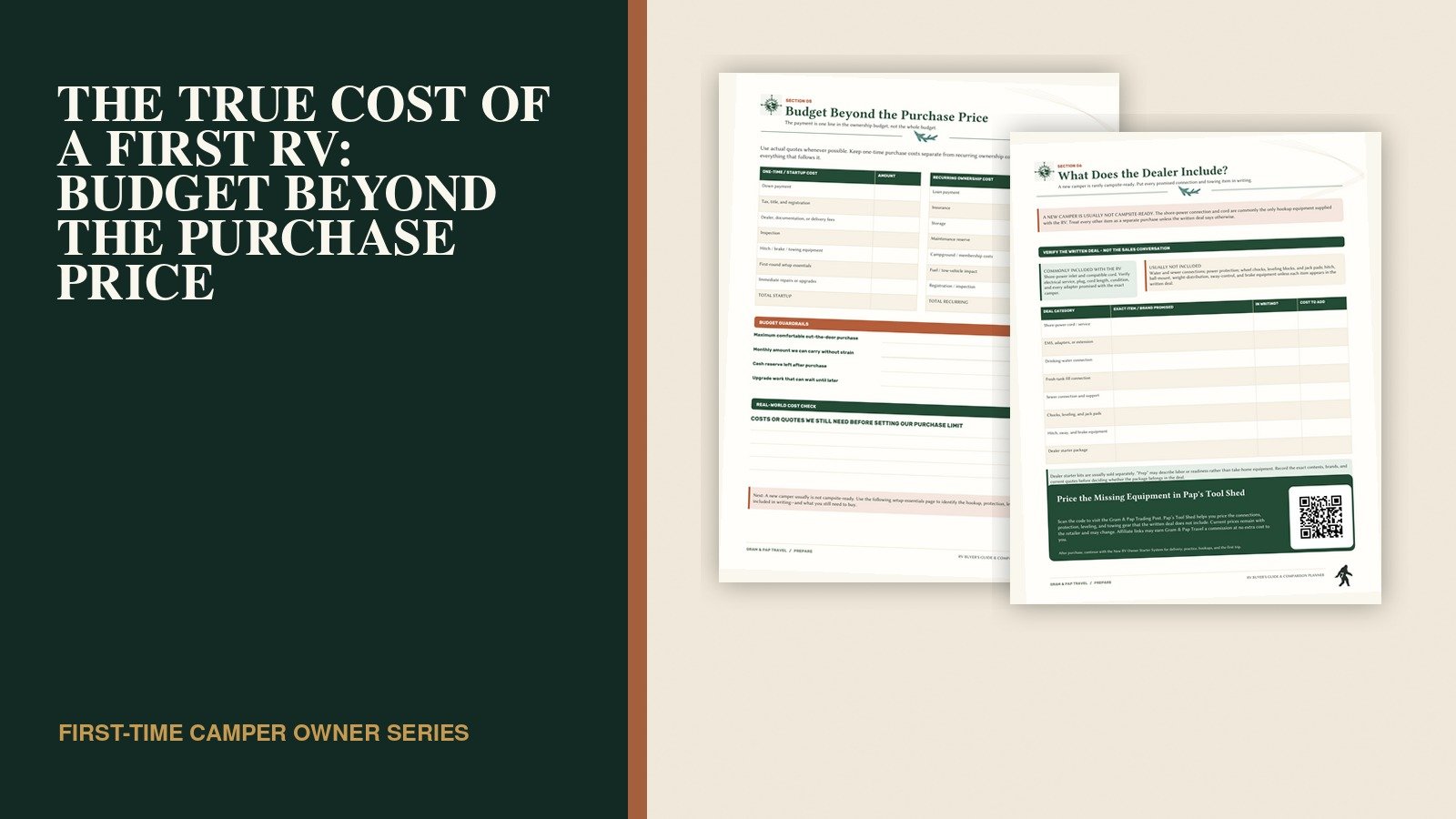
Record the advertised price, negotiated price, dealer or preparation fees, taxes, registration, financing costs and any added products. Ask what each fee buys and which items are optional. Compare written totals for the exact VIN or unit—not a model family or an example payment.
Financing can change the total cost substantially. Review the rate, term, total of payments, prepayment rules and any products rolled into the loan with an appropriate financial adviser when needed.
Separate startup costs from recurring costs
Startup costs may include inspection, hitch and brake equipment, power protection, water and sewer connections, leveling and chocking equipment, initial supplies, registration and immediate repairs or upgrades.
Recurring costs may include insurance, storage, campground fees, fuel, propane, routine service, tires, registration, roadside assistance, winterization, repairs and financing. Actual needs vary by RV type, climate, storage and travel pattern. Keeping the two groups separate makes the first-year impact visible.
Do not assume a new camper is campsite-ready
The shore-power connection and cord are commonly the only hookup equipment supplied with a new RV. Treat every other item as a separate purchase unless the written deal says otherwise. Verify water hoses, pressure regulation, fresh-tank fill fittings, sewer hose and support, wheel chocks, leveling blocks, jack pads, surge protection or EMS, adapters, hitch, sway control and brake equipment.
Dealer starter kits are usually sold separately, and “prep” can describe readiness or labor rather than take-home equipment. Record the exact contents, brands and current quotes before deciding whether a package belongs in the deal.
Price tradeoffs, not just discounts
A lower purchase price may leave expensive systems or equipment to add later. A higher price may include features that do not solve a real need. Compare the total cost required to make each candidate usable for the intended camping pattern.
The Gram & Pap RV Buyer and New Owner Bundle connects the buying budget and dealer-inclusion checklist with the new owner’s starter-gear, delivery and first-trip worksheets, keeping the missing-equipment list from becoming a campground surprise.
Make the whole first year fit
The goal is not to predict every dollar. It is to prevent one attractive payment from pushing essential equipment, storage, insurance and maintenance outside the decision until after the signature.
Planning note: RV designs, equipment and requirements vary. Use the certification labels and current manuals for the exact vehicle and RV. Obtain qualified towing, inspection, electrical, propane, mechanical, insurance or financial help whenever the decision is outside your training or the available information is uncertain.