RV Inspection and Dealer Questions to Resolve Before Signing
Part 4 of 8 in the First-Time Camper Owner Series.
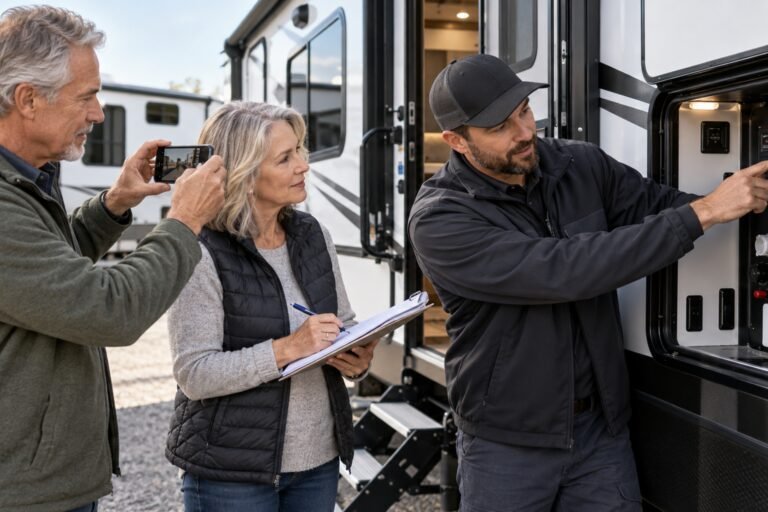
An RV purchase should be based on the condition and equipment of the exact unit changing hands. Model brochures and neighboring display units cannot answer whether this VIN has the promised options, a sound roof or a working water system.
Identify the exact unit
Record the VIN or serial number, year, make, model, floor plan, stock number and seller. Confirm that the paperwork, labels and unit agree. Ask for the VIN-specific build sheet and current manuals when available.
Inspect structure, systems and moving equipment
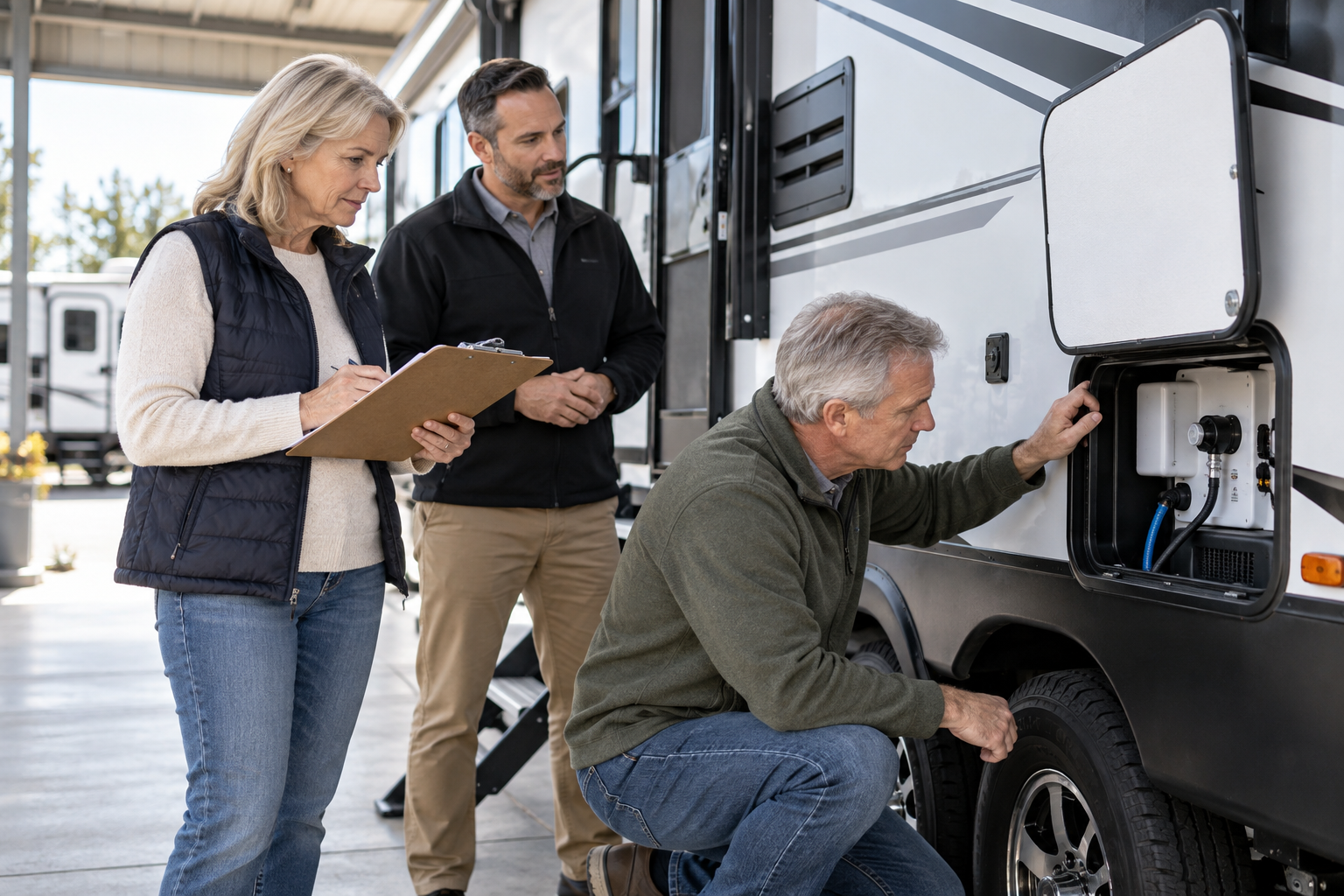
Review the roof, seams, sealants, vents and accessories. Look for moisture, damage or repairs at walls, floor, ceiling and storage areas. Check tire dates, condition, load range and the cold-pressure placard. Inspect the frame, axles, suspension, brakes, hitch and underbody as appropriate.
Operate slides, awnings, steps, jacks and stabilizers according to the manuals. Test 120-volt and 12-volt systems, charging, outlets and safety devices. Test fresh water, city water, pump, drains, tanks and accessible areas for leaks. Verify the refrigerator, furnace, air conditioner, water heater and other installed appliances.
Ask what words like “prep” actually buy
Solar prep, inverter prep, generator prep, camera prep and tire-monitor prep can describe very different equipment. Ask what is physically installed: wire size and route, connectors, controller, transfer equipment, mounting provisions, monitor, camera or nothing beyond a label. Photograph the label and record the answer.
Put every material promise in writing
Record included equipment, repairs, missing items, due dates, fees, warranties, service responsibility and delivery conditions. A verbal promise is hard to find later in the service lane.
Consider an independent inspection
A qualified independent RV inspector can provide a separate condition assessment for new or used units. The buyer still needs to understand the report, its exclusions and any systems that could not be tested. Resolve material concerns before signing.
The Gram & Pap RV Buyer and New Owner Bundle carries this inspection into a delivery handoff check, photo record, warranty file and first-trip follow-up so unresolved items remain visible after purchase.
Let sleep be part of the process
Before signing, verify ratings, review the written out-the-door cost, complete the inspection and system tests, resolve open questions, and confirm insurance, storage and service plans. A decision that cannot survive one quiet night deserves another look.
Planning note: RV designs, equipment and requirements vary. Use the certification labels and current manuals for the exact vehicle and RV. Obtain qualified towing, inspection, electrical, propane, mechanical, insurance or financial help whenever the decision is outside your training or the available information is uncertain.