RV Starter Gear and Hookups: What the First Campsite Actually Requires
Part 7 of 8 in the First-Time Camper Owner Series.
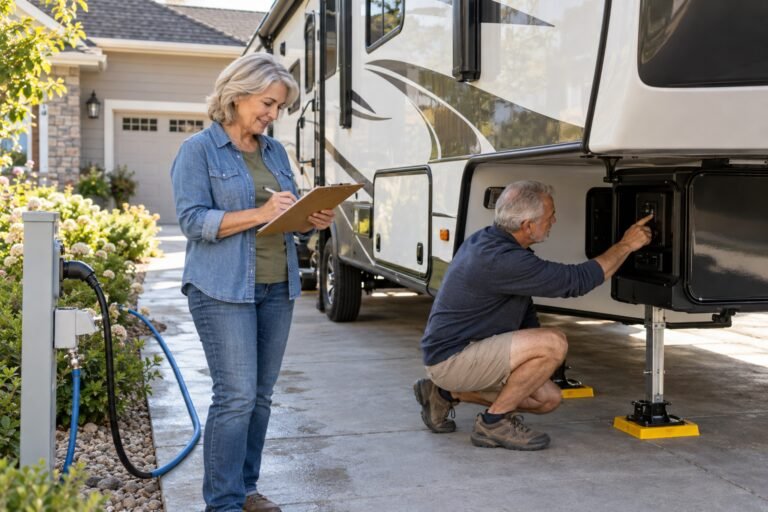
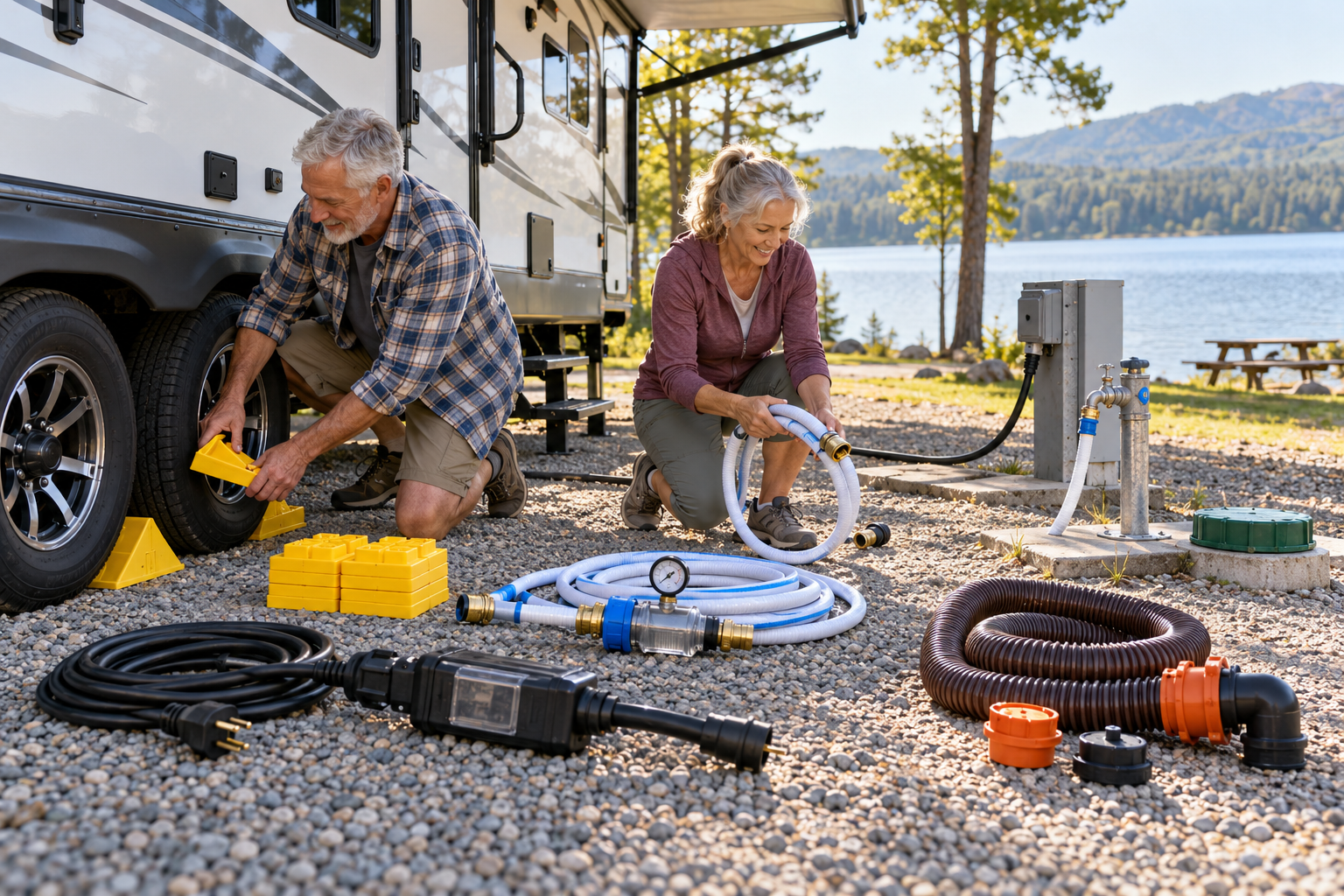
A new RV can arrive with cabinets, appliances and upholstery while still lacking the equipment needed to position, protect and connect it at a campsite. Build the first shopping list around those jobs before buying every gadget in the aisle.
Position and stabilize
Wheel chocks, leveling blocks, an appropriate level, jack or stabilizer tools and work gloves belong near the top of the list. Use products that fit the rig and follow the RV manufacturer’s sequence. Chocking, leveling and stabilizing are related tasks, not interchangeable ones.
Protect and connect power
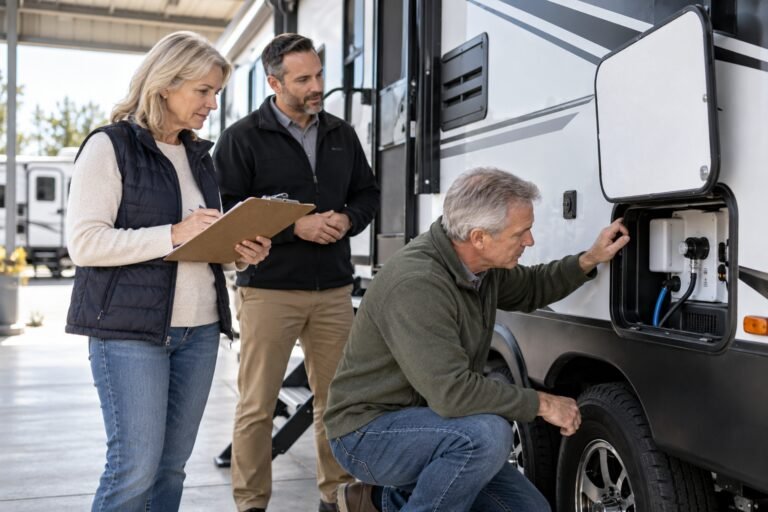
Confirm the RV’s electrical service and cord. Add appropriate surge protection or an electrical management system, any correct adapter that is genuinely needed, safe cord storage and approved spare fuses. Follow campground rules, equipment manuals and the RV instructions. Do not improvise damaged or overheated connections.
Keep water equipment dedicated and potable
Use a potable-water hose, appropriate pressure regulation, and a filter if wanted. A fresh-tank fill connection may require a separate fitting. Store clean-water items away from sewer equipment.
Build a complete waste connection
A sewer hose by itself may not be the whole system. Confirm fittings, caps, support where required, storage and dedicated gloves. Learn the tank and valve routine from the RV manual before the first dump-station audience assembles.
Add roadside and simple-repair basics
Carry an accurate tire gauge, reflective triangles, a flashlight or headlamp, a basic tool kit suitable for the owner, approved spare fuses and the roadside-assistance contact. Equipment should fit the exact RV and have a permanent storage home.
Choose a forgiving first campground
Favor a short drive, daylight arrival and a site that fits the RV and total travel length. Confirm slide and awning room, electric service, water and sewer arrangement, surface, slope, access, route restrictions, check-in instructions and an after-hours plan.
The Gram & Pap RV Buyer and New Owner Bundle makes the missing-equipment question prominent during the dealer comparison, then carries it into a starter-gear checklist and the first campground setup routine.
Let the first trip prove the second shopping list
Buy the gear required to protect, connect and recover. Let actual use decide which comforts and organizers deserve the remaining storage space.
Planning note: RV designs, equipment and requirements vary. Use the certification labels and current manuals for the exact vehicle and RV. Obtain qualified towing, inspection, electrical, propane, mechanical, insurance or financial help whenever the decision is outside your training or the available information is uncertain.