How to Choose an RV for the Camping Life You Will Actually Live
Part 1 of 8 in the First-Time Camper Owner Series.
RV shopping gets easier when the first comparison is not between campers. It is between the camping life imagined in the brochure and the camping life that will actually happen.
A polished floor plan can make almost any RV feel convincing for twenty minutes. The harder test is an ordinary morning, a wet afternoon, a fuel stop with the slides closed, and the end of a travel day when everyone wants the same narrow aisle.
Write the camping brief first
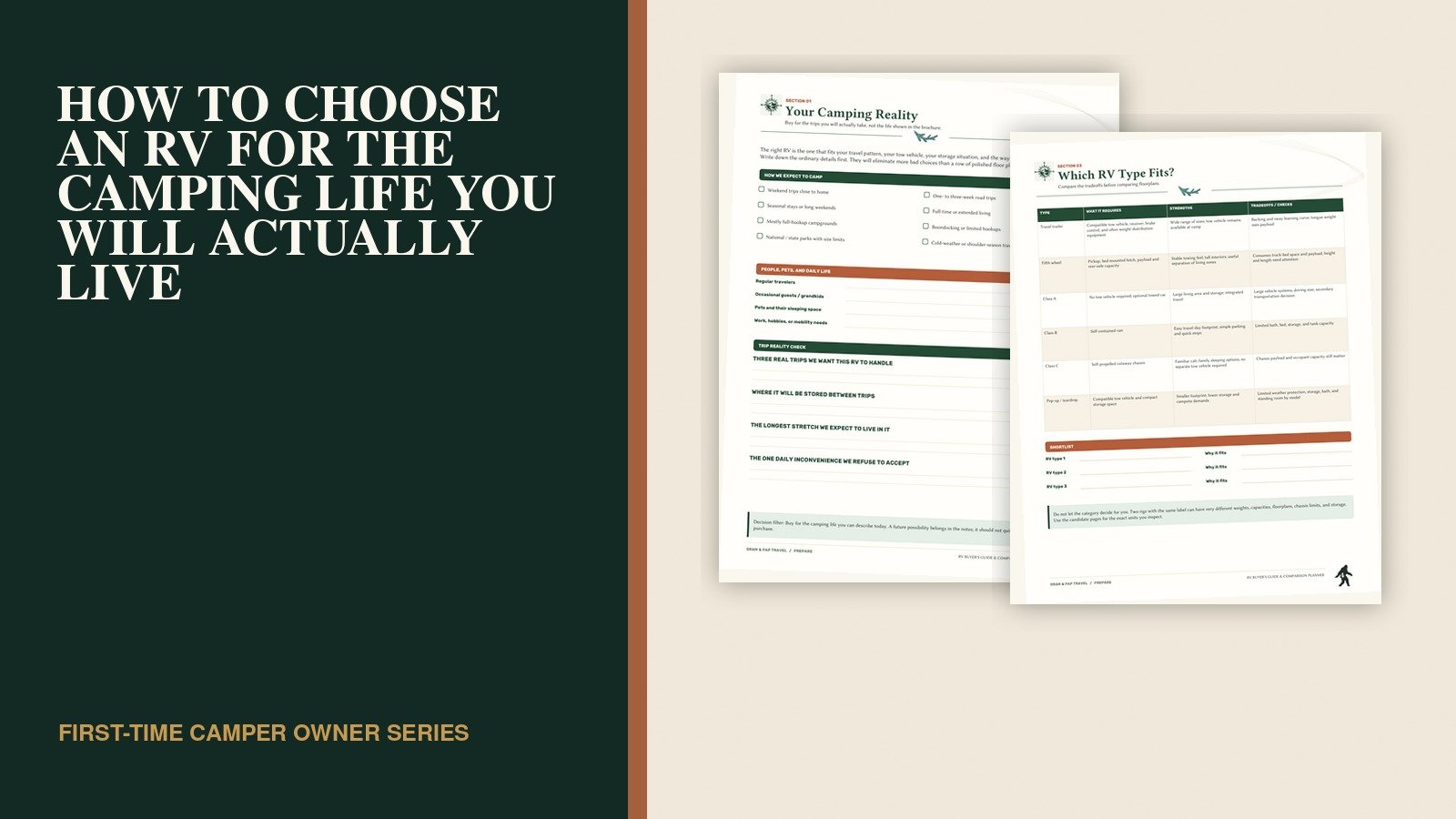
Record the expected trip pattern: weekends near home, one- to three-week road trips, seasonal stays, dry camping, full-hookup parks, or some mixture. Add the number of regular occupants, occasional guests, pets, mobility needs, work or hobby space, and the gear that must travel inside or outside the RV.
This is not busywork. It creates a reason for every must-have. A permanent bed may matter because converting a dinette every night would become tiresome. A large tank may matter for dry camping but add little value for full-hookup weekends. A washer-and-dryer space may be essential for long stays and wasted volume for short trips.
Put the tow vehicle and storage location in the brief
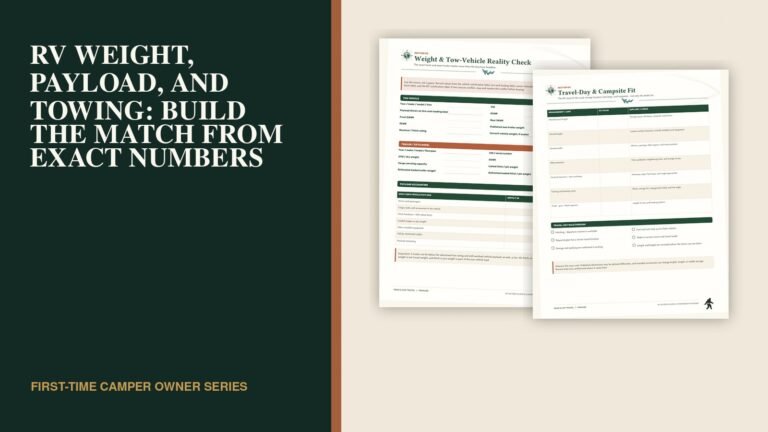
For a towable, the exact vehicle matters: configuration, ratings, occupants, cargo, accessories and hitch equipment. A brochure’s broad maximum tow figure is not a complete match. Use the vehicle certification and tire-and-loading labels, the owner’s manual, VIN-specific towing information, hitch ratings, and the RV certification label. If sources conflict, stop and resolve the conflict before buying.
Motorhomes have their own payload and axle limits, and every RV still needs a legal, practical storage home. Measure the driveway, gate, storage space and route. Include total travel length and installed roof equipment when recording height.
Separate must-haves from showroom attractions
A must-have should solve a real use case. A deal-breaker should protect safety, budget, comfort or daily function. Everything else may remain a nice-to-have until it proves its value.
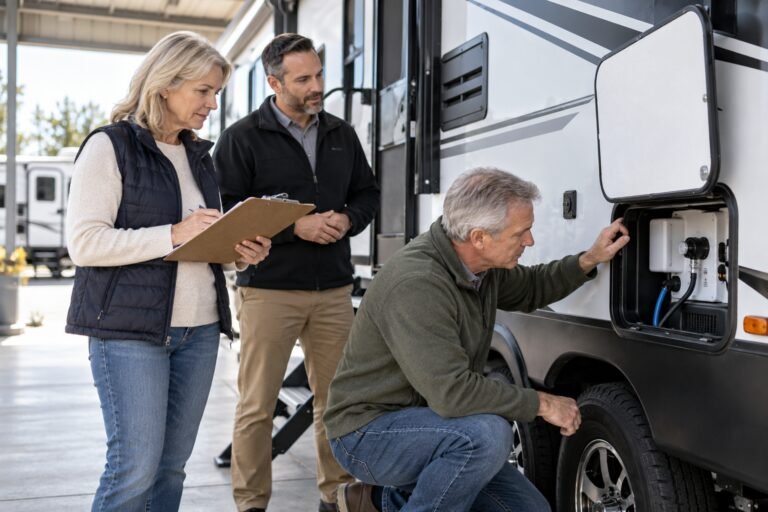
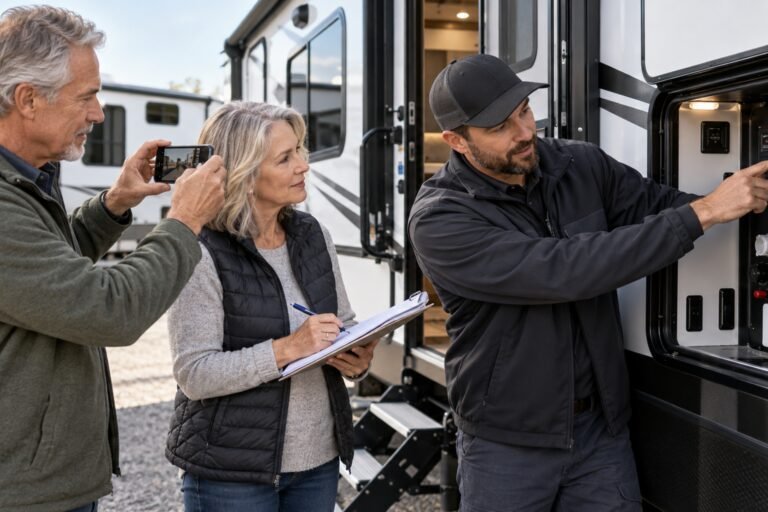
Test the entry, seating, kitchen, bathroom, bed, privacy, storage and slide-in access. Ask what blocks when the slides are closed. Check whether the refrigerator, bathroom and critical storage remain reachable on travel days. Walk through a rainy afternoon when shoes, coats and people all need somewhere to go.
Carry the decision into ownership
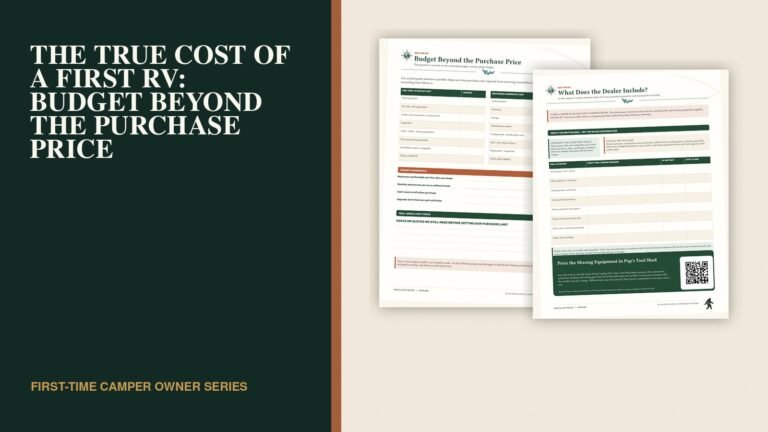
The strongest buying process does not end at the signature. The same facts must continue into delivery, system practice, setup and the first trip. The Gram & Pap RV Buyer and New Owner Bundle pairs a 17-page comparison planner with a 14-page first-month workbook so the reasons for choosing a rig do not disappear when the keys arrive.
Choose the RV that fits when nobody is watching
The right RV does not need to win every category. It needs to fit the real trips, real limits and ordinary routines that will determine whether it is pleasant to use after the showroom shine wears off.
Planning note: RV designs, equipment and requirements vary. Use the certification labels and current manuals for the exact vehicle and RV. Obtain qualified towing, inspection, electrical, propane, mechanical, insurance or financial help whenever the decision is outside your training or the available information is uncertain.