Spring RV Road-Ready Checklist: Storage Exit Is Not Travel Clearance
Part 4 of 6 in the RV Seasonal Care Series.
Spring reopening answers one question: do the stored systems operate again? Road-readiness answers another: should this RV return to the highway? Treating those questions as identical can leave tires, running gear, hitch components or unsecured equipment outside the inspection.
Start with the paperwork and the exterior
Confirm registration, insurance and any required inspection are current. Check tires cold against the RV placard, inspect age and visible condition, and include the spare. Inspect wheels, lug hardware, bearings and brakes according to the RV, axle and component manuals.
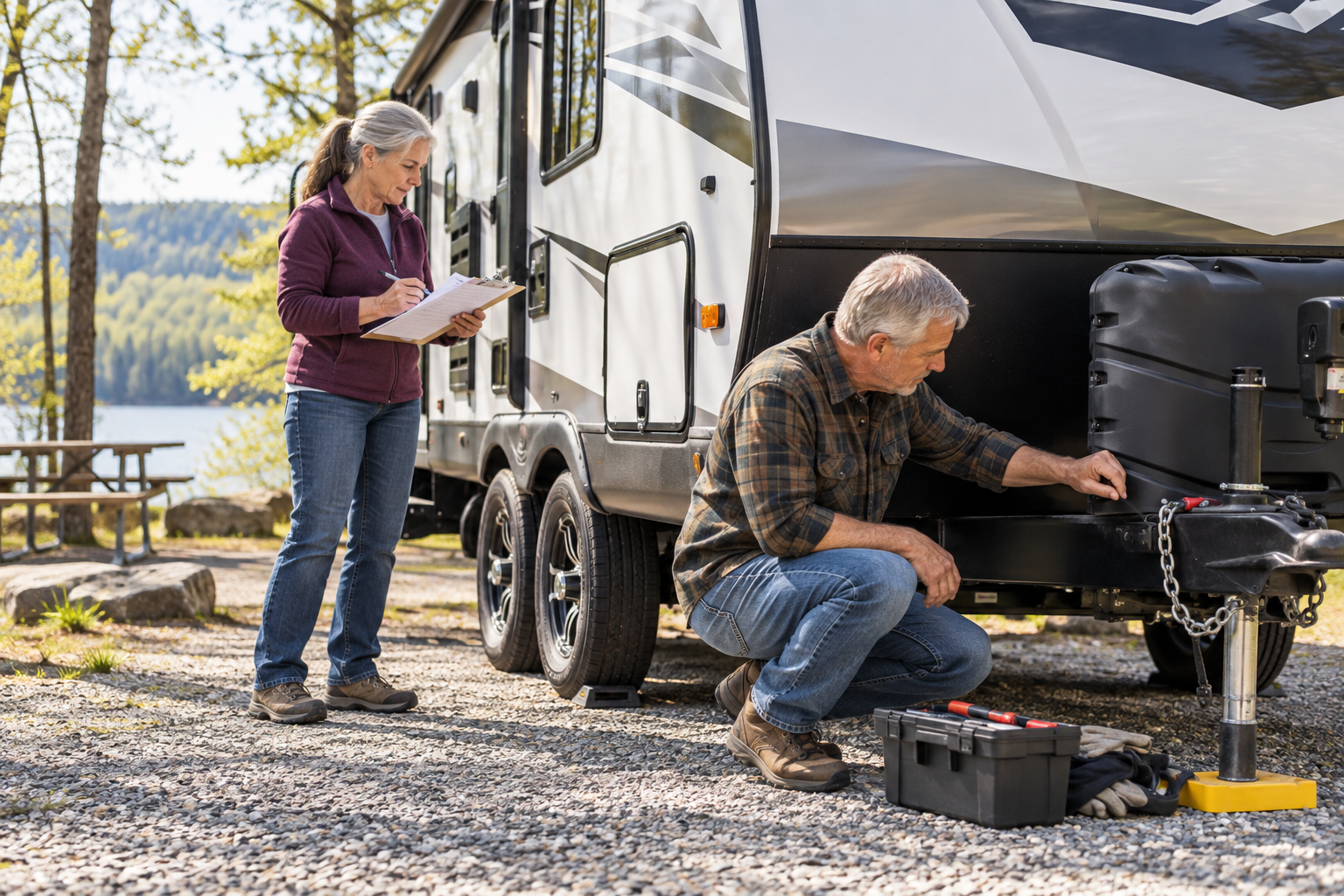
Check suspension, hitch or coupler, safety chains or cables, breakaway equipment, lights and markers. Confirm the roof, awning, slides, steps and exterior doors are secure. A component that operated correctly last fall still deserves a spring inspection.
Check the interior as travel equipment
Look for active water, roof and window leaks. Secure cabinets, refrigerator contents and loose items. Verify battery charging, propane appliances, fresh and waste systems, alarms, extinguisher and emergency exits.
Record unresolved findings as safe to use, service soon or stop. Do not let a checklist’s last box turn an uncertain condition into permission to travel. If a tire, brake, hitch, propane, electrical or structural condition cannot be verified safely, use qualified help.
Finish with a complete walk-around
Walk around the entire RV after hookup and again immediately before moving. Confirm jacks and stabilizers are fully raised, chocks and blocks are removed, compartments are latched, connections are correct, lights work and nothing remains under or beside the rig.
Don’t let the road teach you the hard way when a two-minute walk-around could have prevented the hard lesson.
Plan a short shakedown
Choose a close, forgiving route or campground. Travel in daylight and mild weather if practical, tell someone the plan and leave room to stop and inspect. Carry the relevant manuals, basic tools and emergency contacts without stacking the test trip under a tight schedule.
Watch the whole RV during and after the test
Pay attention to braking, tracking, vibration, tire and hub condition, charging behavior, water leaks, pump cycling, appliance operation, latches, doors, odors, noises and warning lights. Inspect again after the drive and record each finding as fix now, monitor or service.
The road-ready and first-trip pages in the RV Seasonal Care & Maintenance System keep the inspection and shakedown findings beside an owner and due date. The purpose is not to prove that nothing can go wrong. It is to give the small warnings somewhere to land before they become travel companions.
Safety note: RV designs and installed components vary. Follow the current manuals and safety instructions for the exact RV, chassis, axles, batteries, water heater, appliances, generator, solar equipment and other installed systems. Use qualified service help when a procedure is outside your experience or cannot be verified safely.