How to Protect an RV Through Winter Storage, Not Just on Storage Day
Part 2 of 6 in the RV Seasonal Care Series.
Storage preparation receives most of the attention because it produces a satisfying finish line: tanks drained, refrigerator cleaned, cover secured and door locked. The RV, however, keeps experiencing weather after everyone goes home.
Match protection to the storage site
Record whether the RV is indoors, covered or outdoors; whether the surface is firm and well drained; and whether the site can be visited after storms. Note access hours, gate codes and any restriction that could prevent a timely inspection.
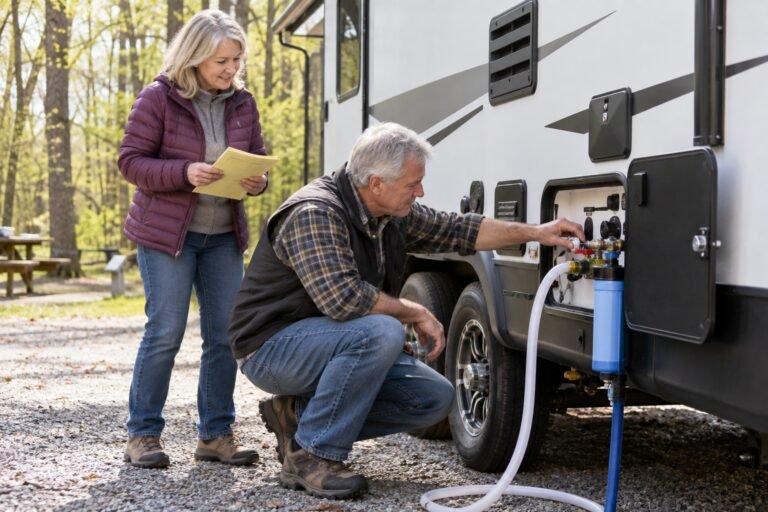
Before storage, wash and dry the exterior, inspect roof seams and penetrations, repair active water-entry defects, retract and dry the awning, and position slides according to the RV manufacturer’s instructions. Check the underbelly and pipe penetrations for damage or openings.
Use covers as equipment, not wrapping paper
If a cover is appropriate for the RV and storage conditions, use one designed to fit and breathe. Protect sharp edges and secure the cover so wind movement does not rub the finish. Do not block ventilation openings that installed appliances require. Inspect the cover after strong wind, rain or snow instead of assuming the original tie-down remains correct.
Remove the food and the hiding places
Food, crumbs, trash and scented products can attract pests. Liquids and pressurized products may also be vulnerable to freezing. Clean and dry the refrigerator, cabinets, bath and floors. Seal accessible pest gaps with suitable durable material without obstructing required vents or drainage.
Traps make sense only where they can be checked. Poison can leave an animal in an inaccessible place and creates risks of its own. Choose the pest-control method for the storage site and record when it must be inspected.
Manage moisture without creating another problem
Leave clean interior doors open where appropriate for air circulation and raise cushions or the mattress when the RV design allows it. Place moisture-control products where they cannot spill. A device that collects water but overturns during the first visit is not much of a moisture plan.
Create a realistic inspection rhythm
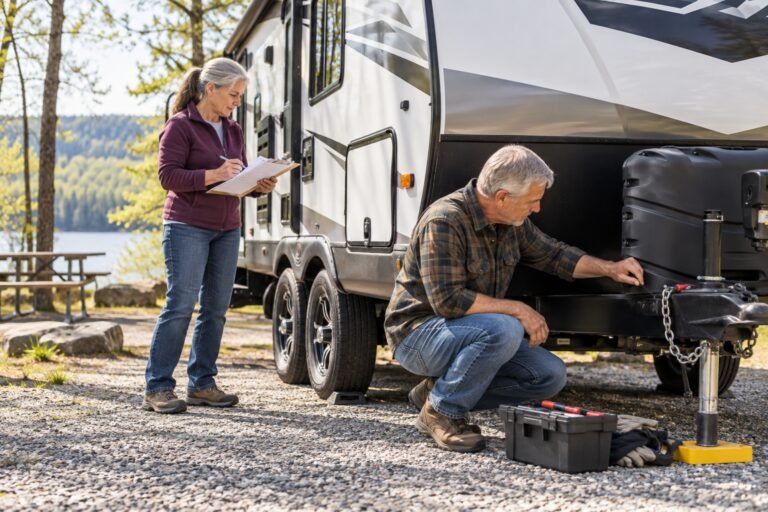
Inspect after the first hard freeze, after major wind, rain or snow, and at an interval that matches the site and local conditions. Check the roof or cover from a safe position, look for water entry, pests and moisture, confirm tires and chocks remain sound, and record battery or shore-power status if those systems remain active.
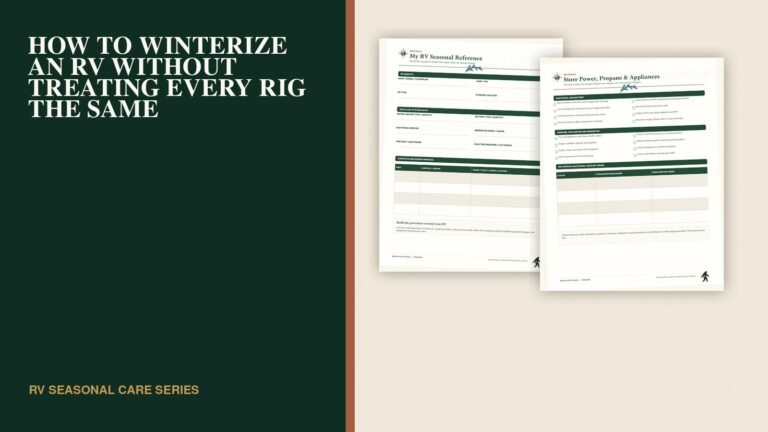
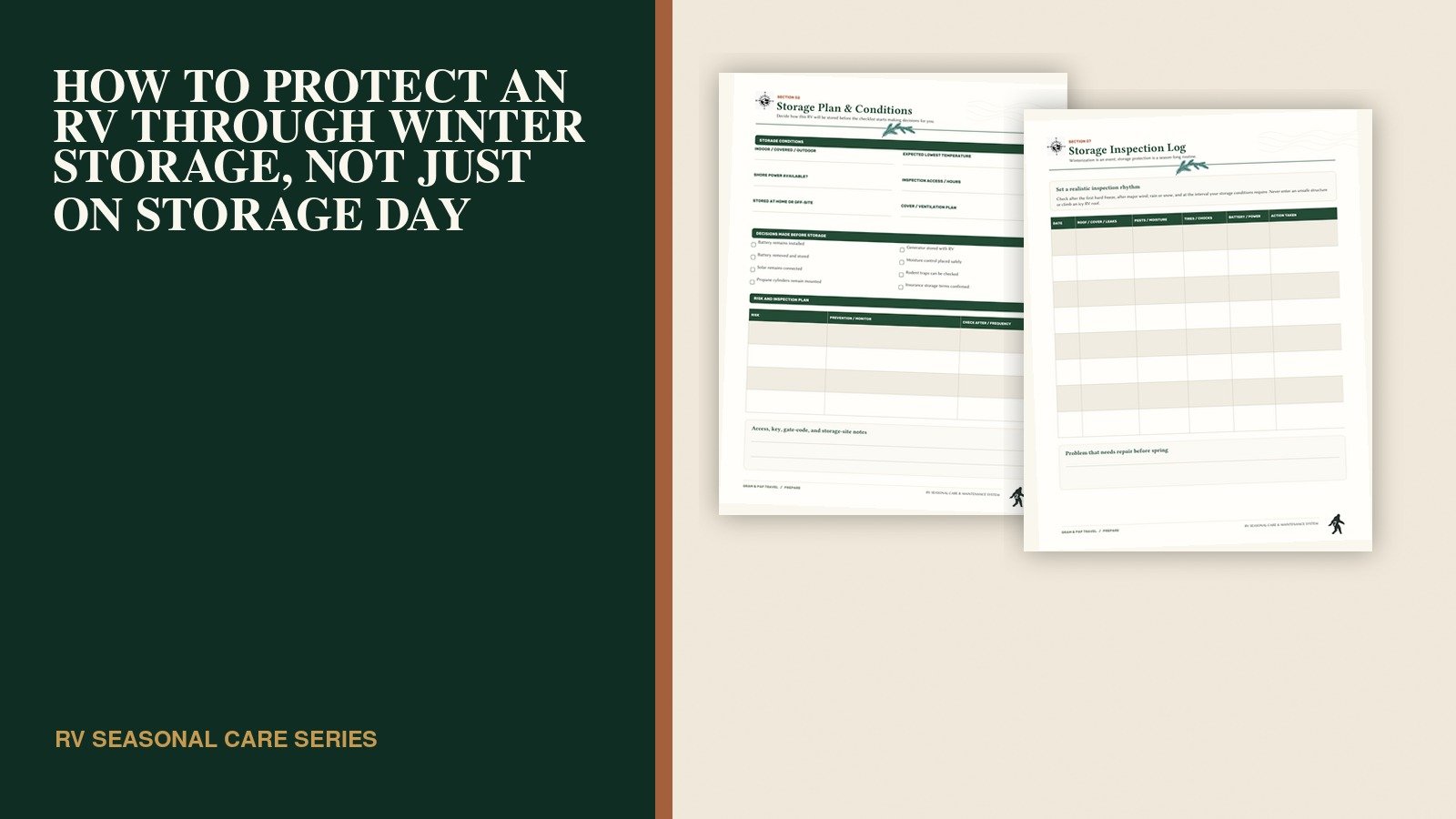
The storage pages and recurring log in the RV Seasonal Care & Maintenance System keep the conditions, risks, preventive steps and inspection results together. The log is useful because it turns “check it occasionally” into dates, observations and actions.
Do not let the inspection create the accident
Never enter an unsafe storage building or climb an icy RV roof. Use ground-level observations, a safe ladder arrangement or qualified help as conditions require. The goal is to find developing trouble—not become the developing trouble.
Safety note: RV designs and installed components vary. Follow the current manuals and safety instructions for the exact RV, chassis, axles, batteries, water heater, appliances, generator, solar equipment and other installed systems. Use qualified service help when a procedure is outside your experience or cannot be verified safely.