A Practical 7-Day RV Meal Plan That Won’t Fill Every Cabinet
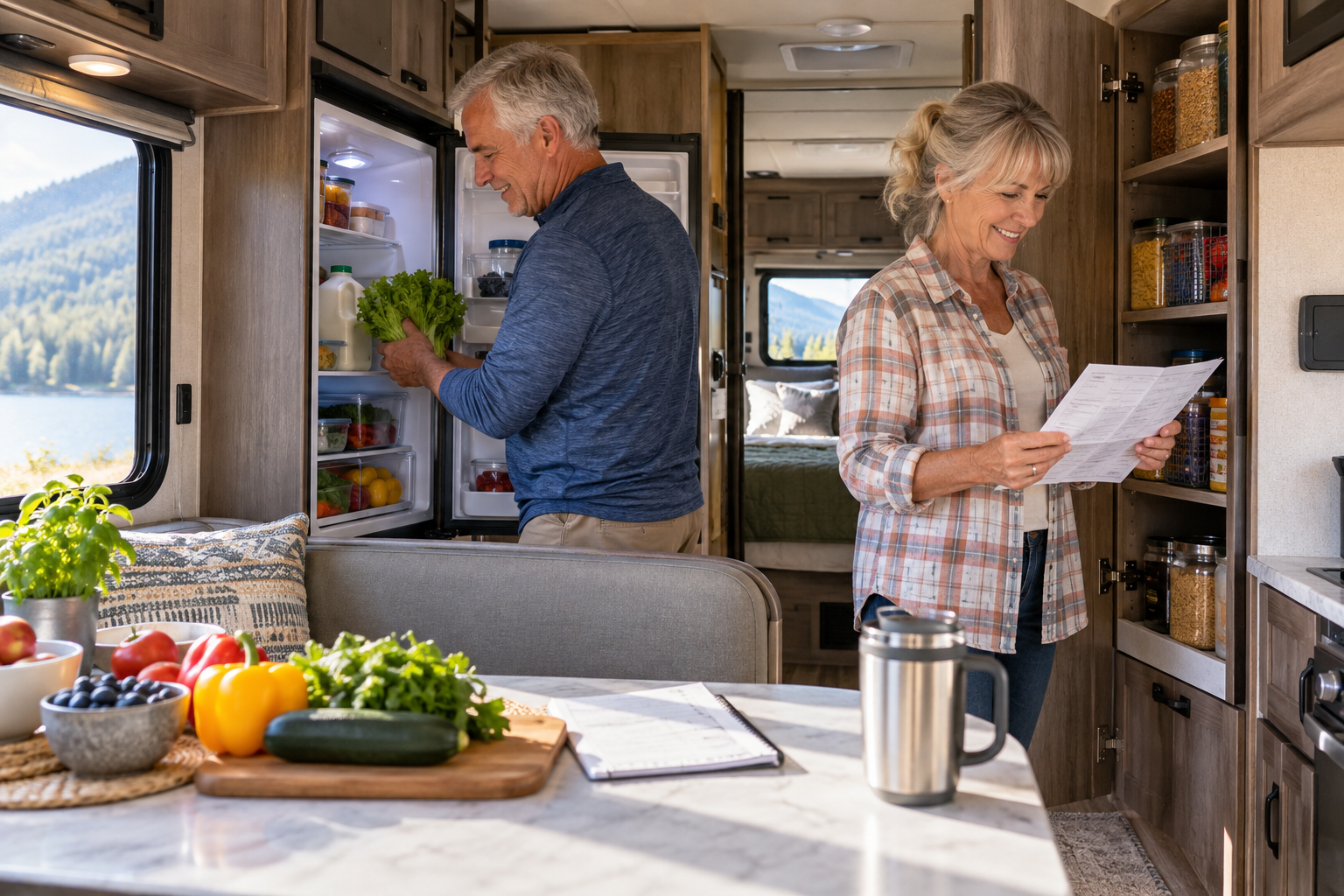
An RV kitchen has a way of making groceries look larger after they come through the door. A perfectly reasonable shopping trip can fill the refrigerator, claim the pantry and leave three bags of good intentions sitting on the dinette.
A seven-day RV meal plan should make camping easier. It should not require every cabinet, six specialty pans and a vacation from the vacation to cook it all.
Begin with the trip schedule
Mark travel days, activity-heavy days and evenings when you expect to eat away from the campground. Those are not ordinary cooking days.
Departure morning may need a fast breakfast. A long travel day needs food that is easy to reach and eat safely while stopped. A full sightseeing day probably does not need a dinner requiring an hour of preparation.
Plan the day you will actually have, not the enthusiastic version of yourself who was standing in the grocery aisle.
Choose a few meals with shared ingredients
Limited storage rewards ingredients that can do more than one job. A cooked protein might become dinner, a lunch wrap and a salad topping. Vegetables can serve beside one meal and enter a skillet the next day. Cheese, eggs, tortillas and simple pantry staples can support several combinations.
Shared ingredients reduce grocery volume and the half-used containers that return home after traveling hundreds of miles.
Give breakfast and lunch a repeatable pattern
Every meal does not need to be unique. Two or three breakfast choices and a flexible lunch pattern are easier to shop for and prepare.
Breakfast might rotate between eggs, yogurt and fruit, or another simple combination that suits your household. Lunch can use leftovers, sandwiches, salads or a snack-style plate. Save the creative energy for the meals you actually enjoy cooking at camp.
Respect the refrigerator, freezer and pantry
Before finalizing the menu, look at the storage available in your RV. Consider:
- Refrigerator and freezer space
- Safe food-storage temperatures
- Pantry depth and container sizes
- Weight and breakage
- Water and power limitations
- The cooking equipment you genuinely use
Do not build a menu around appliances or cookware that will not be available. Follow current food-safety guidance for refrigeration, storage and reheating.
Plan one leftovers meal
Leftovers are not a failure of menu planning. They are proof that portions are difficult to judge in advance.
Leave one lunch or dinner flexible. It can absorb leftovers, a schedule change, an invitation from neighboring campers or the local restaurant you did not know existed when you planned the trip.
Build the grocery list from the menu
Once the meals are visible, list ingredients by storage type: fresh or cold, pantry or dry goods, drinks and snacks. Check the RV and house before buying duplicates.
The 7-Day Meal Plan in the Gram & Pap RV Trip Planner puts breakfast, lunch and dinner beside a three-part grocery list, so the menu and the food needed to make it stay on the same page.
Prep only where it helps
Washing produce, portioning ingredients and cooking one flexible protein ahead can reduce dishes and work in the RV. Avoid turning the day before departure into a commercial food-production shift.
The best prep removes a problem you know you will have: limited counter space, late arrival, a busy activity day or a meal that creates more cleanup than it earns.
Leave a little room
Room in the refrigerator is useful. Room in the schedule is even better.
A practical meal plan keeps everybody fed, controls grocery spending and gets you out of the kitchen. It should also leave space for the unexpected pie shop, the neighbor’s campfire invitation and the evening when sitting outside wins the vote.