RV Weight, Payload, and Towing: Build the Match from Exact Numbers
Part 2 of 8 in the First-Time Camper Owner Series.
RV weight discussions often begin with one attractive towing number. A safe and workable match requires several limits from the exact vehicle and exact RV, plus a realistic estimate of how both will be loaded.
Use the source, not a guess
Record the tow vehicle’s GVWR, front and rear GAWR, payload shown on the tire-and-loading label, receiver ratings and any VIN-specific towing information. For the RV, record GVWR, UVW or unloaded weight, cargo capacity, axle ratings and published hitch or pin weight.
Published empty hitch weight is not the number the loaded combination will necessarily place on the vehicle. Batteries, propane, water, cargo and their locations change the result. Treat the brochure figure as a reference point, not a final operating measurement.
Account for every user of payload
Vehicle payload is used by the driver, passengers, pets, cargo, bed accessories, toolboxes, hitch equipment and the trailer’s loaded tongue or pin weight. Write each item down. Payload rarely vanishes in one dramatic decision; it disappears one passenger, toolbox and “small” accessory at a time.
Do not use remaining payload as permission to exceed an axle, tire, receiver, hitch or combination rating. Every applicable limit still controls.
Estimate before buying, measure after loading
Before purchase, use conservative loaded estimates and the best model-specific data available. After purchase, load the vehicle and RV as they will actually travel and obtain appropriate scale weights. Compare the measured conditions with the exact ratings and follow the vehicle, hitch and RV manufacturers’ instructions.
Motorhomes need the same honesty
A motorhome buyer must still account for passengers, water, fuel where applicable, food, gear, accessories and anything towed. Check GVWR, axle ratings, tire limits, cargo-carrying capacity and the hitch rating. A large exterior does not create unlimited carrying capacity.
Keep the numbers attached to the candidate
Different trims, options and model years can change the numbers. Record the VIN, stock number and source beside every candidate so a figure from one unit does not quietly migrate to another.
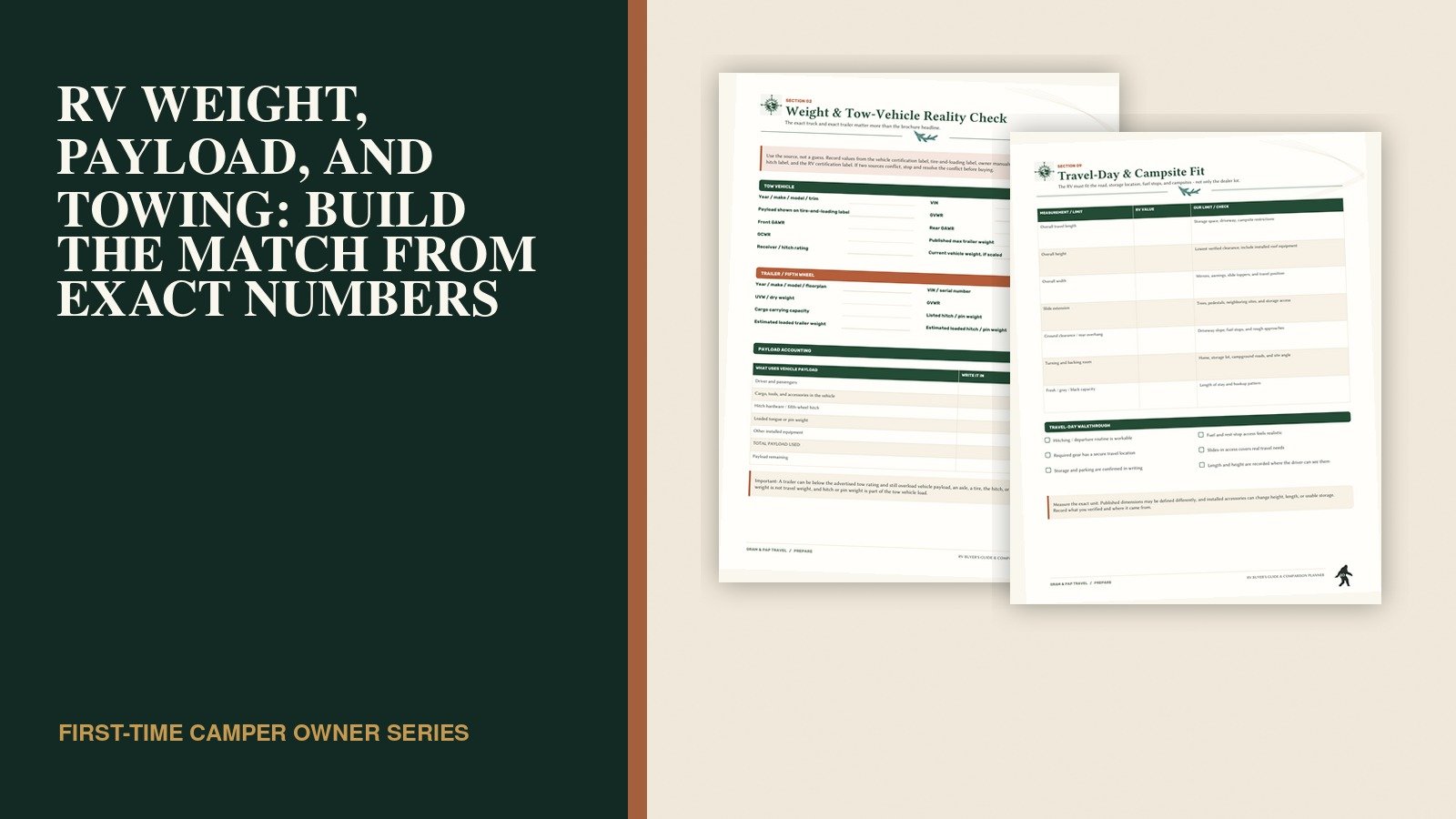
The Gram & Pap RV Buyer and New Owner Bundle provides a weight and tow-vehicle reality check, three candidate sheets, a side-by-side decision page, and a first-month weight and tire baseline for the RV that is ultimately chosen.
Resolve uncertainty before the deposit
This article and workbook organize a decision; they do not replace certification labels, manuals, actual weighing or a qualified towing professional. If ratings or source documents disagree, the next step is clarification—not a more optimistic calculation.
Planning note: RV designs, equipment and requirements vary. Use the certification labels and current manuals for the exact vehicle and RV. Obtain qualified towing, inspection, electrical, propane, mechanical, insurance or financial help whenever the decision is outside your training or the available information is uncertain.