RV Generator Maintenance: Keep Your Power Running Strong
Let me tell you about the time our RV generator maintenance routine went completely sideways. Picture this: we’re tucked into a beautiful boondocking spot in Utah, no hookups for miles, and our Onan decides to throw a tantrum right as we’re trying to run the air conditioning on a 98-degree day. That was breakdown number two in what became a frustrating pattern of generator failures.
After three generator breakdowns in two years, we finally got serious about learning what actually keeps these workhorses happy. Turns out, most of the maintenance advice out there is either overkill or misses the critical stuff entirely. We’ve been running strong for the last 18 months now, and I want to share what we’ve learned the hard way.
The Real Cost of RV Generator Neglect
Here’s the thing about generators – they’re not like your truck engine that you drive every day. They sit there for weeks, sometimes months, waiting for you to need them. Then suddenly you’re depending on them for everything from running your RV kitchen essentials to keeping the lights on during a storm.
Our first breakdown happened after we’d neglected our generator for about six months. We were new to RVing then, fresh off our experience with rail-and-road travel, and honestly didn’t know what we didn’t know. The repair bill was $850, not counting the two days we spent in a sweltering RV waiting for parts.
The second failure was our own fault too – we’d been following a maintenance schedule that was way too complicated and missed the basics. The third one? That’s when we realized we needed to completely rethink our approach to RV generator maintenance.
What Most RV Generator Maintenance Guides Get Wrong
After talking to three different RV techs and one very patient Onan specialist, we discovered that most maintenance guides are either written by people who’ve never actually lived in their RV full-time, or they’re covering their legal bases with excessive recommendations.
The truth is, generators are pretty simple machines. They need clean air, clean fuel, clean oil, and regular exercise. That’s it. Everything else is either preventive overkill or addressing problems you may never have.
For example, most guides tell you to change the spark plug every 100 hours. Our tech showed us plugs with 300 hours that looked brand new. Meanwhile, they barely mention the air filter that actually chokes out more generators than any other single component.
The Forgotten Filter That Kills Generators
Here’s the big one that nearly every RVer misses: the fuel filter. Not the obvious one in your fuel tank – the tiny inline filter between your fuel pump and carburetor. This little guy is about the size of a film canister (showing my age here), and it’s usually tucked away where you can’t see it.
This filter catches all the microscopic debris that settles in your fuel tank while you’re parked. Miss this maintenance, and your generator will start surging, running rough, or just quit altogether. We learned this lesson at 9 PM in a Walmart parking lot in Arizona.
Our Real-World RV Generator Maintenance Schedule
After 18 months of reliable operation, here’s the maintenance routine that actually works for us. We’re running an Onan 4000, but this applies to most RV generators with minor variations.
Monthly (or Every 25 Hours)
Exercise Run: This is the most important thing you can do. We run our generator for 30 minutes under load every month, even if we don’t need it. “Under load” means actually using it – run the air conditioner, microwave, or charge your batteries. Just letting it idle doesn’t count.
Visual Inspection: Check for loose bolts, frayed wires, or fluid leaks. Takes five minutes and can save you from roadside breakdowns. We learned this the hard way during our awning repair adventures – sometimes the vibration from generator problems shows up in unexpected places.
Every 50 Hours (or 6 Months)
Oil Change: Use the oil specified in your manual – usually 15W-40 for most RV generators. Don’t overthink this one. Change it, check for metal particles in the old oil, and move on.
Air Filter Check: Clean or replace if it’s dirty. In dusty conditions, we check this monthly. A clogged air filter will kill performance faster than almost anything else.
Every 100 Hours (or Annually)
Fuel Filter Replacement: This is the one everyone forgets. On our Onan, it’s located near the fuel pump, and you’ll need to remove a cover panel to access it. Plan on 45 minutes for this job if you’re doing it yourself.
Spark Plug Inspection: Notice I said inspection, not replacement. Unless it’s fouled or the gap is way off, most plugs will run 200+ hours easily.
Carburetor Cleaning: Only if you’re having performance issues. If you’re exercising regularly and using fuel stabilizer, this rarely becomes necessary.
The Exercise Rule That Actually Works
Most guides tell you to run your generator monthly, but they don’t explain why or how. Here’s what we’ve learned: generators hate sitting idle. The carburetor gums up, seals dry out, and fuel goes stale.
Our routine is simple: first Saturday of every month, we fire up the generator and run it for 30 minutes with a real load. We’ll make coffee, run the microwave, charge our devices – anything that draws actual power. This keeps everything moving and burning clean.
In winter storage, we bump this up to every two weeks. The extra exercise prevents the carburetor issues that plague generators after long periods of non-use.
Load vs. No Load: Why It Matters
Running your generator without a load is like revving your truck in park – it’s not doing much good. Generators need to work to stay healthy. Under load, they burn fuel completely, keep internal components at proper operating temperature, and exercise all the systems.
A good rule of thumb: if your generator isn’t working hard enough to slow down slightly when you turn something on, you’re not loading it enough.
Fuel Quality: The Foundation of Reliable Power
Bad fuel kills more RV generators than all other issues combined. This is especially true if you’re doing extended boondocking adventures where you’re really depending on your generator.
We learned this lesson during our first winter in Arizona. We’d filled up with what turned out to be old fuel at a remote station, and our generator started running rough within a week. The ethanol had separated and was causing all kinds of havoc.
Fuel Stabilizer: Your Generator’s Best Friend
We add fuel stabilizer to every tank, not just when storing the RV. This prevents fuel degradation and ethanol separation, especially important in the extended-range fuel tanks that many RVs have.
Our choice is Sta-Bil Marine formula – it’s designed for ethanol fuels and works better than the automotive version for small engines that sit for long periods.
Common Maintenance Mistakes We Made (So You Don’t Have To)
Overthinking Oil Changes: We started out changing oil every 25 hours because that’s what some guide recommended. Complete waste of time and money. Every 50 hours is plenty for most RV generators.
Ignoring the Simple Stuff: We were so focused on complicated maintenance that we missed loose bolts that were causing vibration issues. Sometimes the basics matter most.
Not Documenting Hours: Track your generator hours religiously. Most units have an hour meter, but we also keep a simple log book. This helps you stay on schedule and provides valuable info if you need warranty work.
Seasonal Neglect: During mild weather when we weren’t using air conditioning much, we’d forget about the generator entirely. Big mistake. Regular exercise is crucial regardless of season.
When to Call a Professional
We’re pretty handy with basic RV generator maintenance, but there are times when you need expert help. Here’s what we’ve learned about when to DIY and when to call in the pros.
DIY territory includes oil changes, air filter service, basic cleaning, and exercising. These are straightforward jobs that don’t require special tools or deep technical knowledge.
Professional territory includes carburetor rebuilds, electrical troubleshooting, and anything involving the control board. We learned this the expensive way when we tried to diagnose a no-start condition ourselves and ended up making it worse.
Finding Good Generator Service
Not all RV service centers are created equal when it comes to generators. We’ve found that shops specializing in commercial generators often do better work than general RV service centers. They see more units and have more experience with the specific issues that affect generators.
When you’re shopping for service, ask about their experience with your specific generator model and whether they stock common parts. Nothing’s worse than being told your repair will take two weeks because they have to order a $15 part.
Setting Up Your Maintenance System
The best maintenance schedule in the world doesn’t help if you don’t follow it. We’ve found that simple systems work better than complicated ones.
We use our phone’s calendar with recurring reminders for monthly exercise runs and maintenance milestones. When it’s time for service, we have a simple checklist we follow. Nothing fancy, just a reminder of what needs checking.
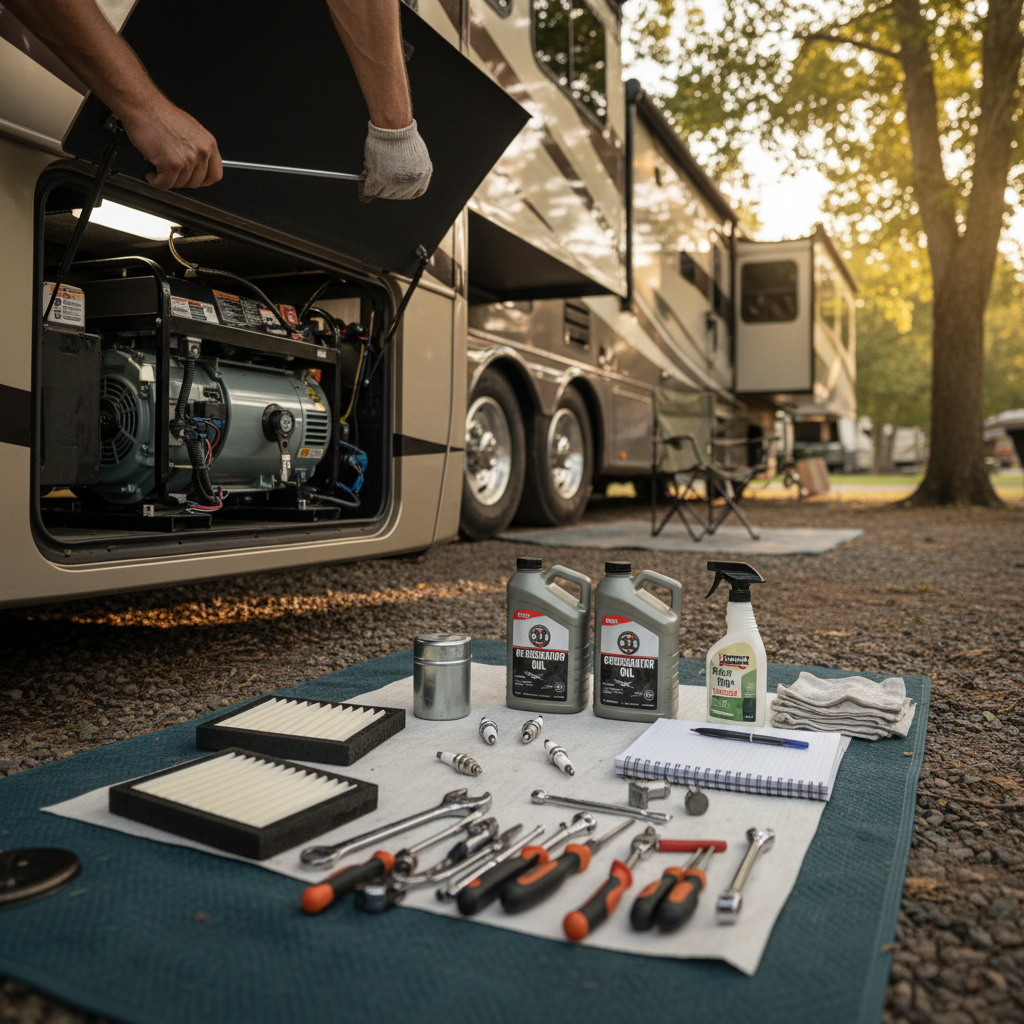
Keep your maintenance supplies in one place – oil, filters, tools, and your log book. This makes it easy to stay on top of service and reduces the temptation to put things off. Just like organizing your propane safety equipment, having everything in one spot makes maintenance less of a chore.
The Bottom Line on RV Generator Maintenance
After three breakdowns and 18 months of reliable operation, here’s what we know for sure: consistent, simple maintenance beats sporadic, complicated efforts every time.
Focus on the basics – exercise, clean fuel, regular oil changes, and that forgotten fuel filter. Skip the excessive maintenance recommendations unless you’re actually having problems.
Most importantly, don’t wait until you’re in the middle of nowhere to discover your generator won’t start. Whether you’re planning scenic New England routes or heading off-grid for extended periods, your generator needs to be ready when you are.
The peace of mind that comes from knowing your power system is reliable is worth every minute spent on proper RV generator maintenance. Trust me, you don’t want to learn these lessons the hard way like we did.