RV Composting Toilets: Our 6-Month Reality Check
So here we are, six months into our composting toilet experiment, and I’m sitting here with a glass of bourbon wondering how the hell we got talked into this. Sarah keeps reminding me it was my idea after our third black tank sensor failure in two months, but honestly, I was probably three beers deep when I made that declaration.
Let me cut to the chase: composting toilets aren’t the miracle solution the YouTube crowd makes them out to be, but they’re not the nightmare your camping buddy warned you about either. The truth, as usual, is somewhere in the middle – kind of like our rig after I tried to level it on that sketchy slope in Colorado.
We’re going to walk through the real deal here. The installation headaches, the daily reality, the smell situation (spoiler: it’s complicated), and whether we’d do it again. Because after six months of living with this thing, we’ve learned a few things they don’t mention in those glossy brochures.
Why We Ditched Our Black Tank for a Composting Toilet
Our black tank saga started innocently enough. First, it was just wonky sensors – you know the drill. Tank reads full when it’s empty, empty when it’s full. Then the gate valve started acting up during our rail-and-road reset trip through Montana.
The final straw came at a campground outside Yellowstone. Three days of “honey, the toilet’s backing up again” followed by me crawling under the rig with a flashlight, cursing like a sailor while other campers walked by pretending not to notice.
Sarah found me there at midnight, tools scattered everywhere, muttering about how we should have bought that Class A with the residential toilet. That’s when she suggested maybe it was time to look into alternatives.
The composting toilet option kept popping up in forums. No black tank, no chemicals, no dump stations. Sounded like RV paradise, right? Famous last words.
The Installation: Not Exactly a Weekend Project
If you’re handy with basic tools and don’t mind a project that takes longer than expected, installation isn’t terrible. If you’re like me and thought this would be a simple swap-out, buckle up buttercup.
First challenge: our old toilet footprint didn’t match the new unit. Not even close. We ended up with a lovely decorative ring of old bolt holes around our new toilet that Sarah creatively calls “rustic charm.”
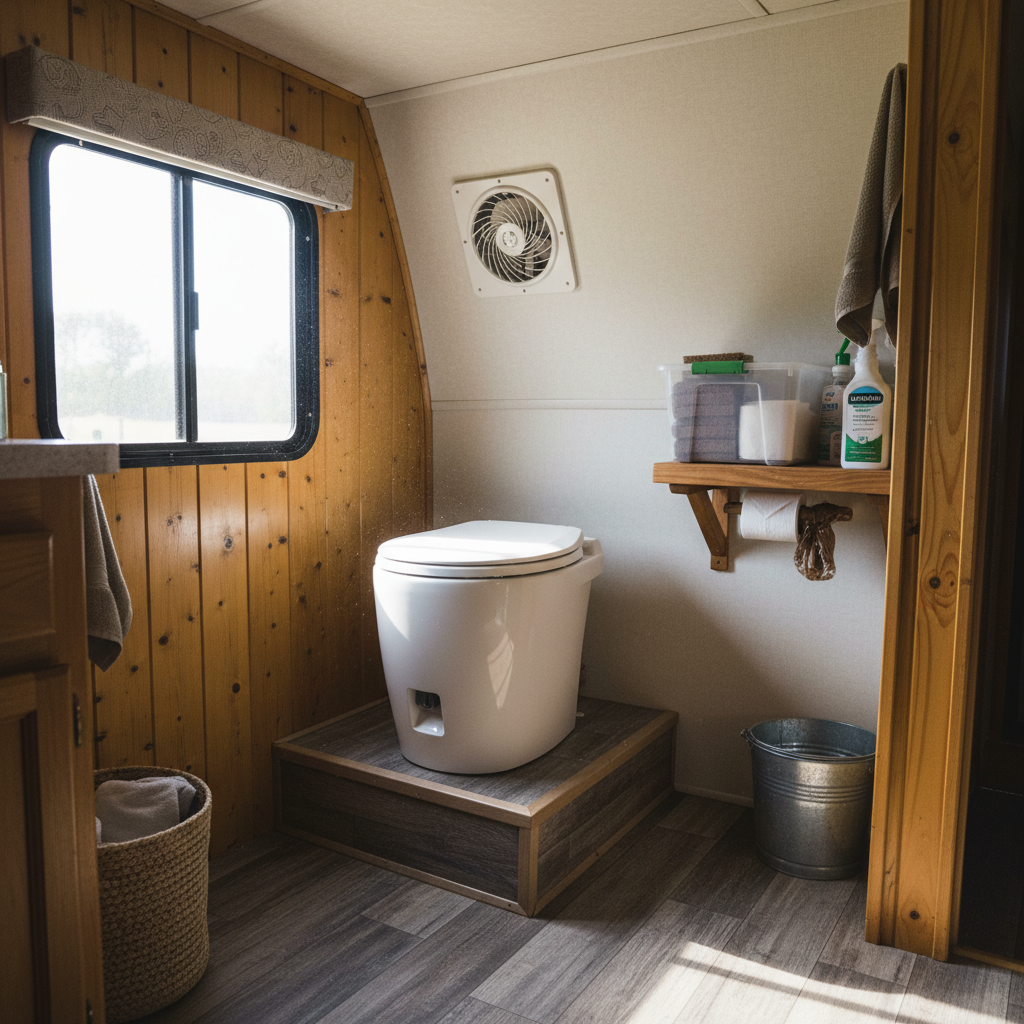
The venting was the real adventure. Composting toilets need proper ventilation – not the passive vent your old toilet had, but an actual fan system. We spent two days running new wiring and cutting a new vent hole. Thank God for that awning repair experience – at least I knew which tools not to use this time.
Pro tip: measure everything twice, order parts three times. We made four trips to hardware stores because apparently RV plumbing uses different threads than everything else on planet Earth.
Daily Life with a Composting Toilet: The Real Talk
Here’s what nobody tells you about composting toilet life: it changes your bathroom routine completely. Not necessarily bad, just different.
Every morning starts with checking the fan (is it running?), checking moisture levels (too wet, too dry?), and giving things a little stir. Yes, you stir your toilet contents. Welcome to RV life, folks.
The separation system takes some getting used to. Ladies, you’ll need to aim differently. Gentlemen, sit down – trust me on this one. We learned that lesson the hard way during week two.
Sarah’s become the unofficial toilet monitor. She tracks usage, moisture, carbon-to-nitrogen ratios like she’s managing a science experiment. Which, honestly, is pretty much what we’re doing.
The maintenance routine isn’t difficult, but it’s constant. Think of it like tending a small, very personal garden. Miss a few days and things get… interesting.
The Smell Situation: Let’s Be Honest Here
Okay, let’s address the elephant in the room – or should I say, the smell in the bathroom. Because everyone asks, and everyone deserves an honest answer.
When everything’s working right, a properly maintained composting toilet shouldn’t smell worse than a regular toilet. Notice I said “when everything’s working right.”
Week three was rough. Really rough. We hadn’t figured out the moisture balance yet, and let’s just say our neighbors probably wondered if something died in our rig. Turns out we were adding too much liquid and not enough carbon material.
The learning curve is real. Too dry and you get dust clouds that’ll make you question your life choices. Too wet and you get… well, you get the idea.
Once we found our groove around month two, smells became manageable. Not completely odor-free like some people claim, but definitely not worse than a traditional RV toilet on a hot day.
The key is consistency and paying attention. Miss your maintenance routine and you’ll know it within 24 hours.
What We Love About Composting Toilets
Despite the learning curve, there are some genuine benefits we didn’t expect.
First, no more dump station anxiety. You know that feeling when you’re low on fresh water but your black tank is nearly full? Gone. We can boondock longer without worrying about tank capacity.
The environmental aspect feels good too. No chemicals going into the ground, and the end product actually enriches soil (though we’re not there yet – takes about six months to fully compost).
Water savings are significant. Our fresh tank lasts nearly twice as long now. That’s huge when you’re dry camping or staying at those budget boondocking spots with no hookups.
Maintenance costs dropped dramatically. No more dump fees, no more black tank chemicals, no more sensor cleaners. The savings add up faster than you’d think.
The Downsides: Things They Don’t Mention
Let’s be real – it’s not all sunshine and composted roses over here.
The learning curve is steeper than YouTube makes it seem. Expect at least six weeks of figuring things out, maybe longer if you’re not naturally detail-oriented.
Space is an issue. Our composting toilet is bulkier than our old unit, and the composting chamber takes up valuable storage space. In an RV, every cubic inch matters.
You become intimately involved with your waste management in ways you never imagined. Some folks embrace this; others find it off-putting. There’s no middle ground.
Capacity limitations are real. With heavy use (like when we had friends visit), emptying frequency doubles. Not a dealbreaker, but something to consider if you entertain often.
The initial smell during installation and first use? Let’s just say we opened every window and ran every fan. Sarah threatened to book a hotel.
Maintenance Reality: More Than You Think
Daily maintenance takes about five minutes. Weekly deep maintenance takes thirty minutes to an hour. Monthly maintenance can take most of a morning if you’re thorough.
You’ll need supplies: carbon material (coconut coir, peat moss), bulking agents, cleaning supplies. It’s not expensive, but it’s ongoing. Budget about $30-50 monthly for supplies.
The fan runs 24/7, drawing power constantly. Not a huge drain, but noticeable if you’re watching every amp-hour like we do during our solar setup adventures.
Troubleshooting requires patience. When something goes wrong (and it will), you can’t just call a plumber. You become the expert by necessity.
Six Months In: Would We Do It Again?
After six months, we’re cautiously optimistic. The composting toilet works, but it requires commitment and attention to detail that not everyone wants to sign up for.
If you’re the type who loves RV projects and doesn’t mind hands-on maintenance, go for it. The freedom from black tank drama is genuinely liberating.
If you prefer set-it-and-forget-it solutions, stick with traditional toilets. There’s no shame in that game, and modern RV toilets are actually pretty reliable when properly maintained.
For us, the learning curve was worth it. We’re more self-sufficient, our environmental impact is lower, and we’ve got stories that’ll last a lifetime. Plus, Sarah’s become quite the composting expert – who knew?
The smell situation improved dramatically once we figured out the moisture balance. Most days, you wouldn’t know it’s any different from a regular toilet. Some days… well, let’s just say good ventilation is essential.
Bottom Line: Is a Composting Toilet Right for You?
Here’s my honest assessment after six months: composting toilets are a viable alternative if you’re willing to learn and stay engaged with the process.
Consider a composting toilet if you:
• Spend lots of time boondocking
• Want to reduce environmental impact
• Don’t mind hands-on maintenance
• Have patience for a learning curve
• Like RV modification projects
Stick with traditional if you:
• Prefer low-maintenance solutions
• Have limited time for upkeep
• Are squeamish about waste management
• Need maximum bathroom convenience
Would we recommend it? With reservations, yes. It’s not the magic bullet some people claim, but it’s not the disaster others warn about either. Like most RV decisions, success depends on matching the solution to your travel style and tolerance for complexity.
Just remember: YouTube makes everything look easier than it really is, including composting toilets. Plan for a learning curve, budget for supplies, and maybe have a backup plan for those first few weeks while you figure things out.
Because trust me, you’ll need it.