State Park vs Private Campgrounds: Where We Spend Our Money
After three years of full-time RVing and staying at hundreds of campgrounds, we’ve developed some pretty strong opinions about where our camping budget gets the best bang for the buck. The eternal debate of state park vs private campgrounds isn’t just about saving money-it’s about finding the right fit for your travel style, your rig’s needs, and honestly, your tolerance for other people’s music at 2 AM.
Look, we’ve made mistakes. We’ve paid premium prices for campgrounds that looked amazing online but turned out to be glorified parking lots. We’ve also discovered hidden gems in state parks that cost half the price and offered twice the experience. Tonight, let me share what we’ve learned about making smart campground choices.
The Real Cost Breakdown: State Park vs Private Campgrounds
Let’s start with the elephant in the room-money. State parks typically run $15-35 per night, while private campgrounds range from $40-80+ per night. That difference adds up fast when you’re on the road full-time.
But here’s where it gets interesting. State parks often include amenities that private campgrounds charge extra for. Most state parks include firewood, hiking trails, and swimming areas in that base price. Meanwhile, that $60 private campground might charge you $8 for a bundle of wood and $5 for WiFi access.
We track our camping expenses religiously, and our average monthly camping costs break down like this:
• 70% state parks: $875/month
• 30% private campgrounds: $485/month
• Total monthly average: $1,360
When we flip those percentages and stay mostly at private campgrounds, our monthly costs jump to over $2,000. That’s an extra $640 per month that could go toward fuel, food, or rig improvements.
Amenities That Actually Matter
Private campgrounds love to advertise their amenities-pools, game rooms, planned activities, cable TV. Sounds great in theory. But after three years on the road, we’ve learned which amenities we actually use versus which ones are just marketing fluff.
Private campground amenities we actually use:
• Full hookups (when we need them)
• Laundry facilities
• Decent WiFi
• Level, spacious sites
Private campground amenities we thought we’d use but rarely do:
• Swimming pools (usually crowded and not well-maintained)
• Game rooms (often dated and stuffy)
• Planned activities (we prefer exploring the area)
• Cable TV (we have streaming services)
State parks, on the other hand, offer amenities that align better with why we’re RVing in the first place:
• Hiking trails
• Natural swimming areas
• Wildlife viewing
• Quiet, natural settings
• Educational programs about local history and ecology
The difference is that state park amenities encourage you to get outside and explore, while private campground amenities often keep you inside the campground itself.
Site Quality and Space Considerations
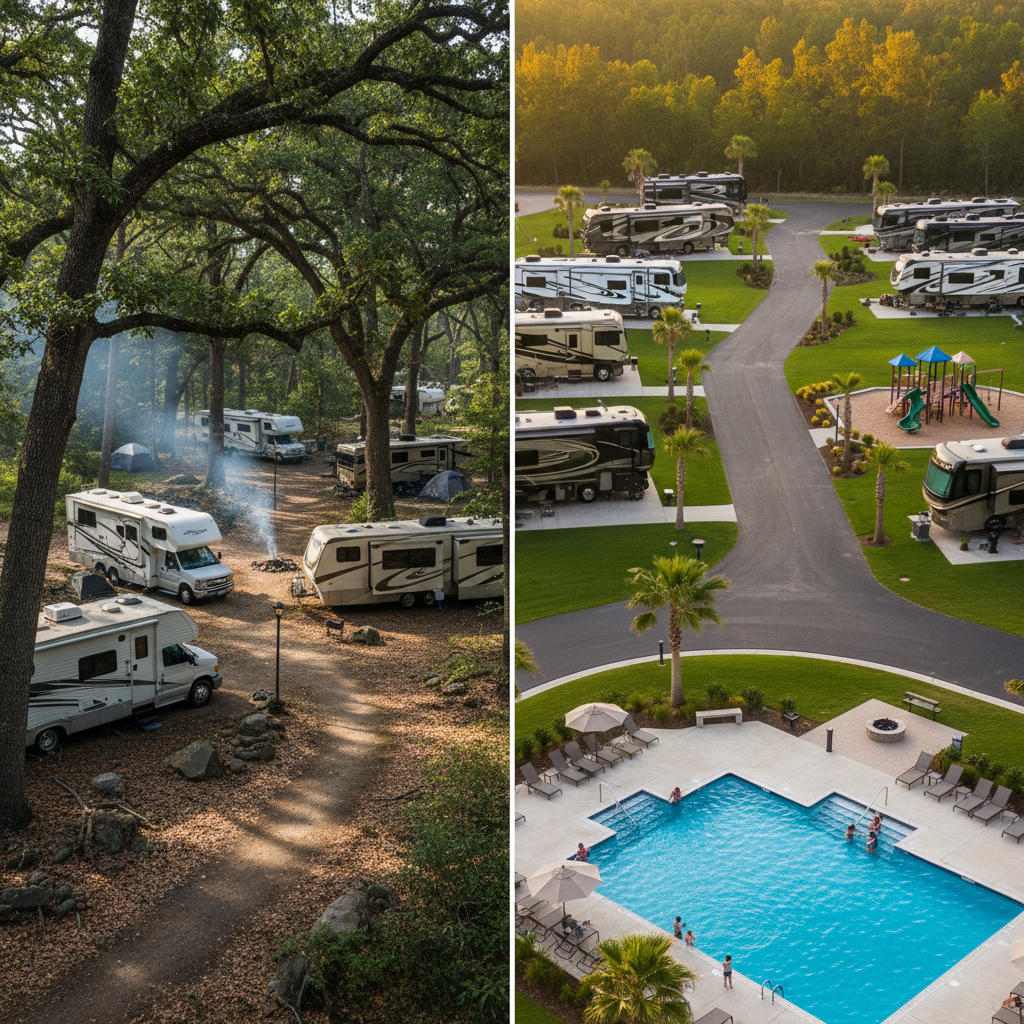
Here’s where private campgrounds sometimes have an edge. Many newer private campgrounds offer longer, wider sites that can accommodate big rigs with multiple slide-outs. The sites are often level (or close to it), with good separation between neighbors.
State parks can be hit-or-miss on site quality. Older state parks were designed when RVs were much smaller, so you might find yourself trying to fit a 35-foot Class A into a site designed for a 20-foot travel trailer. Some state parks have modernized their sites, but others still have tight turns, short sites, and challenging hookup configurations.
However, what state parks lack in RV convenience, they often make up for in natural beauty and privacy. We’ve stayed at state parks where our site was tucked into the woods with no visible neighbors, versus private campgrounds where we could literally reach out our window and touch the neighbor’s RV.
Pro tip: When researching state parks, look for ones that have been recently renovated or have dedicated RV sections. These often offer the best of both worlds.
The Hookup Reality Check
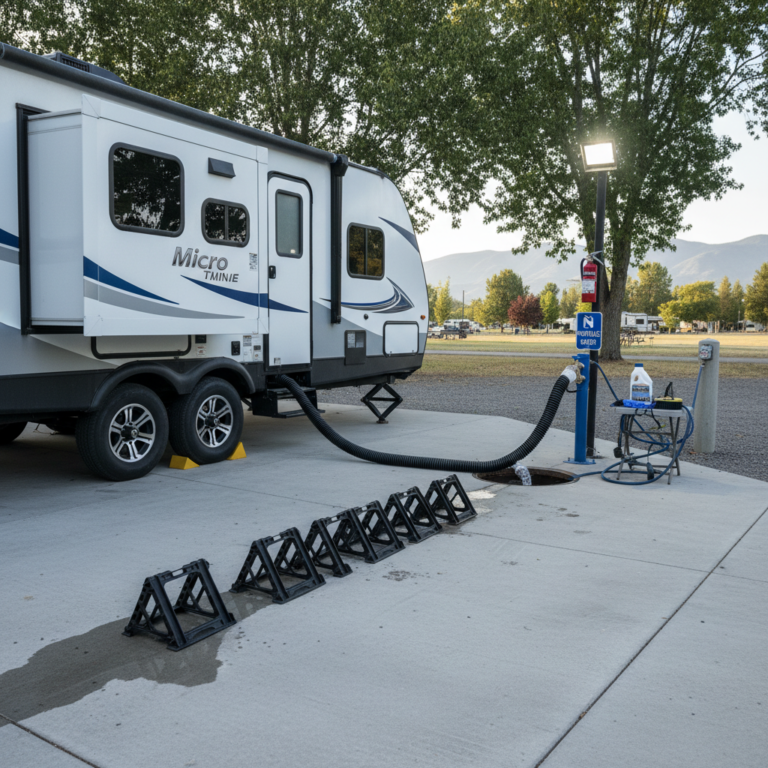
Let’s talk about hookups, because this is where the state park vs private campgrounds debate gets practical real quick. Private campgrounds almost always offer full hookups-water, electric, and sewer at every site. State parks are more varied.
Many state parks offer electric and water hookups, but sewer connections are less common. This means you’ll be using your gray and black tanks more, and planning dump station visits. For some RVers, this is a deal-breaker. For us, it’s become second nature.
Actually, using our tanks more has made us more conscious of our water and waste usage. We’ve gotten better at conserving water and managing our tank levels. Plus, most state parks have clean, accessible dump stations, so it’s really not a big hassle.
The electric situation varies widely in state parks. Some offer 50-amp service, others only 30-amp or even 20-amp. If you’re running multiple high-draw appliances, this might matter. We’ve learned to adjust our power usage based on what’s available, which honestly makes us more versatile campers.
Reservation Systems and Availability
Both state parks and private campgrounds have moved to online reservation systems, but they work very differently. State park reservations often open exactly 5-6 months in advance, and popular parks fill up within hours for peak season dates.
Private campgrounds typically offer more flexibility. Many accept reservations a year or more in advance, and they’re more likely to have last-minute availability. Some private campground chains offer membership programs that guarantee site availability.
Here’s our strategy: We book state parks as far in advance as possible for our must-see destinations, then fill in the gaps with private campgrounds. This gives us the cost savings of state parks while maintaining flexibility for spontaneous route changes.
The reservation systems themselves are another story. State park websites can be clunky and frustrating, while private campground booking systems are usually more user-friendly. It’s a minor point, but when you’re trying to book sites on the road using spotty cell service, every bit of user experience matters.
Crowd Control and Atmosphere
This might be the biggest difference between state parks and private campgrounds, and it’s completely subjective. State parks tend to attract a different crowd than private campgrounds.
State park campers are usually there for the outdoor experience. You’ll see more hikers, kayakers, and wildlife watchers. Campfires are common, but they’re usually earlier in the evening. People respect quiet hours because they’re there to connect with nature.
Private campgrounds cater to a broader range of camping styles. You might have serious outdoors enthusiasts in one site, and party-focused RVers in the next. Some private campgrounds actively encourage social activities and can get pretty lively.
Neither approach is wrong, but knowing what you’re getting into helps set expectations. If you want peace and quiet, state parks are usually your better bet. If you enjoy meeting other RVers and don’t mind some noise, private campgrounds might suit you better.
We’ve also noticed that state parks tend to have better enforcement of rules. Quiet hours are actually quiet, speed limits are enforced, and problem campers are dealt with quickly. Private campgrounds vary widely in this regard.
Location and Access to Attractions
State parks are often located in the most scenic areas of a region-on lakes, in forests, near mountains, or along coastlines. They’re positioned to showcase natural beauty, which means they’re usually perfect base camps for outdoor activities.
Private campgrounds are more likely to be located near highways, cities, or tourist attractions. This can be convenient if you’re passing through or want easy access to restaurants and shopping, but you might sacrifice natural beauty for convenience.
Some of our best memories have come from state parks in stunning locations that we would never have discovered otherwise. Places like Goblin Valley State Park in Utah or Fort De Soto Park in Florida-these locations are destinations in themselves.
That said, when we’re traveling long distances or need to resupply, private campgrounds near highways can be lifesavers. They’re often easier to get into and out of with a big rig, and they’re more likely to be near services we need.
WiFi and Cell Service Reality
Let’s be honest about connectivity. Private campgrounds usually offer WiFi, but quality varies dramatically. Some provide fast, reliable internet that can handle video calls and streaming. Others offer WiFi that barely loads email.
State parks rarely offer WiFi, and cell service can be spotty since they’re often in remote locations. If you need reliable internet for work, this is a significant consideration.
However, we’ve found that many state parks are actually getting better cell coverage as carriers expand their networks. And there’s something to be said for the forced digital detox that comes with limited connectivity.
Our solution involves a combination of cellular boosters, multiple carrier devices, and realistic expectations about when we’ll be offline. When we know we’ll need good connectivity, we choose private campgrounds or state parks near cities.
Seasonal Considerations and Weather
State parks and private campgrounds handle seasons very differently. Many state parks close or limit services during off-seasons, while private campgrounds are more likely to stay open year-round.
This became very apparent during our first winter on the road. Several state parks we wanted to visit were closed or had limited hookups available. Private campgrounds in the same areas remained fully operational.
On the flip side, state parks often offer the best deals during shoulder seasons. Spring and fall can be absolutely magical at state parks, with fewer crowds and mild weather perfect for outdoor activities.
Weather preparedness is another consideration. Private campgrounds usually have better infrastructure for handling severe weather-storm shelters, underground utilities, and staff on-site 24/7. State parks might have limited staff after hours.
Making the Choice: When We Choose What
After three years and hundreds of campgrounds, we’ve developed a pretty clear decision tree for choosing between state park vs private campgrounds:
We choose state parks when:
• We’re staying 3+ nights in an area
• Natural beauty and outdoor activities are priorities
• We want to save money
• We don’t need strong internet connectivity
• We’re okay with potentially limited hookups
We choose private campgrounds when:
• We’re just passing through (1-2 nights)
• We need full hookups for maintenance or comfort
• We require reliable WiFi for work
• Weather conditions are challenging
• State parks in the area are full or closed
This strategy has worked well for us, though we’re constantly adjusting based on new experiences. The beauty of RV life is the flexibility to try different approaches and find what works for your style and budget.
Speaking of budget and planning, this campground strategy ties into broader RV financial planning. If you’re still in the research phase, check out our guide on The 4-Week Budget-Smart Plan to Buy Your First RV to understand how campground costs fit into the bigger picture.
And if you’re dealing with equipment challenges at either type of campground, our post on RV Awning Fails: What We Learned the Hard Way might save you some headaches.
The Bottom Line on Campground Choices
After three years of comparing costs, amenities, and experiences, we’ve settled on a 70/30 split favoring state parks. This gives us significant cost savings while still providing access to private campground amenities when we need them.
The key is being honest about your priorities and flexible in your approach. Some RVers prioritize convenience and amenities-private campgrounds might be worth the extra cost. Others value natural settings and budget conservation-state parks are the clear winner.
For us, the state park vs private campgrounds debate isn’t really a debate anymore. It’s about choosing the right tool for the job. Just like we wouldn’t use our best RV kitchen essentials for every meal, we don’t use the same type of campground for every stay.
What matters most is getting out there and experiencing different places. Whether you’re parked at a luxury resort or boondocking in a national forest, the magic of RV life is in the journey, not necessarily where you plug in at night.
The camping world is huge and varied, and there’s room for every style and budget. Start with what feels comfortable, then gradually expand your comfort zone. You might surprise yourself with what you discover along the way.