The RV Information Page You’ll Be Glad You Filled Out Before You Need It
The RV’s VIN, insurance number and tire information are easy to find on a quiet afternoon at home. They become harder to locate when you are standing beside the rig, the weather is unhelpful and somebody on the phone is waiting for an answer.
One prepared RV information page gives both travelers a known place to look. It does not need to contain every fact about the vehicle. It needs the practical information that may be requested quickly.
Begin with important contacts
Record the current phone numbers and basic identifying details for:
- Roadside assistance
- RV insurance
- Auto or tow-vehicle insurance
- An emergency contact
- A family or check-in contact
- A veterinarian when traveling with pets
Call emergency services first when there is immediate danger, injury, fire or another urgent threat. A planning page is not a substitute for professional help.
Add the RV details another person may request
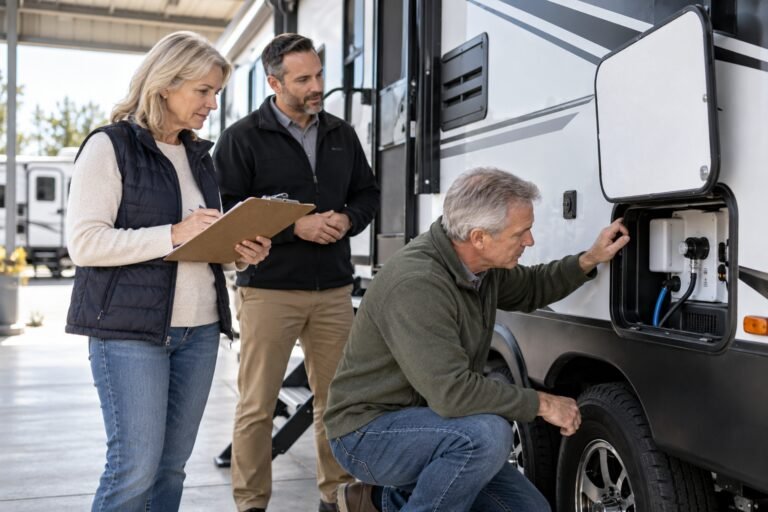
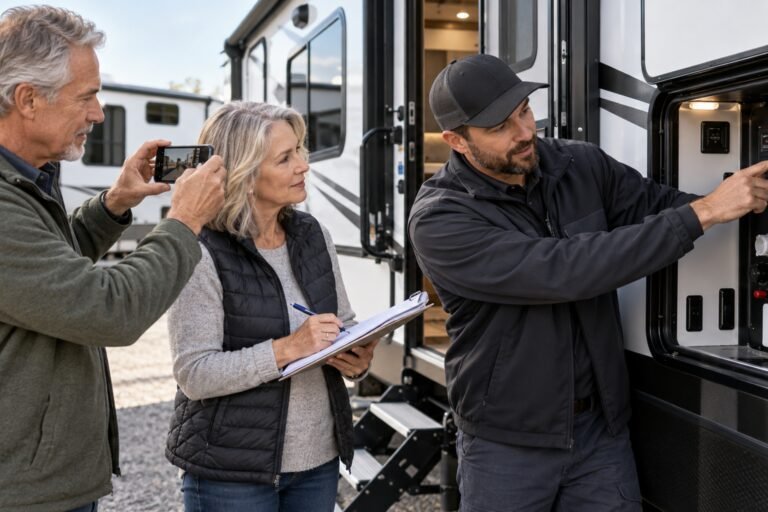
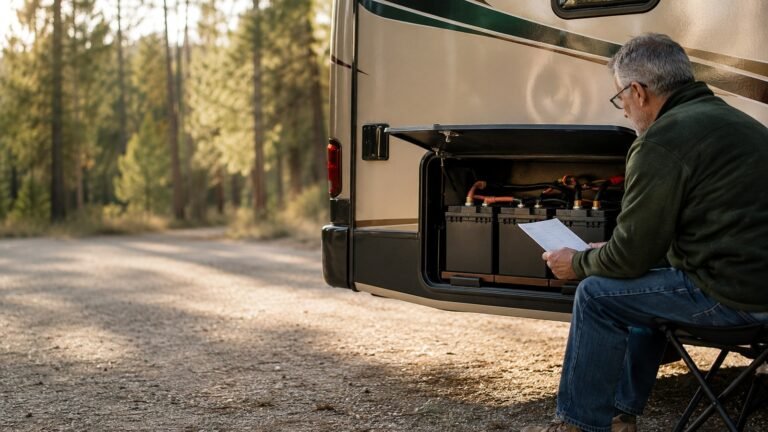
Useful specifications may include the VIN, license plate, tire size and recommended pressure information, propane capacity, holding-tank sizes and generator model.
Verify these details against the RV’s labels and manuals. Tire-pressure requirements depend on the vehicle, tires, load and manufacturer guidance; do not rely on a generic number copied from somebody else’s rig.
Write down where the RV is currently located
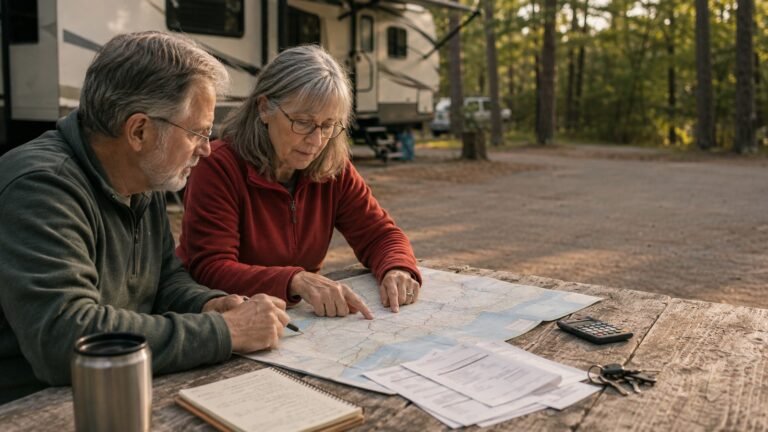
This field is easy to overlook and may be the most useful one on the page. Record the campground name, street address, site number and any directions needed to find you.
If boondocking or traveling through a remote area, use an appropriate method to capture current coordinates or location information. Make sure both travelers know how to retrieve and communicate it even without reliable cell service.
Do not turn the page into an identity-theft kit
Keep sensitive information off a casually stored worksheet. Do not include passwords, payment-card numbers, full financial account information or anything unnecessary for roadside or travel use.
Insurance policy numbers may be useful, but store and handle them according to your comfort level. A contact number and the location of the secure insurance record may be enough for your routine.
Keep copies in sensible places
The page does no good if it is locked inside the vehicle you cannot access. Consider where each traveler could reach it, and keep the authoritative documents secured separately.
A printed working copy in a trip folder can be paired with an appropriately protected digital copy. Tell your travel partner where both are. Preparation that only one person understands is not finished.
Make it part of trip setup
Review the page before each major trip. Confirm contact numbers, update equipment changes and fill in the destination or campground location.
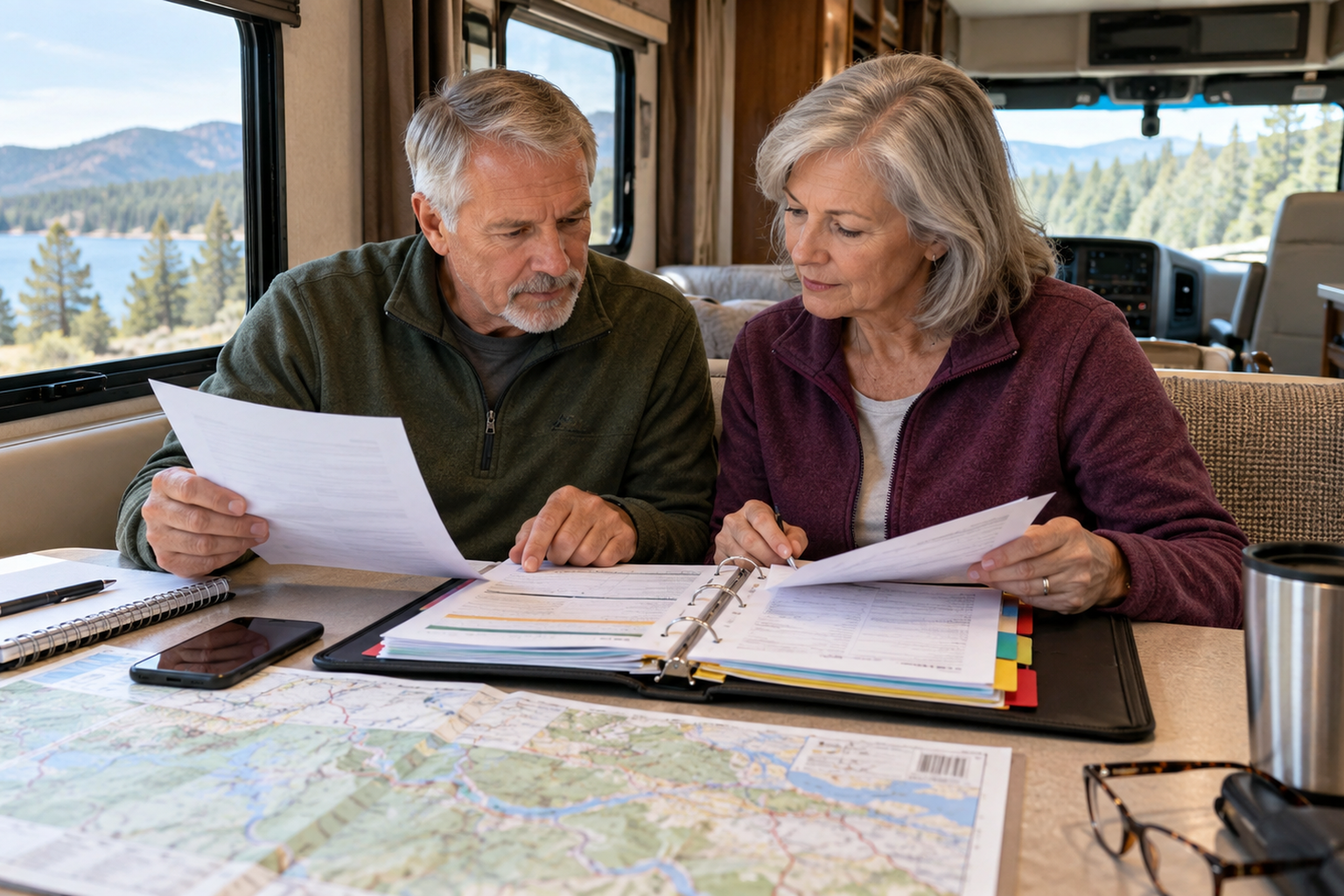
The Important Contacts & RV Info worksheet in the Gram & Pap printable RV Trip Planner provides one place for these practical details, including a dedicated emergency-location field. It belongs with the trip pages, not buried beneath last year’s campground brochures.
Prepared is calm written down
No worksheet prevents breakdowns or emergencies. It can prevent a stressful situation from beginning with ten minutes of searching.
Fill the page out while nothing is wrong. Put it where both travelers know to look. Then hope it spends the entire trip being unnecessary—which is the best job an emergency-information page can have.