How to Dewinterize an RV Without Rushing Water, Power, and Propane
Part 3 of 6 in the RV Seasonal Care Series.
Taking an RV out of storage is not simply winterization played backward at double speed. Parts may have been removed, valves changed, batteries disconnected and warning tags left in place. Each setting must be restored before pressure, heat or electrical loads are applied.
Read the notes left during shutdown
Begin with the photographs, valve positions, removed-part list and restart order recorded during winterization. Inspect for leaks, pest damage, loose wiring, damaged hoses and anything that changed during storage. A clean-looking interior does not prove that every system is ready.
Restore the water system before energizing the heater
Keep every water-heater energy source off. Reinstall the drain plug or anode as the water-heater manual specifies, close low-point and fresh-tank drains, return bypass valves to the use position, reconnect the pump pickup and reinstall or replace filter cartridges.
Flush RV antifreeze until the water runs clear, sanitize the fresh-water system according to the RV manual, fill the water heater completely and purge air from hot and cold fixtures. Only after the tank is full and air is purged should its approved energy source be enabled.
Leak-test where water can hide
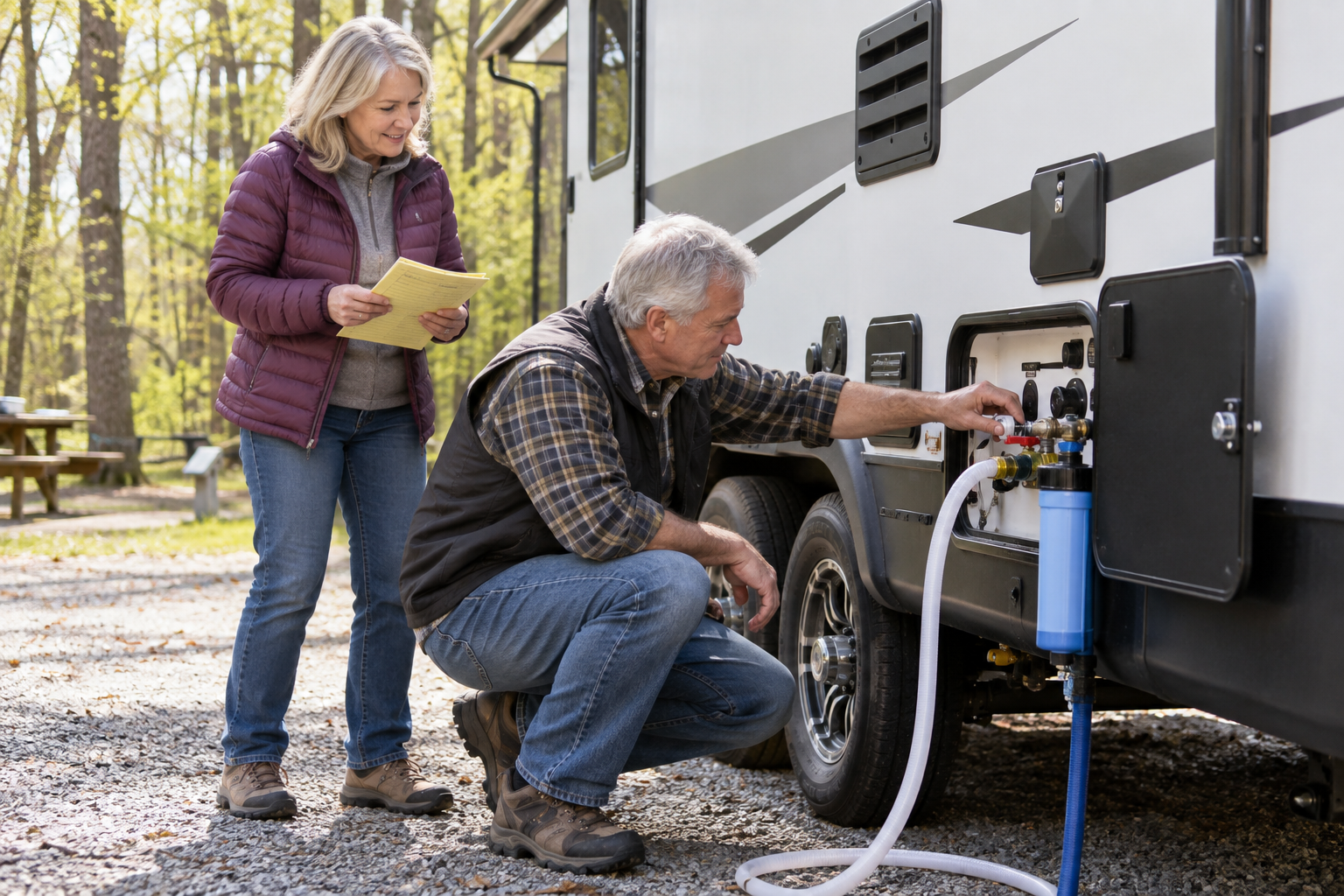
Run the pump and listen for normal cycling. If city water is used, connect it through the appropriate regulated setup. Inspect fittings, cabinets, filter housings, the water-heater area and accessible underbelly locations while the system is under pressure. Test the toilet, drains and tank valves.
Reconnect charging equipment in the approved order
Inspect battery terminals and cables before reconnection. Verify converter, inverter and charge-controller settings for the installed battery chemistry. Restore batteries, solar and shore power only in the sequence specified by the relevant manuals, then confirm stable readings before adding loads.
Restart propane and appliances carefully
Inspect the propane system before opening cylinder valves and use only an approved leak-test method. Test the refrigerator, furnace and air conditioner on their intended sources. Check the smoke, carbon-monoxide and LP alarms, fire extinguisher and emergency exits. Stop for propane odor, repeated electrical faults, overheating or water near wiring.
The spring-restoration pages in the RV Seasonal Care & Maintenance System separate water restoration from power, charging, propane, appliances and life-safety checks. That separation creates room to record a result and correction instead of treating “turned it on” as proof.
Let an abnormal result stop the sequence
A pump that will not stop, a fitting that begins to drip, a breaker that trips repeatedly or an unexpected odor is not a reason to hurry through the remaining list. Stop, isolate the affected system when safe, consult the current manual and use qualified service help when the cause cannot be verified.
Safety note: RV designs and installed components vary. Follow the current manuals and safety instructions for the exact RV, chassis, axles, batteries, water heater, appliances, generator, solar equipment and other installed systems. Use qualified service help when a procedure is outside your experience or cannot be verified safely.