RV Mattress Guide: Sleep Better on the Road
Let me tell you about the night I finally threw in the towel on our factory RV mattress. After three months of waking up feeling like I’d been wrestling alligators instead of sleeping, I knew something had to change. That thin foam disaster was turning every night into a test of endurance, and frankly, road life is hard enough without losing sleep over a bad mattress.
If you’ve been tossing and turning on that original factory foam, you’re not alone. Finding the right RV mattress can be the difference between waking up refreshed for your next adventure or stumbling around camp like a zombie. After testing several options over the past two years, I’ve learned what actually works for comfortable sleep in our rolling home.
Why Your Factory RV Mattress Probably Sucks
Let’s be honest about those factory mattresses. Most RV manufacturers choose them based on cost, not comfort. They’re typically made with low-density foam that breaks down quickly, especially with the constant movement and temperature swings of RV life.
The foam gets compressed from repeated folding during storage and setup. Meanwhile, the cheap covers often don’t breathe well, creating hot spots that leave you sweating through the night. Add in the weird dimensions that don’t match standard home mattress sizes, and you’ve got a recipe for poor sleep.
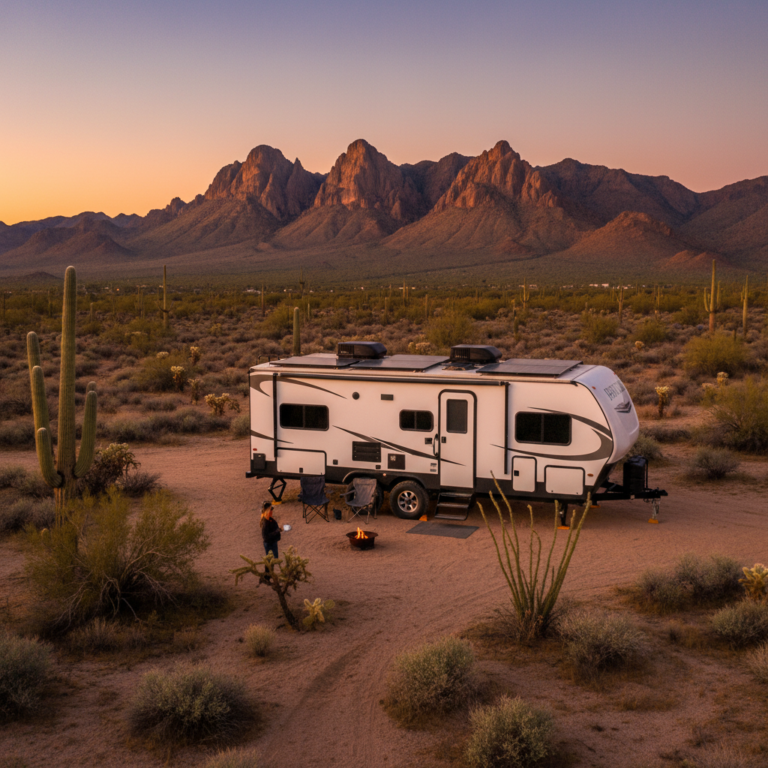
Temperature regulation becomes a real issue too. Many factory mattresses trap heat, which gets amplified in the confined space of an RV bedroom. After experiencing this firsthand during our summer travels through Arizona, we knew an upgrade wasn’t optional anymore.
Understanding RV Mattress Sizes and Dimensions
Here’s where things get tricky with RV mattresses – the sizes are just different enough from home mattresses to make shopping frustrating. A standard queen mattress measures 60″ x 80″, but many RV queens are 60″ x 75″ or even shorter at 72″.
Before you shop for any RV mattress, measure your current space carefully. Length, width, and height all matter because RV bedroom spaces are tight. That extra inch of thickness might mean your sheets won’t fit or cabinets won’t close properly.
Common RV mattress sizes include RV King (72″ x 80″), RV Queen (60″ x 75″), RV Full (53″ x 75″), and various custom sizes depending on your rig’s layout. Some manufacturers get creative with corner cuts or rounded corners to fit specific floor plans.
We learned this the hard way when we ordered what we thought was a standard queen, only to find it was too long for our bedroom slide-out. Always measure twice, order once.
Memory Foam: The Popular Choice for RV Sleep
Memory foam has become incredibly popular for RV applications, and for good reason. It contours to your body, providing pressure relief that’s especially appreciated after long driving days. The material also handles the movement and vibration of RV travel better than traditional spring mattresses.
However, not all memory foam is created equal. Look for medium-density foam (around 3-5 pounds per cubic foot) that offers good support without being too firm. Higher density foams can sleep hot, which becomes problematic in RVs where climate control is limited.
We’ve found that gel-infused memory foam works well for temperature regulation. The gel helps dissipate heat, though it’s not a miracle cure for hot sleepers. Additionally, consider the thickness – anything under 6 inches might not provide adequate support for adult couples.
One consideration with memory foam is the initial odor. New foam often has a chemical smell that can be overwhelming in the small space of an RV. Plan to air it out before installation, similar to how you’d prepare for major upgrades like those covered in our 4-week budget-smart RV buying plan.
Latex Mattresses: Natural Comfort for Road Warriors
Latex mattresses offer a different feel than memory foam – more responsive and bouncy, with excellent durability. Natural latex is antimicrobial and dust mite resistant, which can be beneficial in the humid conditions RVs sometimes experience.
The biggest advantage of latex for RV use is temperature neutrality. Unlike memory foam, latex doesn’t trap heat, making it ideal for couples who sleep warm or for travel in hot climates. The material also tends to last longer than foam alternatives.
However, latex mattresses come with drawbacks. They’re significantly heavier than foam options, which matters when you’re watching your rig’s weight capacity. They’re also more expensive upfront, though the longevity can justify the cost over time.
Dunlop latex tends to be firmer and more durable, while Talalay latex offers a softer, more consistent feel. For RV applications, we lean toward Dunlop for its durability, especially if you’re planning extended travel like the adventures described in our cross-continental slow-travel guide.
Custom RV Mattress Options
Sometimes standard sizes just don’t work for your RV’s unique layout. Custom mattress companies specialize in creating RV mattresses that fit odd shapes, corner cuts, and specific thickness requirements.
Companies like Sleep Number, Denver Mattress, and several online retailers offer custom RV mattresses. You can specify dimensions, firmness levels, and materials to match your exact needs. This route often costs more but solves the fit problems that plague many RV owners.
When considering custom options, think about how the mattress will be delivered and installed. Some RV bedroom doors are narrow, and getting a one-piece mattress through them can be challenging. Foldable or split designs might be necessary.
We’ve seen couples go with split mattresses where each partner can choose their preferred firmness level. This works particularly well in larger rigs where space allows for the mechanism, though it does require more complex bedding solutions.
Special Considerations for Different Sleep Styles
Side sleepers need different support than back sleepers, and this becomes more critical in the confined space of an RV bedroom. If you’re a side sleeper, look for softer materials that allow your hips and shoulders to sink in while supporting your spine.
Memory foam typically works well for side sleepers, providing the contouring needed for pressure relief. Medium to medium-soft firmness levels usually offer the best balance of comfort and support for side sleeping couples.
Back sleepers generally need firmer support to maintain proper spinal alignment. Latex or firmer memory foam options work well, preventing the sinking that can cause back pain. If you switch between sleeping positions, look for medium-firmness options that accommodate both styles.
For couples with different preferences, consider a mattress with dual firmness zones or separate mattresses if space allows. This prevents the compromise that leaves both partners unsatisfied with the sleep surface.
Dealing with RV-Specific Sleep Challenges
RV sleeping comes with unique challenges that home mattresses don’t face. Temperature swings, condensation, limited ventilation, and constant movement all affect sleep quality and mattress performance.
Moisture control becomes crucial, especially if you’re boondocking frequently without hookups. Look for mattresses with moisture-wicking covers and good breathability to prevent mold and mildew issues.
Consider mattress protectors designed for RV use. They should be waterproof but breathable, protecting your investment while allowing air circulation. Bamboo or moisture-wicking synthetic fabrics work better than plastic-backed protectors in RV environments.
Ventilation under the mattress is often overlooked but critical. Many RV beds sit on solid platforms that don’t allow air circulation. Adding a ventilated mattress foundation or spacing slats can prevent moisture buildup and extend mattress life.
Budget-Friendly RV Mattress Solutions
Not everyone needs to spend $2,000+ on a custom mattress solution. There are budget-friendly options that can dramatically improve your sleep without breaking the bank, similar to the money-saving approaches we discuss in our budget-first RV research guide.
Mattress toppers can transform an existing mattress for a fraction of the replacement cost. A 3-4 inch memory foam or latex topper can add the comfort and support missing from factory mattresses. Just ensure your bedroom has enough height clearance for the added thickness.
Online mattress companies often offer better value than traditional RV-specific retailers. Brands like Tuft & Needle, Casper, and Purple offer quality mattresses in RV-friendly sizes at competitive prices. Many come with trial periods, though returning them from the road can be challenging.
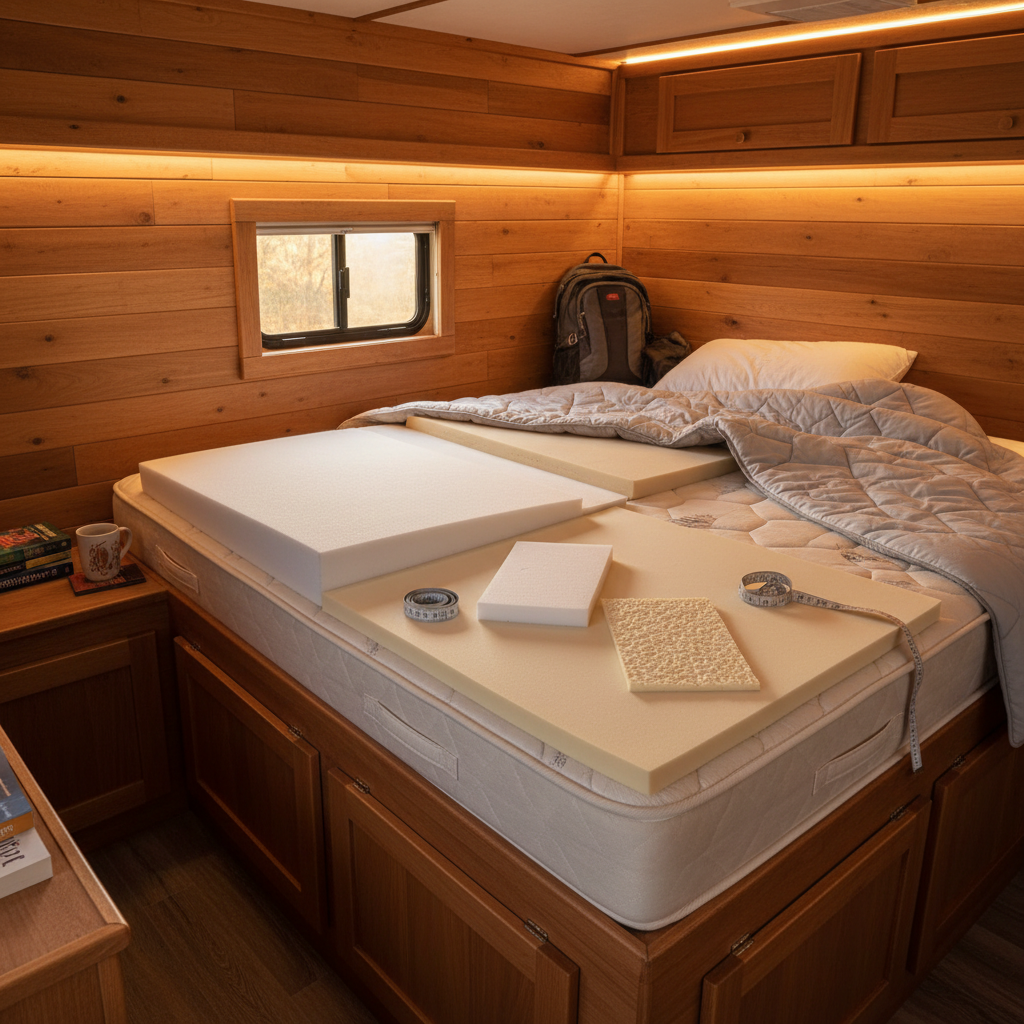
Consider modular foam systems where you can adjust firmness by rearranging layers. These often cost less than custom solutions while providing flexibility to fine-tune comfort as your needs change.
Installation Tips and Bedroom Setup
Getting your new RV mattress installed properly makes a huge difference in comfort and longevity. Start by thoroughly cleaning the bedroom area and checking for any structural issues with the bed platform.
Ensure adequate ventilation around the mattress. If your RV bed sits on a solid platform, consider adding ventilation holes or slats to allow air circulation. This prevents moisture buildup that can damage both the mattress and your RV’s interior.
Measure doorways and hallways before ordering to ensure delivery is possible. Some mattresses can be compressed for shipping, while others may need to be delivered in pieces or through windows if bedroom access is limited.
Plan your bedding accordingly. RV-sized sheets can be harder to find and more expensive than standard sizes. Factor this into your total mattress upgrade budget, along with any needed mattress protectors or foundations.
Maintaining Your RV Mattress on the Road
Proper maintenance extends mattress life and keeps your sleep surface healthy. In the RV environment, this becomes even more important due to space constraints and environmental challenges.
Rotate your mattress regularly, especially if it’s not designed to be flipped. This prevents uneven wear patterns that develop from sleeping in the same position every night. Memory foam mattresses typically shouldn’t be flipped, but latex and spring mattresses often can be.
Keep the bedroom well-ventilated, especially during humid conditions. Use fans to circulate air and consider running a small dehumidifier if moisture becomes a persistent problem. This is particularly important in coastal areas or during rainy seasons.
Address spills and stains immediately. The confined space of an RV means odors and moisture have nowhere to go, so quick action prevents long-term problems. Keep appropriate cleaning supplies on hand, just like you would for your essential RV kitchen tools.
Our Real-World RV Mattress Recommendations
After trying several options over our travels, we’ve landed on some solid recommendations based on different needs and budgets. For most couples, a medium-firm memory foam mattress in the 8-10 inch range provides the best balance of comfort, support, and value.
For hot sleepers or those traveling in warm climates frequently, latex or gel-infused memory foam works better than standard memory foam. The temperature regulation is worth the extra cost, especially during summer travels through places like the Southwest.
Budget-conscious travelers should consider quality mattress toppers as an interim solution. A good 3-4 inch topper can transform a marginal factory mattress into something livable while you save for a full replacement.
Custom options make sense for RVs with unusual bed shapes or very specific comfort needs. The extra cost often pays off in better sleep quality and longer mattress life, especially for full-time RVers.
Making the Investment in Better RV Sleep
Upgrading your RV mattress might seem like a luxury, but it’s really an investment in your health and enjoyment of RV life. Poor sleep affects everything from driving safety to your ability to enjoy destinations and activities.
Consider the cost per night of quality sleep over the life of the mattress. Even a $1,500 custom mattress that lasts five years costs less than a dollar per night for better rest. That’s cheaper than most campground fees and infinitely more valuable than tossing and turning on inadequate foam.
Start by measuring your space and identifying your specific needs – temperature regulation, firmness preferences, and any physical considerations like back pain or joint issues. Then research options within your budget, keeping in mind that this is one upgrade that directly impacts your daily quality of life on the road.
The right mattress transforms your RV bedroom from just a place to crash into a genuine sanctuary where you can recharge for the next day’s adventures. Trust me, your back and your travel partner will thank you for making sleep a priority in your rig upgrades.