Create a Park-Specific Wildlife and Safety Plan Before Arrival
Part 6 of 7 in the National Park Planning Series.
A national park safety plan becomes useful when it names the actual hazard, the current precaution and the source. “Watch for wildlife” is too broad to guide food storage, viewing distance or what to do during an encounter.
Start with current park alerts
Review the official park website for weather, fire, smoke, water, road, trail and wildlife information. Visitor centers and ranger stations can provide current local guidance after arrival. Conditions can change faster than a printed guide.
Pair each hazard with a specific precaution
Write heat beside water, shade, pace and turnaround decisions. Write altitude beside acclimatization, symptoms and a conservative plan. Write storms beside forecast checks, exposure and shelter. For wildlife, record the park’s required viewing distance, food-storage rules and encounter guidance.
Do not transfer rules between parks
Different animals, landscapes and facilities require different responses. Food that is acceptable inside a hard-sided RV at one campground may require a designated locker elsewhere. A wildlife precaution suitable in one region may be irrelevant or prohibited in another.
Prepare for limited communication
Record emergency numbers, ranger or visitor-center locations and the limits of cellular service. Share the trail or day plan with someone appropriate. Save the park map and safety information offline, but understand that a phone does not create service where none exists.
Include the whole group
Make sure everyone understands the essential food-storage, wildlife and trail rules. When children are along, many parks offer Junior Ranger programs or booklets; confirm availability at the visitor center rather than promising a program in advance.
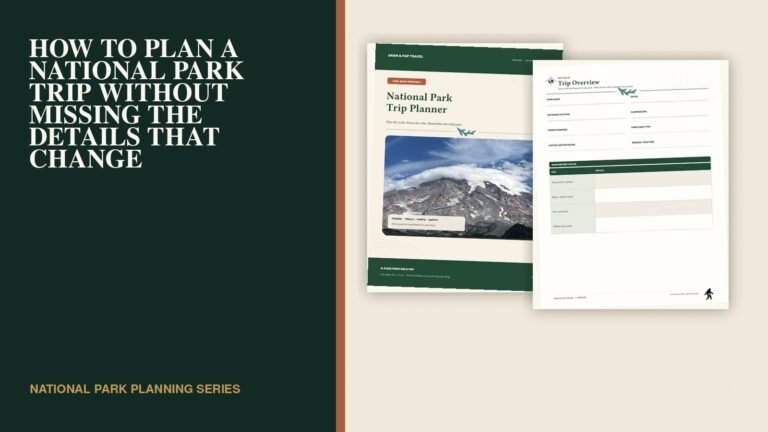
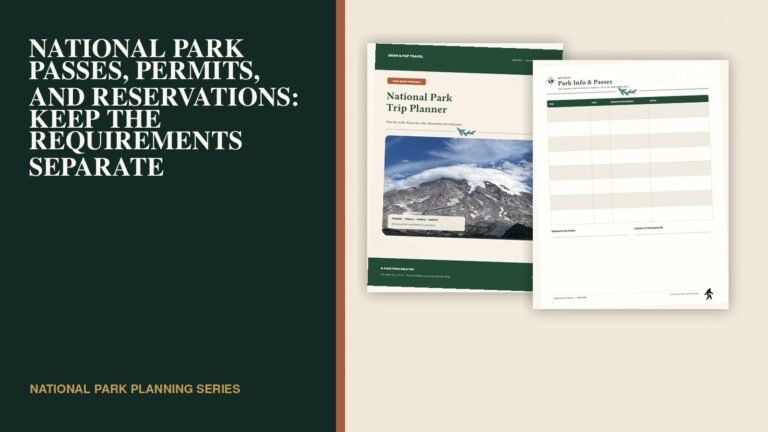
The wildlife and safety page in the Gram & Pap National Park Trip Planner pairs hazards with precautions and leaves room for the local guidance that matters for one park visit.
Use the notes to change the plan
A safety plan is not a form completed for the binder. If the current information changes the route, trail, start time or activity, the plan is doing its job.
Planning note: Park rules, reservations, access, roads, trails, weather, wildlife guidance and campground operations can change. Confirm every time-sensitive detail with the current official National Park Service and reservation sources for the exact park and dates.