Joint-Friendly Activities for Active Senior Campers
Are you ready to embrace the great outdoors without worrying about joint pain or physical strain? Joint-friendly activities for active seniors open up a world of camping adventures that keep you moving while respecting your body’s needs. Whether you’re new to RV life or a seasoned camper looking for gentler ways to stay active, there’s no reason to let age slow down your outdoor dreams.
As we mature, our approach to adventure naturally evolves. Gone are the days when we might have pushed through discomfort for the sake of conquering a challenging trail. Today’s smart travelers know that sustainable, low-impact activities can be just as rewarding – and often more enjoyable – than their high-intensity counterparts.
Why Joint-Friendly Activities Matter for Senior Campers
Your joints have carried you through decades of life’s adventures. Now it’s time to return the favor by choosing activities that support, rather than stress, your body. Joint-friendly camping doesn’t mean giving up excitement or exploration – it means being strategic about how you pursue them.
Low-impact activities offer numerous benefits beyond joint preservation. They often allow for better wildlife observation, deeper connection with nature, and more meaningful conversations with your camping partner. When you’re not focused on physical discomfort, you can fully immerse yourself in the experience.
The beauty of joint-friendly activities lies in their accessibility. These pursuits welcome participants regardless of fitness level or physical limitations, making them perfect for couples where partners might have different abilities or health considerations.
Gentle Hiking: Nature’s Perfect Low-Impact Exercise
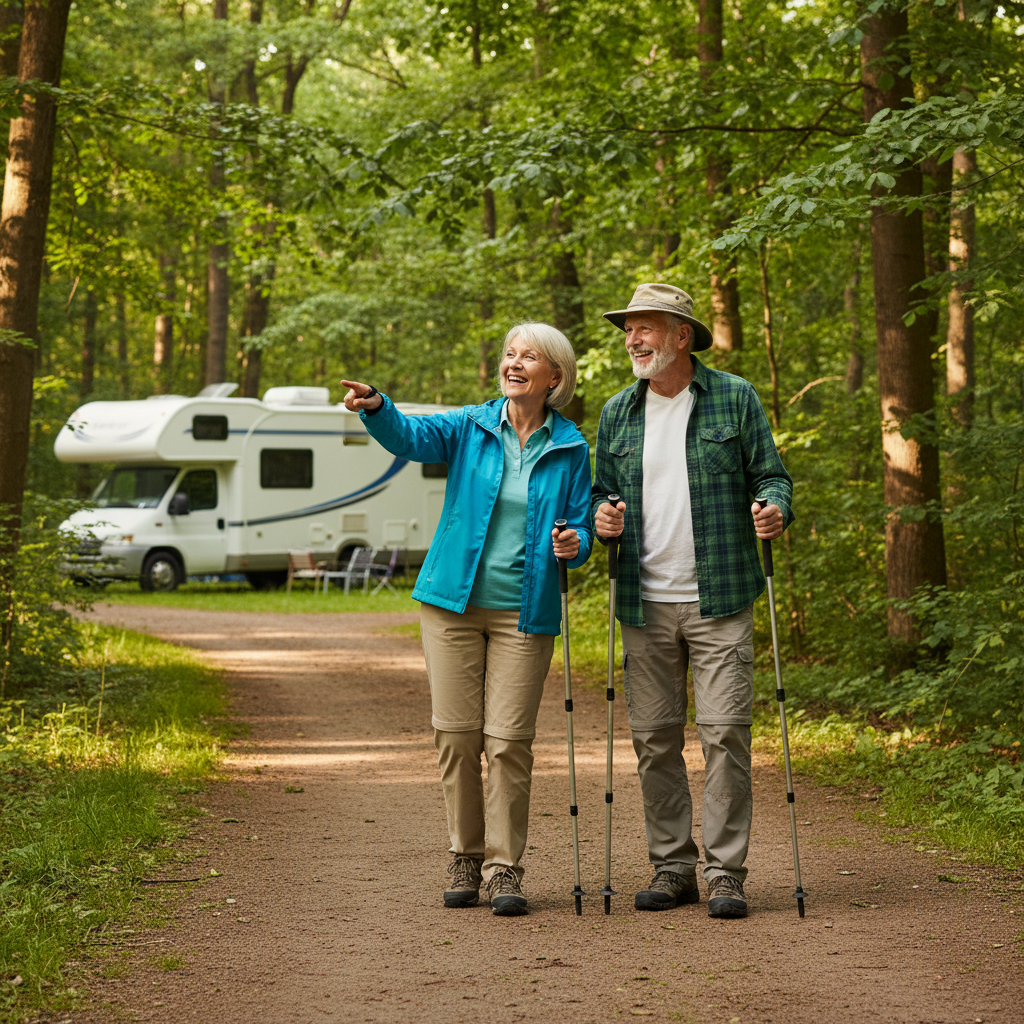
Forget the grueling mountain climbs of your youth. Gentle hiking opens up a treasure trove of natural wonders without the joint-jarring impact. Look for well-maintained trails with minimal elevation gain, soft surfaces like dirt or wood chips, and plenty of rest opportunities.
Nature trails, boardwalks, and converted rail trails offer excellent options for easy exploration. These paths typically feature gentle grades and stable footing, reducing the risk of stumbles or overexertion. Many campgrounds provide detailed trail maps highlighting difficulty levels and surface types.
Consider investing in trekking poles for added stability and reduced joint stress. These lightweight companions can decrease the impact on your knees by up to 25% while improving balance on uneven terrain. They’re especially helpful when exploring new areas where trail conditions might be unfamiliar.
Best Practices for Senior-Friendly Hiking
Start slowly with shorter distances and gradually build your endurance. A 30-minute gentle walk can be just as satisfying as a day-long trek when you’re surrounded by beautiful scenery and good company. Plan rest stops every 15-20 minutes, using these breaks to hydrate, snack, and enjoy your surroundings.
Morning hikes often provide the most comfortable conditions, with cooler temperatures and calmer wildlife activity. Plus, you’ll have the rest of the day to relax at your campsite and prepare a delicious meal in your well-equipped RV kitchen using your essential cooking tools.
Photography Walks: Capturing Beauty at Your Own Pace
Photography walks combine gentle exercise with creative expression, making them ideal joint-friendly activities for couples who love documenting their adventures. This pursuit encourages slow, mindful movement as you search for the perfect shot, naturally incorporating rest periods while you compose and capture images.
The beauty of photography walks lies in their flexibility. You can spend an entire hour in one scenic spot, photographing different angles and lighting conditions, or leisurely stroll through a campground capturing candid moments of fellow travelers enjoying their outdoor experiences.
Consider specializing in different types of photography based on your interests and physical comfort level. Macro photography of flowers and insects requires minimal walking but offers endless creative possibilities. Landscape photography might involve slightly more movement but rewards you with stunning scenic captures.
Equipment Considerations for Senior Photographers
Choose lightweight camera equipment to reduce strain on your neck and shoulders. Many modern cameras offer excellent image quality while weighing significantly less than traditional models. A comfortable camera strap or harness can distribute weight evenly and prevent neck strain during longer photo sessions.
Tripods become increasingly valuable for senior photographers, not just for sharp images but also for reducing the need to hold heavy equipment for extended periods. Look for lightweight, easily adjustable models that provide stability without adding excessive weight to your photo walks.
Water-Based Activities: Gentle Exercise with Scenic Views
Water activities offer some of the most joint-friendly exercise options available to active seniors. The natural buoyancy of water reduces impact on joints while providing gentle resistance for muscle strengthening. Many campgrounds are strategically located near lakes, rivers, or coastal areas specifically to offer these opportunities.
Kayaking and canoeing provide excellent upper body exercise while allowing you to explore waterways at your own pace. Modern rental facilities often stock lightweight, stable boats designed specifically for recreational paddling rather than competitive sport. These vessels prioritize comfort and ease of entry over speed or agility.
For those who prefer staying closer to shore, wading and gentle swimming offer refreshing ways to stay active. Early morning or late afternoon water activities provide comfortable temperatures and stunning lighting for photography enthusiasts who want to combine their interests.
Safety Considerations for Water Activities
Always inform campground staff or fellow campers about your water activity plans and expected return time. Wear appropriate safety equipment, including well-fitted life jackets, regardless of your swimming ability. Many accidents occur not from poor swimming skills but from unexpected situations like equipment failure or sudden weather changes.
Check local water conditions and weather forecasts before heading out. What appears calm and inviting can change quickly, especially on larger bodies of water. When in doubt, stay closer to shore or choose a different activity for that day.
Birdwatching: The Ultimate Patient Pursuit
Birdwatching perfectly embodies the spirit of joint-friendly activities – it’s engaging, educational, and can be enjoyed from a comfortable seated position. This peaceful pursuit encourages quiet observation and can be incredibly rewarding as you learn to identify different species and their behaviors.
Many campgrounds are located in prime birdwatching areas, offering opportunities to spot both resident and migratory species. Early morning and late afternoon provide the most active viewing times, coinciding with comfortable temperatures for outdoor sitting.
Invest in a quality pair of lightweight binoculars and a comfortable portable chair. These tools enhance your viewing experience while ensuring physical comfort during longer observation sessions. Field guides specific to your region help identify species and add an educational element to your hobby.
Creating Birdwatching Stations
Set up comfortable viewing areas near your RV using portable chairs and small tables for field guides and refreshments. Position these stations near natural food and water sources where birds are likely to gather. Many experienced birdwatchers create simple feeding stations using appropriate seed types to attract local species.
Consider joining local birding groups or participating in citizen science projects like eBird or Christmas Bird Counts. These activities add social elements to your hobby while contributing valuable data to scientific research efforts.
Geocaching: Modern Treasure Hunting for All Ages
Geocaching combines gentle exploration with puzzle-solving, making it an engaging activity for couples who enjoy working together toward common goals. This modern treasure hunting game uses GPS coordinates to guide participants to hidden containers called caches.
Most geocaches are designed to be accessible to families, meaning they typically involve minimal hiking on established paths. The focus is on problem-solving and exploration rather than physical endurance. Many caches are located in interesting historical or natural sites, adding educational value to your adventures.
Smartphone apps make geocaching incredibly accessible for beginners. These tools provide maps, difficulty ratings, and user reviews that help you choose appropriate caches for your comfort level and interests. Start with easier caches to build confidence before tackling more challenging finds.
Geocaching Etiquette and Safety
Always follow Leave No Trace principles when geocaching. Replace caches exactly as you found them and avoid creating new paths or disturbing vegetation. Log your finds online to help maintain the community database that makes the hobby possible for everyone.
Choose caches rated for beginners and read recent logs to ensure they’re still accessible and in good condition. Some caches may have been damaged by weather or removed by property owners, making the search frustrating rather than fun.
Campfire Cooking: Social Activity with Practical Benefits
Outdoor cooking brings people together while providing gentle activity that doesn’t strain joints. Unlike the quick meal preparation you might do in your fully equipped RV kitchen, campfire cooking encourages slower, more social meal preparation.
Start with simple recipes that don’t require extensive prep work or standing for long periods. Foil packet meals, dutch oven cooking, and grilled items work well for beginners. These methods often require minimal cleanup while producing delicious results that taste even better when enjoyed outdoors.
Involve your camping partner in meal planning and preparation. This collaborative approach makes cooking more enjoyable while sharing physical tasks. One person can handle ingredient prep while the other manages the fire, creating an efficient and social cooking experience.
Comfortable Cooking Setup
Create a comfortable cooking area using portable tables at appropriate heights to reduce bending and reaching. Good lighting is essential for safe food preparation, especially during evening cooking sessions. Battery-powered lanterns or LED strips provide excellent hands-free illumination.
Keep frequently used items within easy reach to minimize movement during cooking. A well-organized camp kitchen reduces physical stress while improving safety and efficiency. Consider the setup tips you might use when boondocking on a budget to create efficient outdoor cooking spaces.
Stargazing: Peaceful Evening Entertainment
Few activities are more joint-friendly than stargazing, yet this peaceful pursuit offers profound rewards for couples seeking connection with the natural world. Camping locations often provide excellent dark sky viewing opportunities impossible to find in urban areas.
Comfortable seating is key to enjoyable stargazing sessions. Reclining chairs or blankets with good back support allow for extended viewing without neck strain. Consider portable loungers designed specifically for stargazing that provide proper support while positioning you for comfortable sky viewing.
Learn a few basic constellations or download stargazing apps that help identify celestial objects. This knowledge adds depth to your viewing experience and provides conversation topics during quiet evening hours. Many campgrounds offer organized stargazing events with knowledgeable guides.
Enhanced Stargazing Experiences
Time your camping trips to coincide with meteor showers, lunar eclipses, or other celestial events for unforgettable experiences. Astronomy websites and apps provide calendars of upcoming events that can help you plan memorable camping adventures.
Consider investing in a simple telescope or high-quality binoculars designed for astronomy. These tools reveal details invisible to the naked eye while remaining manageable for senior users. Many models are specifically designed for easy setup and use.
Planning Your Joint-Friendly Camping Adventure
Successful joint-friendly camping starts with choosing the right destinations and timing. Research campgrounds that specifically cater to active seniors or offer amenities like paved trails, accessible facilities, and organized activities. Many state and national parks provide detailed accessibility information on their websites.
Consider the seasonal timing of your trips carefully. Spring and fall often provide the most comfortable conditions for outdoor activities, with moderate temperatures and reduced crowds. These seasons also offer unique natural phenomena like wildflower blooms or fall foliage that enhance your outdoor experiences.
If you’re new to RV camping, consider starting with your first RV purchase and planning shorter trips to build confidence and experience. This approach allows you to test different activities and discover your preferences without overcommitting to long adventures.
Essential Preparation Tips
Pack appropriately for your chosen activities, focusing on comfort and safety over performance gear. Quality, supportive footwear is crucial for any walking activities, while layers allow you to adjust to changing conditions throughout the day.
Create a flexible itinerary that allows for rest days and weather contingencies. The best camping trips balance planned activities with spontaneous discoveries, giving you freedom to pursue unexpected opportunities or simply relax when your body needs a break.
Consider connecting with other active senior campers through RV clubs or online communities. These connections can provide valuable activity suggestions, safety tips, and even companionship for solo travelers or couples looking to expand their social circle.
Remember that the goal of joint-friendly activities is to enhance your camping experience while respecting your physical needs. Whether you’re exploring gentle trails, capturing stunning photographs, or simply enjoying peaceful evening stargazing sessions, the key is finding sustainable ways to stay active and engaged with the natural world around you.