RV Dump Station Etiquette: Pro Tips for Proper Waste Handling
Let me tell you about the first time we really screwed up at an RV dump station. Picture this: two newbies, our first month on the road, pulling up to a busy station with a line of seasoned RVers behind us. What should’ve been a 15-minute job turned into a 45-minute disaster involving a kinked hose, a backed-up gray tank, and the kind of colorful language that would make a sailor blush. The looks we got could’ve melted steel.
That embarrassing afternoon taught us everything we know about RV dump station etiquette – the hard way. Now, after three years and hundreds of dump stations later, we’ve got the process down to a science. More importantly, we’ve learned the unspoken rules that separate the pros from the rookies.
Understanding RV Dump Station Basics
Before we dive into the etiquette, let’s cover the fundamentals. An RV dump station is where you empty your black tank (toilet waste) and gray tank (sink and shower water). Most stations have a concrete pad with a drain hole, a fresh water spigot for rinsing, and sometimes a trash bin.
You’ll find these stations at campgrounds, truck stops, some gas stations, and dedicated RV service centers. Some are free (usually for registered guests), while others charge anywhere from $5 to $20. Payment methods vary – cash, credit cards, or those frustrating coin-operated systems that seem designed to eat your quarters.
The basic process involves connecting your sewer hose to your RV’s waste outlet, extending it to the drain, and emptying your tanks in the proper order. Sounds simple, right? Well, that’s where the devil hides in the details.
Essential Gear for Smooth Dump Station Operations
Having the right equipment makes all the difference between a smooth operation and a messy nightmare. Here’s what we never leave home without:
The sewer hose setup: Invest in a quality 20-foot sewer hose with bayonet fittings. We learned this lesson after our cheap hose split at the worst possible moment. Get clear elbow connectors so you can see when your tanks are empty, and always carry extra rubber gloves – the thin disposable ones, not your kitchen gloves.
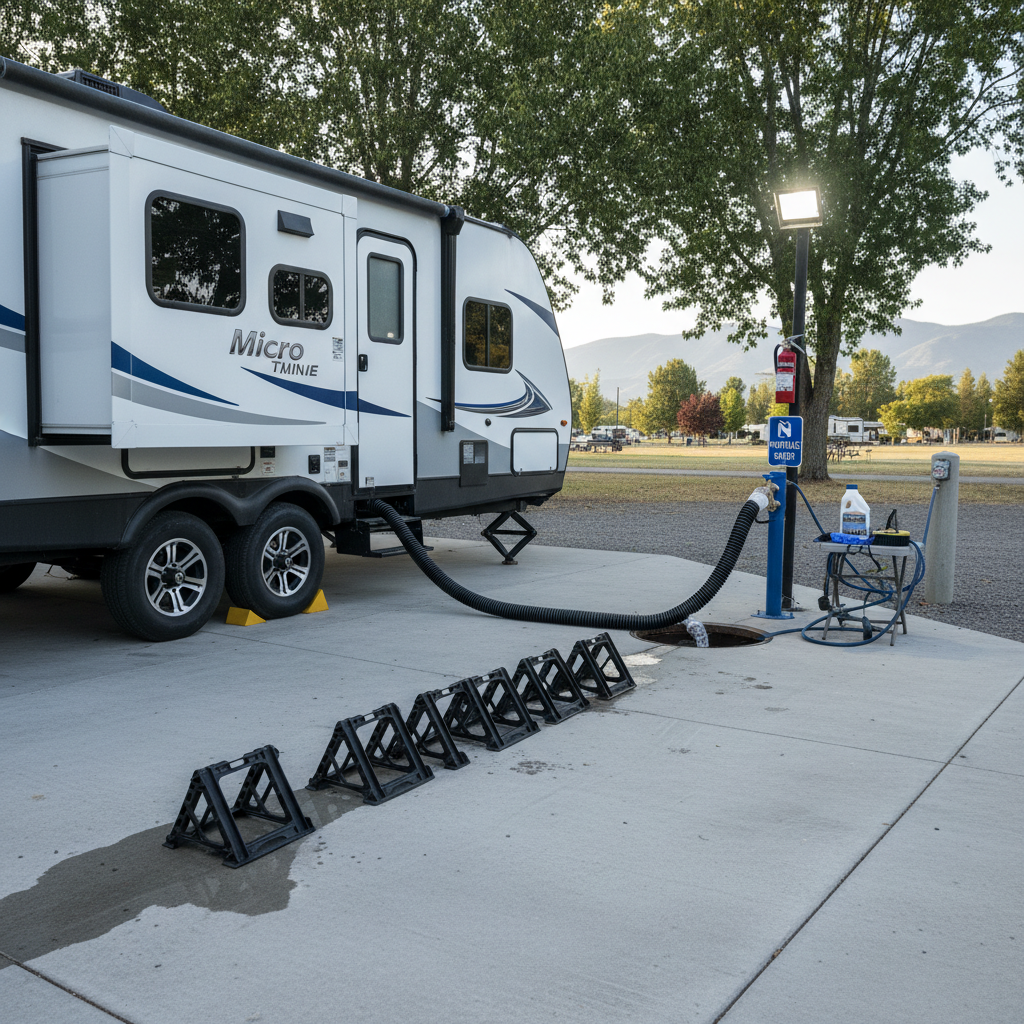
A portable tank support is worth its weight in gold. These little plastic brackets keep your hose elevated and prevent that dreaded “hose sag” that can cause backups. Trust me, you don’t want to learn about hose sag the hard way like we did in Arkansas.
Don’t forget the basics: toilet paper designed for RVs, tank treatments, and a good spray nozzle for the rinse hose. We also carry a small bucket for washing hands and a towel designated specifically for dump station use.
The Unspoken Rules of RV Dump Station Etiquette
Here’s where things get real. These aren’t written down anywhere, but break these rules and you’ll become campfire gossip faster than you can say “black tank backup.”
First rule: Be ready when you arrive. Don’t pull up and then start digging around for your gear. Have everything laid out and ready to go. Other RVers waiting behind you will appreciate the efficiency, especially during busy travel seasons.
Keep your setup contained to your assigned space. I’ve seen people spread their gear all over the station like they’re setting up camp. Your hose, connections, and supplies should stay in your area. It’s just common courtesy.
Always empty your black tank first, then the gray tank. The gray water helps flush out the sewer hose. This isn’t just etiquette – it’s practical. Doing it backward can leave you with a messy cleanup situation.
Never leave your hose connected when you’re not actively using it. If you need to take a break or figure something out, disconnect and move your hose aside. This allows others to use the station if needed.
Payment Systems and Station Types
Understanding different payment systems can save you time and frustration. Free stations at campgrounds are usually reserved for guests, though some allow dump-only visits for a fee. Always check at the office first – showing up unannounced can create awkward situations.
Commercial truck stops often have the most reliable stations, but they’re also the busiest. Pilot, Flying J, and Love’s are our go-to chains. Their stations are well-maintained, and staff can help if you run into trouble. Expect to pay $10-15 at most commercial locations.
Coin-operated stations are becoming less common, but you’ll still encounter them. Always carry quarters – lots of them. These machines are notoriously finicky and rarely make change. We learned to keep a small bag of quarters specifically for dump stations after being stuck at a station in Utah with a machine that only accepted exact change.
Some newer stations use apps or credit card readers. Download apps like GasBuddy or Pilot Flying J ahead of time if you prefer cashless transactions. It’s much easier than fumbling with your phone while wearing rubber gloves.
Proper Hose Handling and Waste Management
This is where proper technique separates the amateurs from the pros. Your sewer hose is your lifeline, so treat it with respect.
Always inspect your hose before connecting. Look for cracks, soft spots, or worn areas. A hose failure during dumping is nobody’s idea of a good time. We carry a backup hose after learning this lesson in Colorado when our main hose split during a busy weekend rush.
Create a slight downward slope from your RV to the drain. Water flows downhill – physics hasn’t changed since we started RVing. Use your hose supports to maintain this slope throughout the length of your hose.
Open your black tank valve slowly and be ready for the rush. Black tanks can create significant pressure, especially when full. I’ve seen inexperienced RVers get caught off guard by the force, leading to messy situations.
After emptying, rinse your hose thoroughly. Use the station’s rinse water to flush clean water through the entire length. This prevents odors and keeps your hose in good condition. Some stations have dedicated hose rinse areas – use them if available.
Avoiding Common Mistakes and Problems
Let’s talk about the mistakes that’ll get you talked about around campfires – and not in a good way.
The biggest rookie mistake: Not bringing gloves or the right tools. I watched a couple at a station in Arizona try to connect their hose bare-handed because they forgot gloves. Don’t be that couple. Always pack disposable gloves, even if you think you won’t need them.
Overfilling your tanks is another common problem. Know your tank capacities and monitor your levels. An overfull black tank can create pressure issues and potentially damage your tank sensors. Most RVers learn this the hard way – we certainly did during our first month on the road.
Don’t rush the process. Taking shortcuts leads to mistakes, and mistakes at a dump station are particularly unpleasant. Plan for 20-30 minutes at the station, including setup, dumping, and cleanup time.
Weather awareness is crucial. Dumping in high winds can turn a routine task into a nightmare. We’ve learned to check weather conditions and sometimes delay dumping if conditions aren’t favorable. It’s better to wait than deal with wind-blown spray.
Station Maintenance and Cleanup
Here’s something that separates good RVers from great ones: leaving the station better than you found it.
Always rinse the dump area after use. Even if it looks clean, give it a quick rinse. This courtesy helps prevent odors and keeps the station pleasant for the next user. Use the station’s rinse hose – never your fresh water hose.
Pick up any trash or debris around your area. Even if it wasn’t yours, taking a moment to clean up helps maintain these facilities for everyone. We’ve seen too many stations closed due to poor maintenance and misuse.
Report any problems to station management. Broken equipment, clogged drains, or maintenance issues should be reported immediately. These facilities require regular upkeep, and your feedback helps ensure they remain operational.
Store your equipment properly after use. A clean, well-maintained setup shows respect for your gear and consideration for your travel companions. Plus, proper storage extends the life of your expensive sewer hose and connections.
Pro Tips from Seasoned RVers
After years on the road and countless conversations around campfires, here are the insider tips that can make you look like a pro:
Time your dump station visits strategically. Early morning or late afternoon are typically less busy than mid-day. Avoid Sunday afternoons during peak season – that’s when everyone’s preparing to head home.
Keep a dedicated dump station kit. Store all your dumping supplies in one container: hoses, gloves, supports, and cleaning supplies. This organization speeds up your setup and ensures you never forget essential items.
Learn to read your tank monitors, but don’t rely on them completely. Many RV tank sensors are notoriously inaccurate. Develop a sense of timing based on your usage patterns. After a while, you’ll know when tanks need emptying without checking gauges.
Consider your dumping schedule as part of your travel planning. Route your trips to include convenient dump stations, especially if you’re boondocking for extended periods.
Troubleshooting Common Issues
Even with perfect technique, problems can arise. Here’s how to handle the most common issues like a seasoned pro.
If your black tank won’t empty completely, don’t panic. This usually indicates a clog or insufficient water in the tank. Try adding water through your toilet and letting it sit for 30 minutes before trying again. Tank treatments can help break down solid waste causing blockages.
Hose connection problems are common, especially with older RVs. If your bayonet connection won’t seal properly, check for damage or debris. Carry spare gaskets – these small rubber seals are critical for proper connections and cost just pennies to replace.
Station drain clogs occasionally happen, usually from inappropriate items being dumped. If you encounter a clogged drain, don’t try to fix it yourself. Report it to station management immediately and find an alternative station if possible.
Equipment failures happen at the worst times. Always carry backup supplies: an extra hose section, spare connectors, and additional gloves. These items take up minimal storage space but can save your day when primary equipment fails.
Building Good Relationships on the Road
The RV community is remarkably supportive, and dump stations are often where you’ll meet fellow travelers. A friendly attitude and willingness to help can create lasting friendships.
Don’t hesitate to ask for help if you’re struggling. Most experienced RVers remember their own rookie mistakes and are happy to share knowledge. We’ve received incredible help from strangers who noticed us struggling with equipment or procedures.
Similarly, offer assistance to newcomers when appropriate. A simple offer to help or share knowledge can make someone’s day and strengthen the RV community. We’ve made several lifelong friends by helping fellow travelers navigate their first dump station experiences.
Share information about station conditions and locations. If you find a particularly good or problematic station, mention it in RV forums or apps. This community knowledge helps everyone travel more effectively.
Conclusion: Mastering RV Dump Station Etiquette
Proper RV dump station etiquette isn’t just about following rules – it’s about respecting shared facilities, fellow travelers, and the environment that makes our lifestyle possible. The techniques and courtesy practices we’ve covered will help you handle any dump station with confidence and consideration.
Remember, everyone was a beginner once. Those embarrassing first experiences teach valuable lessons that make us better RVers. Take time to prepare, invest in quality equipment, and always leave stations better than you found them.
Whether you’re planning your first RV purchase or you’re already living the dream on the road, mastering dump station procedures is an essential skill. Like learning to back up your rig or troubleshoot your solar setup, it’s just another part of the RV lifestyle that becomes second nature with practice.
The next time you’re at a dump station, take a moment to appreciate the infrastructure that makes our mobile lifestyle possible. Then dump your tanks like a pro, clean up thoroughly, and maybe help out a rookie who’s struggling with their first attempt. That’s what the RV community is all about.