
RV Packing Checklist vs. Pre-Departure Checklist: Why You Need Both
An RV packing checklist and an RV pre-departure checklist may look like the same thing until you use them. Then the difference becomes clear.
Packing is about what comes with you. Departure is about whether the RV, tow vehicle and campsite are ready to move. Combining both jobs into one giant list makes it longer, harder to scan and easier to ignore.
What belongs on an RV packing checklist?
A packing list covers the gear and supplies needed for the people, pets and plans on this particular trip. Useful categories include:
- Kitchen and galley supplies
- Exterior setup gear
- Tools and simple repair items
- Clothing, toiletries and medications
- Safety equipment and documents
- Pet supplies
- Last-minute items from the house
The last-minute category deserves special attention. Phones, prescriptions, refrigerated food, wallets and keys often cannot be packed the night before. Give them a visible place instead of trusting departure-morning memory.
What belongs on a pre-departure checklist?
A departure checklist is a sequence of conditions that must be confirmed before the rig moves. It covers the inside, outside, hitch and tow connection, tires and mechanical checks.
Depending on your RV, that can include latched cabinets, secured refrigerator, closed windows and vents, retracted slides, disconnected utilities, stowed hoses, raised stabilizers, retracted steps and awning, a locked hitch, attached safety equipment, checked tires and working lights.
Use your RV and tow-vehicle manuals to build the correct list for your equipment. A generic checklist is a starting point, not permission to ignore the manufacturer.
Why the two lists should stay separate
Packing happens over hours or days. Departure checks happen in a short, focused window. Packing may involve both the house and RV. Departure should follow a repeatable path around the actual rig.
The consequences are different too. Forgetting coffee is irritating. Forgetting an awning, stabilizer or unsecured compartment can damage equipment or create a road hazard.
Separate lists let you mark packing items as they enter the RV while preserving a clean departure sequence for the moment it matters.
Create a rig-specific section
No universal list knows your exact floor plan or modifications. Add a short section for equipment unique to your setup: a removable television mount, portable solar panel, rear observation camera, generator tray, pet gate or anything else that needs attention before movement.
Keep that section short. If it grows too long, arrange it by location so the check follows your movement through and around the RV.
Finish with one uninterrupted walk-around
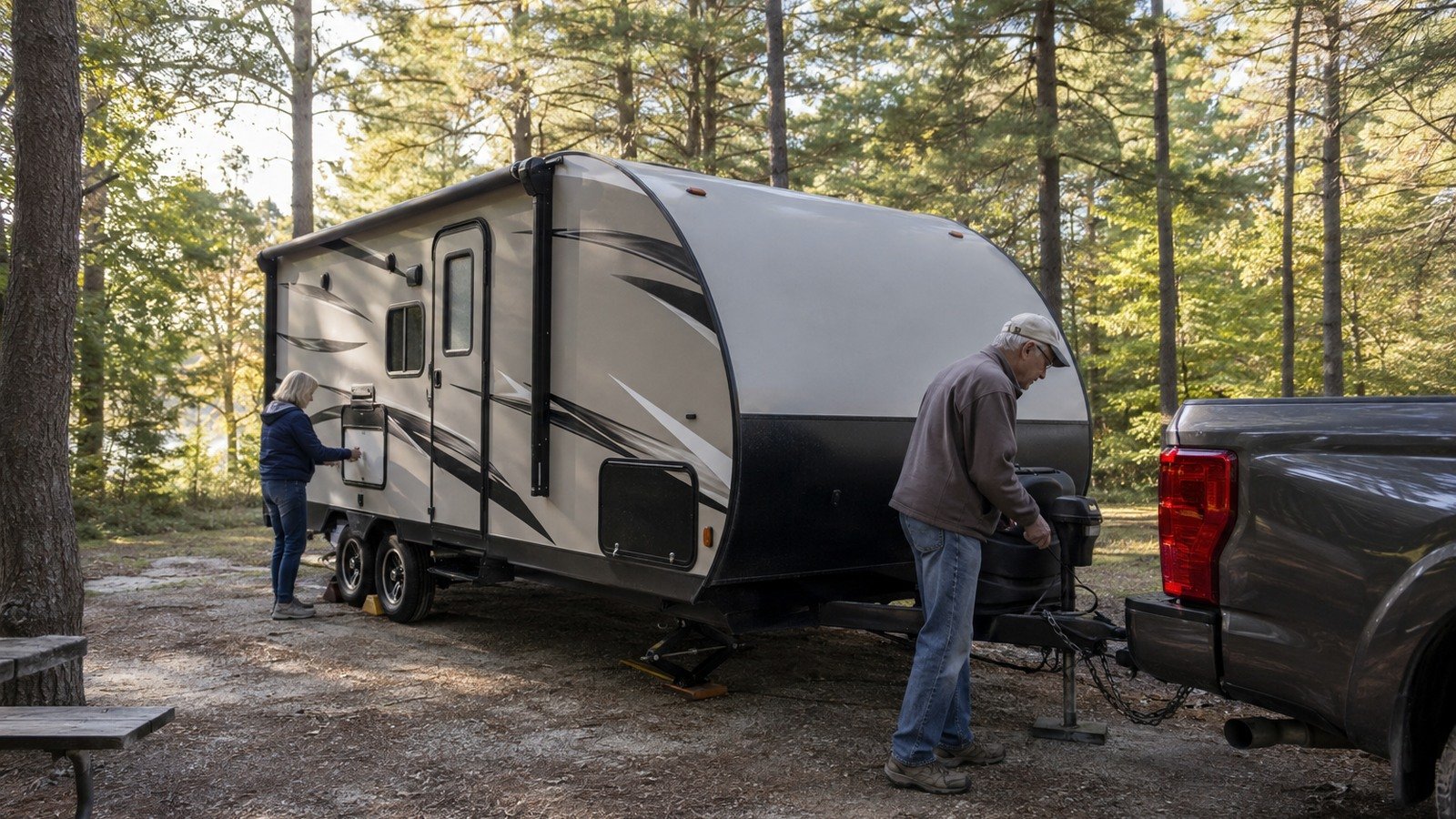
After the individual jobs are complete, one person should perform the final walk-around without carrying gear or answering unrelated questions. Start at the hitch, walk a full circle, look high, look low and look underneath.
Confirm the connection, lights, tires, steps, awning, stabilizers, utilities, doors, compartments and campsite. Then look for anything left beside or under the rig—especially wheel chocks and leveling blocks, which are easier to find before the tires do.
Keep both pages where the work happens
The Gram & Pap RV Trip Planner includes separate Packing and Pre-Departure pages because they solve different problems. The packing page groups supplies by purpose; the departure page follows the inside, outside, hitch and mechanical checks, with room for rig-specific items.
Print them for the trip, make notes as your setup changes and keep the departure page accessible until the final check is finished.
A checklist is a habit written down
Experience does not make a checklist unnecessary. Experience is how a useful checklist gets built. Every forgotten item, awkward fuel stop and shortened leveling block can improve the next version.
The goal is not to remove every surprise from camping. It is to save the surprises for the places you visit instead of the equipment you forgot to secure.