
RV Black Tank Sensors: Why They Lie (And Real Solutions)
Picture this: You’re three days into what should be a relaxing week at your favorite campground, and your black tank sensors are screaming “FULL!” Meanwhile, you’ve barely used the toilet twice. Sound familiar? Welcome to one of RV life’s most frustrating mysteries – sensors that lie more than a politician during election season.
We learned this lesson the messy way during our second month on the road. After a panic-inducing dash to find a dump station (because who wants to deal with an overflow?), we discovered our “full” tank was maybe 20% capacity. That’s when we realized these little electronic fibbers needed some serious attention.
Here’s the truth: black tank sensors are about as reliable as weather forecasts, and for good reason. But before you start cursing the RV gods, let’s dive into why they’re such notorious liars and what you can actually do about it.
Why Black Tank Sensors Give False Readings
Those sensors aren’t trying to ruin your vacation – they’re just fighting a losing battle against physics and, well, poop. Most RVs use simple probe-style sensors that stick into your tank at different levels. When waste touches the probe, it completes an electrical circuit and lights up your panel.
Sounds straightforward, right? Here’s where it gets messy.
The biggest culprit is buildup. Toilet paper, waste, and cleaning chemicals create a coating on the sensors that never fully washes away. Think of it like trying to gauge your coffee level when the mug has dried cream stuck to the sides – those sensors can’t tell the difference between fresh waste and yesterday’s residue.
Temperature changes also mess with the readings. Hot summer days expand materials, while cold nights contract them. Your sensors might read differently at 7 AM versus 2 PM, even with identical tank levels.
Hard water compounds the problem. Mineral deposits build up faster than you’d expect, especially if you’re moving between different water sources regularly. Those minerals create false contact points that make your sensors think the tank is fuller than reality.
Simple Cleaning Tricks That Actually Work
Now for the good news – you don’t need to become a plumbing expert or spend hundreds on professional cleaning. We’ve tried most of these methods during our travels, and some work better than others.
The ice cube method sounds crazy but works surprisingly well. Fill your black tank sensors about 1/3 full with water, add 5-10 pounds of ice, then drive around for 20-30 minutes on bumpy roads. The ice chunks scrub the sensors while the movement creates a natural washing action. Dump everything afterward and see if your readings improve.
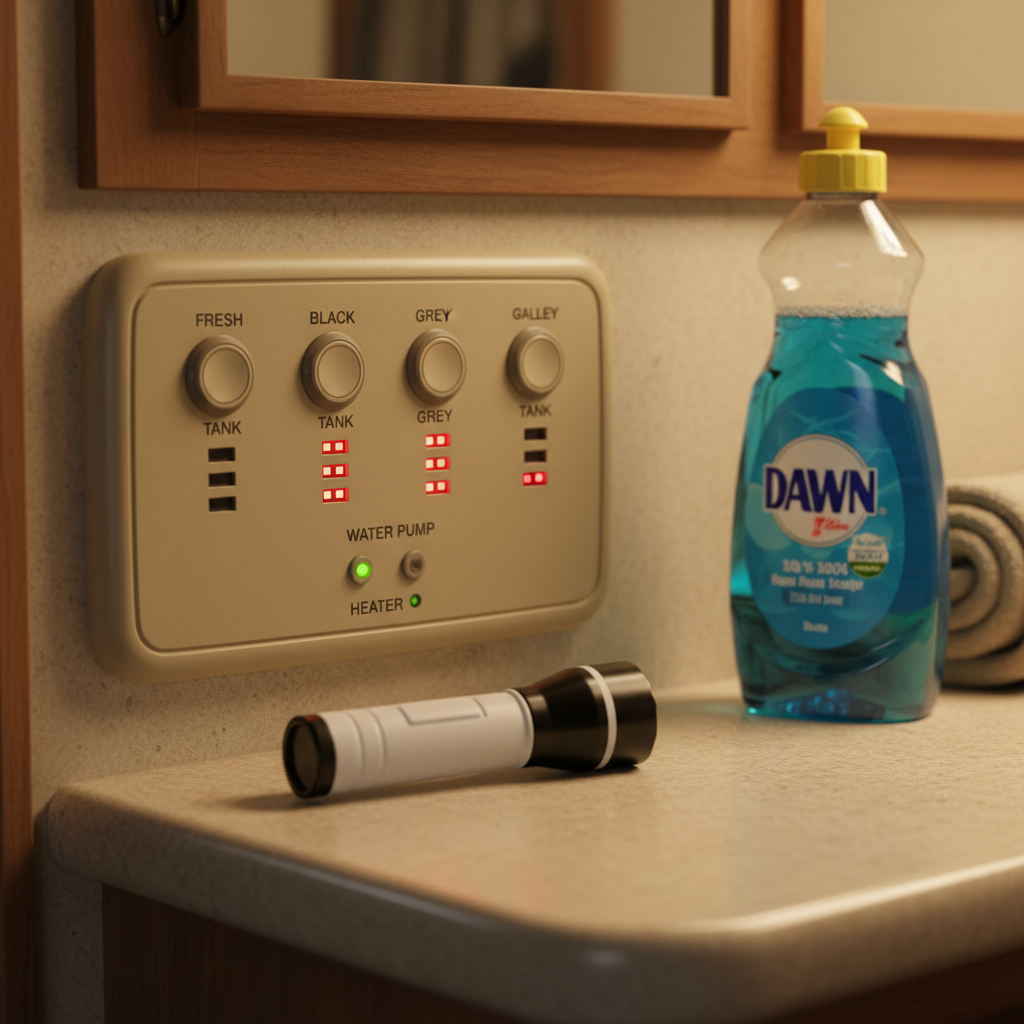
For stubborn buildup, try the Dawn dish soap flush. Add 1/4 cup of Dawn to your tank with hot water, let it sit overnight, then dump and rinse. The degreasing action helps break down waste residue that regular tank chemicals miss.
Here’s a trick we picked up from a full-timer in Arizona: the Calgon treatment. Yes, the laundry water softener. Add two cups to a half-full tank, drive around for a few hours, then let it sit overnight. The phosphates dissolve mineral buildup better than most RV-specific products.
Avoid the temptation to use harsh chemicals or bleach. We made that mistake early on and damaged our tank sensors permanently. Stick to gentler methods that work with your system, not against it.
Backup Methods to Know Your Real Tank Levels
Since sensors are unreliable, smart RVers develop alternative ways to monitor their tanks. These backup methods have saved us from both premature dumps and actual overflow situations.
The most reliable method? Keep a simple log. Note every time someone uses the toilet and for how long. After a few months, you’ll develop an intuitive sense of your tank’s capacity based on usage patterns.
Visual inspection works if you can access your tank’s exterior. Many RVs have translucent or semi-transparent tank materials. A flashlight at night shows liquid levels pretty accurately – just don’t shine it during dinner conversations with neighbors.
Weight distribution tells a story too. A full black tank significantly changes your RV’s handling and tire pressure. If you notice the rear end sitting lower or different road feel, it might be time to dump regardless of what the sensors say.
The “sniff test” isn’t pleasant, but it works. A truly full tank creates noticeable odors even with proper ventilation. If you’re smelling sewer gases inside your RV, don’t wait for sensor confirmation.
Some experienced RVers swear by the “toilet flush test.” When your tank gets close to full, toilet flushes become sluggish or water backs up slightly. This physical feedback is more reliable than electronic sensors.
Long-Term Solutions for Sensor Problems
While cleaning helps, some sensor issues require more permanent solutions. We’ve seen RVers go years with completely non-functional sensors, and they do just fine with alternative monitoring methods.
Tank sensor replacement is possible but expensive. Most RV service centers charge $300-600 for the job, depending on tank accessibility. Before committing, consider whether you actually need sensors or if visual/usage monitoring works better for your travel style.
Aftermarket sensor upgrades offer better reliability than original equipment. Systems like TankTechRx use different technology that’s less prone to buildup issues. However, they require professional installation and cost significantly more than cleaning existing sensors.
For the technically inclined, external monitoring systems attach to tank exteriors and measure liquid levels ultrasonically. These avoid internal buildup entirely but may not work with all tank shapes or materials.
Here’s something we learned from other RVers: some folks simply disconnect their sensors entirely. They rely on usage tracking and physical signs instead of fighting constantly with false readings. It’s not for everyone, but it eliminates sensor frustration completely.
Consider your dumping schedule too. If you’re dumping every 3-4 days regardless of sensor readings, accurate levels matter less than if you’re trying to maximize capacity for extended boondocking.
Preventive Maintenance That Matters
The best sensor problems are the ones that never happen. Simple maintenance habits prevent most buildup issues and extend sensor life significantly.
Use plenty of water with every flush. Adequate water dilutes waste and reduces sensor coating. We aim for at least 1/3 bowl of water per flush, even when conserving water for boondocking adventures.
Regular tank treatments help, but not the way most people think. Rather than relying on chemicals to clean sensors, use them to break down waste more completely. Less solid buildup means less sensor interference.
Monthly preventive cleaning works better than waiting for problems. A simple Dawn flush or ice treatment once a month prevents major buildup from forming. It’s easier than dealing with completely non-functional sensors later.
Monitor your water sources too. If you notice sensor problems starting after visiting areas with particularly hard water, flush your system more frequently. Some campgrounds have mineral content that accelerates sensor coating.
Paper choice matters more than you’d think. Single-ply toilet paper designed for RVs breaks down faster and creates less sensor buildup. We switched after experiencing problems with regular household paper.
When to Trust Your Sensors (Spoiler: Rarely)
Even with perfect maintenance, treat sensor readings as rough estimates rather than gospel truth. We’ve learned to interpret the signals rather than believing them literally.
Empty readings are usually accurate. When sensors show empty after dumping and flushing, they’re probably right. It’s the middle and full readings that cause problems.
Consistent patterns matter more than individual readings. If sensors typically read 1/3 full when you know the tank is empty, that becomes your new baseline. Look for changes in the pattern rather than trusting absolute readings.
Fresh readings after cleaning are most reliable. For about a week after thorough sensor cleaning, readings tend to be more accurate. Use this window to calibrate your alternative monitoring methods.
Multiple indicators trump single sensors. If your sensor says full but visual inspection shows low levels and handling feels normal, trust the physical evidence. Sensors lie; physics doesn’t.
Final Thoughts on Living with Lying Sensors
After three years of full-time RV life, we’ve made peace with unreliable black tank sensors. They’re a helpful tool when working properly, but they’re not essential for successful RV living.
Develop multiple monitoring methods and don’t rely solely on electronics. Usage logs, visual inspection, and physical signs provide more reliable information than most sensor systems.
Remember that sensor problems are inconvenient, not catastrophic. Unlike the awning disasters we’ve experienced, sensor issues won’t leave you stranded or cost thousands to fix.
Focus on prevention and have backup plans. Regular maintenance, proper usage habits, and alternative monitoring methods eliminate most sensor-related stress from RV life.
The bottom line? Those black tank sensors will probably lie to you, and that’s okay. With the right knowledge and backup methods, you can manage your tanks effectively regardless of what those little liars on your panel claim. Trust your experience, maintain your system, and don’t let unreliable sensors ruin your adventures on the road.