Boondocking Water Conservation: 7 Days on 40 Gallons
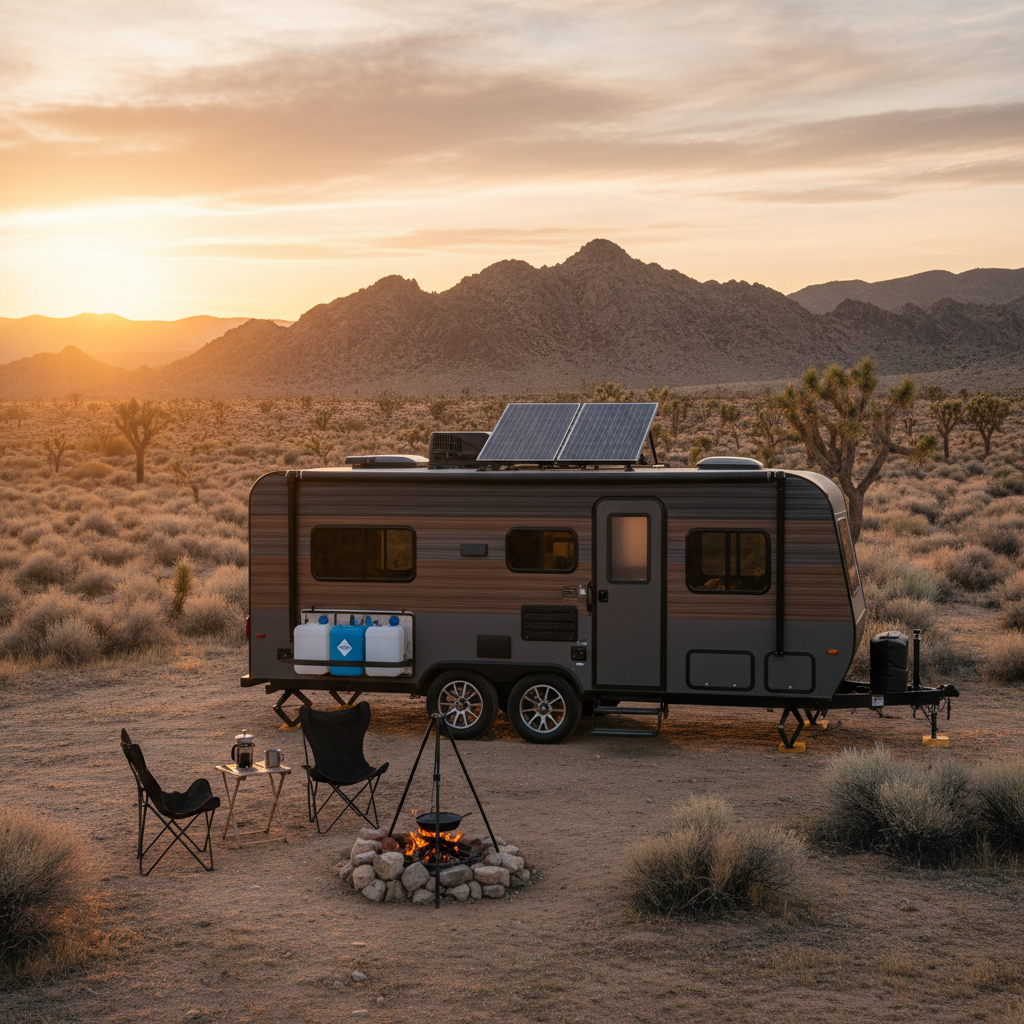
Last month, we parked our rig in the middle of nowhere Utah for seven straight days with nothing but our 40-gallon fresh water tank and a whole lot of determination. Spoiler alert: we didn’t smell like a campfire by day three, and we didn’t have to ration water like we were crossing the Sahara. Boondocking water conservation doesn’t have to mean living like a monk – it just means being smart about every drop.
After picking up tricks from full-timers we’ve met along the way (and learning a few lessons the hard way ourselves), we’ve cracked the code on stretching that precious H2O for extended dry camping. Here’s how we did it, complete with the mistakes we made so you don’t have to.
Why Water Conservation Matters for Boondocking
Look, I used to be that guy who’d take 20-minute showers at home without thinking twice. But when you’re sitting on 40 gallons and the nearest water fill is 50 miles away, every gallon becomes precious real estate.
Most RVs come with tanks ranging from 20 to 100 gallons, but the sweet spot for many rigs is around 40 gallons. That sounds like a lot until you realize a typical home shower uses 17 gallons, and suddenly you’re doing math in your head every time you turn on a faucet.
The beauty of mastering boondocking water conservation isn’t just about survival – it’s about freedom. When you can stretch your resources, you can stay longer in those incredible spots that don’t have hookups. Places like that rim camping near the Grand Canyon or that perfect lakeside spot we found during our Rail-and-Road Reset adventure.
Start With Your Mindset: Every Drop Counts
Before we dive into the tactical stuff, let’s talk mindset. This isn’t about suffering – it’s about being intentional. Think of it like camping in the old days, except with better coffee and a comfortable bed.
The first thing we learned? Track your usage for a couple days before you even attempt a week-long boondocking session. We were shocked to discover we were burning through 8-10 gallons a day just on autopilot habits. Once we started paying attention, we cut that to 5-6 gallons without feeling deprived.
Also, invest in a tank monitoring system if your rig doesn’t have one. Those analog gauges are about as accurate as a weatherman in tornado season. We learned this during one of our early awning mishaps when we thought we had plenty of water and suddenly didn’t.
The Big Three: Dishes, Showers, and Drinking Water
These three categories account for about 80% of your water usage, so this is where you’ll get the biggest bang for your conservation buck.
Dishes: The Paper Plate Debate
Here’s where people get religious about their approach. Some folks swear by paper plates for boondocking, but honestly? That feels like giving up on one of the best parts of RV life – cooking real meals in your own space.
Instead, we use the “minimal water wash” method. Fill a small basin with hot soapy water (maybe a quart), wash everything in there, then rinse with a gentle stream from a spray bottle. This whole process uses about a gallon versus the 3-4 gallons you’d burn with the faucet running.
Pro tip: If you’re serious about boondocking, grab one of those collapsible dish drying racks. They’re game-changers for small spaces and help you stay organized during the washing process.
The tools you use matter too. Having the right RV kitchen essentials means fewer dishes to wash in the first place. One-pot meals become your friend real quick.
Showers: The 2-Minute Military Style
This is where we had to swallow our pride and admit we’d been wasteful for years. A normal RV shower uses 6-8 gallons. A conservation shower? Less than 2 gallons, and you’ll still come out clean.
Here’s the drill: Wet down for 30 seconds, turn off the water, soap up everything, then rinse for 90 seconds max. Use a low-flow showerhead if you don’t already have one – it’s amazing how much water you can save with better equipment.
For hair washing, we’ve learned to embrace the every-other-day approach. Dry shampoo becomes your best friend, and honestly, after a few weeks on the road, you realize how much time you were wasting on daily hair washing at home.
Drinking Water Strategy
Don’t overthink this one. We carry a couple of gallon jugs of drinking water separate from our tank water, especially in areas where the local water tastes like it came from a swimming pool. This protects your good drinking water while letting you use tank water for everything else.
If you’re worried about water quality from campground fills, a good RV water filter is worth its weight in gold. We’ve used ours in some questionable places and always felt confident about our water quality.
The Small Changes That Add Up Big
It’s the little things that’ll surprise you with how much water they save.
Bathroom Habits
This might get a little personal, but we’re all adults here. The “if it’s yellow, let it mellow” rule applies when boondocking. You’re not being gross – you’re being practical.
For hand washing, use hand sanitizer most of the time and save actual washing for when your hands are visibly dirty or before meals. A small squirt of sanitizer uses zero water and gets the job done.
Teeth brushing? Use a cup of water instead of running the tap. This saves about a gallon per day for two people. Small change, big impact over a week.
Cooking Water Wisdom
Steam vegetables instead of boiling them in a pot of water. Use that pasta water for washing dishes afterward (the starch actually helps break down grease). Cook with lids on pots to reduce evaporation and cooking time.
One trick we picked up from a full-timer couple in Arizona: keep a “gray water” pitcher. Catch the water you run while waiting for it to heat up, and use that for initial dish rinsing or cleaning.
Gray Water Management: The Other Half of the Equation
Conserving fresh water is only half the battle. If your gray tank fills up before your fresh tank empties, you’re stuck either way. Most rigs have gray tanks that are roughly the same size as fresh tanks, so the math works out if you’re not wasteful.
Here’s what we learned about managing gray water during our week-long stretch:
Use biodegradable soap for everything – dishes, showers, hand washing. This way, if you need to dump gray water on the ground in an emergency (only where legal and appropriate), you’re not poisoning the local environment.
Strain your dishwater before it goes down the drain. Food particles clog up tanks and create smells you don’t want in your rig. We use a small mesh strainer that cost five bucks and has saved us from multiple gray tank disasters.
Consider a gray water tank treatment. These products help break down soap scum and prevent odors, which becomes more important when you’re trying to stretch that tank capacity.
Emergency Water Sources and Backup Plans
Even with perfect conservation, stuff happens. We’ve been in situations where unexpected circumstances meant we needed more water than planned.
Always know where your nearest water source is, even if it’s 30 miles away. We use apps and resources for trip planning that help identify water fills, dump stations, and emergency services along our route.
Carry extra water containers – not necessarily full, but available. We keep two 5-gallon jugs that we can fill if we need to extend our stay or if we find ourselves using more water than expected.
Some boondockers swear by atmospheric water generators or advanced filtration systems, but honestly, for most of us, smart conservation and good planning beats expensive gadgets every time.
What We Got Wrong (So You Don’t Have To)
Let’s be real – we’ve made every mistake in the book when it comes to boondocking water conservation.
Mistake number one: Not accounting for laundry. Hand washing a few essential items uses more water than you’d think. Now we plan laundry runs into town or save up for campgrounds with facilities.
Mistake number two: Forgetting about cleaning water. Wiping down surfaces, cleaning windows, basic housekeeping – it all adds up. Keep a spray bottle with a water-vinegar solution for most cleaning tasks.
Mistake number three: Not having a backup plan for hot water. If your hot water heater is acting up and you’re trying to heat water on the stove, you’ll use way more water than normal. Learn your backup systems before you need them.
The Real Test: Our 7-Day Utah Adventure
So how did we actually do on our week-long boondocking experiment? We started with 40 gallons and finished with about 3 gallons left in the tank. More importantly, we felt comfortable the whole time.
Daily breakdown looked something like this:
• Cooking and cleanup: 1.5 gallons
• Two quick showers: 3 gallons
• Drinking and coffee: 1 gallon
• Miscellaneous (hand washing, teeth brushing, etc.): 0.5 gallons
Total daily usage: about 6 gallons, which gave us a comfortable buffer for unexpected needs.
The key was consistency. Once we established our routine, it became second nature. By day three, we weren’t even thinking about water conservation – we were just living efficiently.
Is Extended Boondocking Right for You?
Look, extended dry camping isn’t for everyone, and that’s okay. Some folks prefer the convenience of hookups, and there’s nothing wrong with that approach to RV life.
But if you’re curious about those amazing boondocking spots and want the freedom to stay longer in beautiful places, mastering water conservation opens up a whole new world of possibilities.
Start small – maybe try a long weekend with just your fresh water tank before committing to a full week. Build up your skills and confidence gradually.
The payoff is worth it. Some of our best memories from the road have come from those quiet spots where the only sounds are wind and wildlife, places you can only reach by being self-sufficient with your water and power.
Your Next Steps
Ready to give boondocking water conservation a try? Start by tracking your current usage for a few days. You’ll be surprised how much water you use without thinking about it.
Next, practice the techniques we’ve covered during a regular campground stay. Get comfortable with short showers, efficient dishwashing, and conservative habits before you’re depending on them.
Finally, plan your first extended boondocking trip with a backup plan. Know where you can get water if needed, and don’t push your limits on the first try.
The freedom of being able to park anywhere for a week with just what you brought along? It’s a game-changer. And once you’ve got the water conservation piece figured out, you’ll wonder why it took you so long to try extended boondocking.
Trust me – that first sunrise from a spot with no neighbors for miles, knowing you’ve got everything you need right there in your rig? That’s what this whole lifestyle is about.