RV Pantry Staples
RV Pantry Staples
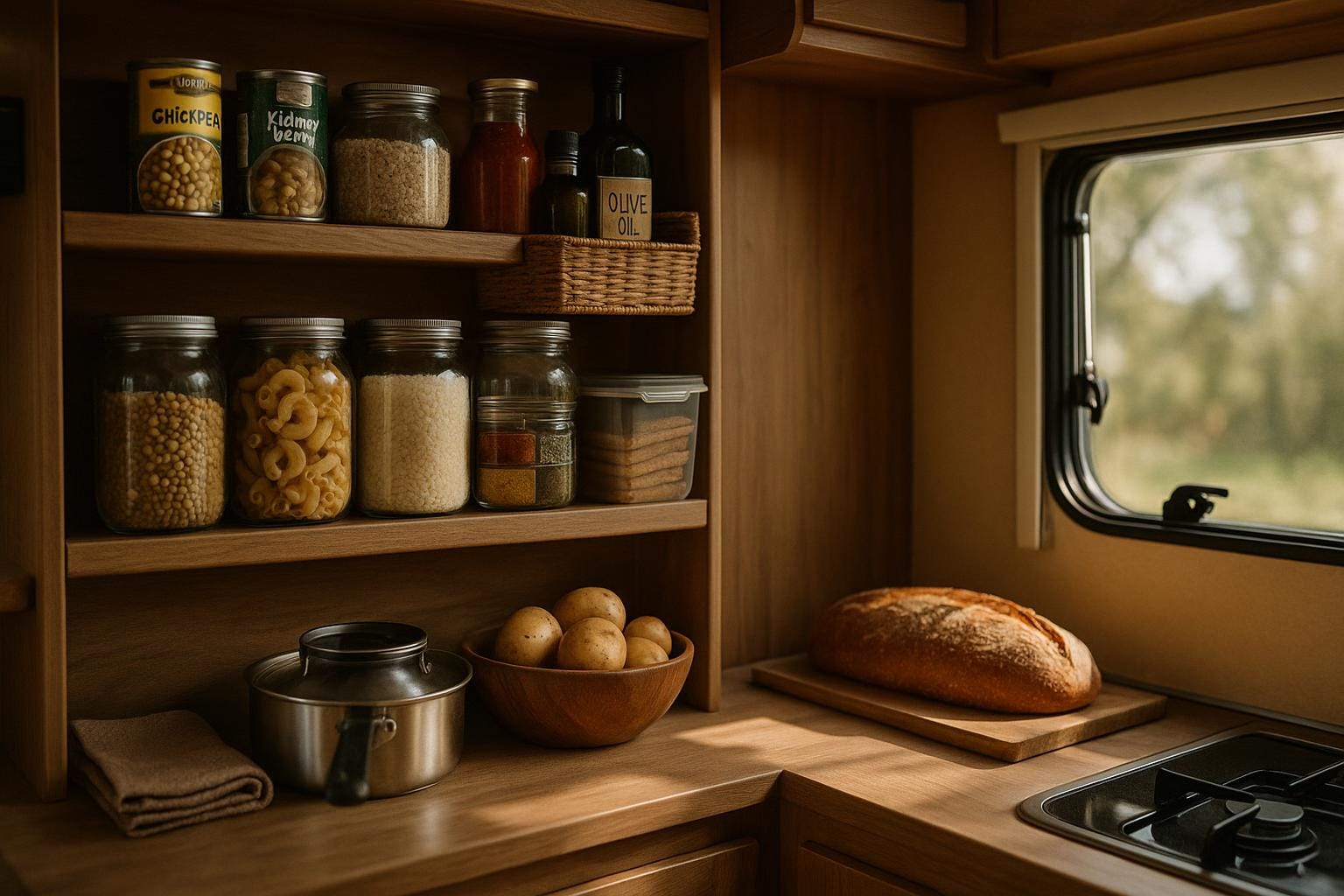
When you’re roaming Europe by RV, campervan, or motorhome, a well-stocked pantry is your secret weapon. Ferry schedules slip, mountain passes reroute you, rural villages snooze on Sundays, and the nearest supermarket can be a dozen winding kilometers away. In this article, I’m sharing the long-lasting ingredients I keep on hand so we can always cook a comforting, budget-friendly meal, even when there isn’t a grocery store in sight.
Why a Well-Planned RV Pantry Matters in Europe
European road trips come with their own rhythms. Shops in smaller towns often close for lunch or on Sundays and holidays, and some regions (especially in southern Europe) keep shorter hours in the off-season. Having dependable RV pantry staples means fewer detours and more spontaneous nights by a lake, a sosta, an aire, or a stellplatz.
There’s also a budget bonus: cooking from your campervan pantry keeps costs down when you’re near tourist hotspots. And because products and labels vary from country to country, keeping your own small set of shelf-stable ingredients ensures you can make familiar meals anywhere.
Where to stock up along the way:
- Discount chains: Lidl and Aldi across Europe
- France: Carrefour, Intermarché, E.Leclerc
- Spain/Portugal: Mercadona, Eroski, Continente
- Germany: Rewe, Edeka
- Italy: Coop, Conad
- UK/Ireland: Tesco, Sainsbury’s, Dunnes
- Asian/Middle Eastern shops for spices, noodles, sauces
The Core Dry Goods That Go the Distance
These are the backbone of our campervan pantry—the reliable, versatile carbohydrates and bases that form the start of a dozen easy dinners.
- Pasta and couscous: quick, forgiving, and endlessly adaptable
- Rice: basmati for curries, arborio for risotto, or parboiled for speed
- Polenta and instant mashed potatoes: fast comfort food for chilly nights
- Oats: breakfast, crumble toppings, or savory porridge
- Lentils: red for speedy dal, green or brown for salads and stews
- Beans and chickpeas: dried for space-saving storage, or jars/cans for convenience
- Flour and baking powder: flatbreads, pancakes, and quick stovetop bakes
- Tortillas/flatbreads: act as wraps, pizzas, or emergency garlic bread
- Crackers and crispbread: long shelf life and handy for no-cook days
- Canned tomatoes and tomato paste (tubes are common in Europe): essential for sauces and soups
- Coconut milk: creamy curries and soups in minutes
- Broth or bouillon cubes: instant depth of flavor without heavy cartons
- Jarred veg and antipasti: artichokes, roasted peppers, sun-dried tomatoes, olives
With these on board, you can create satisfying bases and stretch smaller amounts of fresh produce across multiple meals.
Proteins That Don’t Require a Fridge
Protein can be the trickiest part of off-grid cooking. These shelf-stable options make it easy to eat well when you’re far from a market.
- Canned fish: tuna, mackerel, and sardines (Mediterranean staples that pack protein and healthy fats)
- Jarred beans and chickpeas: silky texture and no soaking required
- Shelf-stable tofu: UHT packs are widely available in organic sections
- Seitan in jars: common in Germany and Austria for hearty stews or sandwiches
- Nut and seed butters: peanut, almond, tahini for sauces, dressings, and snacks
- Jerky or biltong: light, protein-dense, and road-trip durable
- UHT milk and plant milks: last for months unopened; great for coffee, porridge, baking
Tip: Some cured meats (like certain salamis) are shelf-stable before opening, but always check the label for storage requirements once opened.
Flavor Builders and Condiments That Travel Well
These are the small-but-mighty ingredients that transform pantry basics into European-style comfort food with minimal effort.
- Oils and fats: olive oil for everyday cooking, a small bottle of neutral oil, and ghee for high-heat frying
- Vinegars: red wine vinegar, apple cider vinegar, or balsamic for dressings and quick pickles
- Soy sauce or tamari: umami boost for stir-fries, soups, and marinades
- Fish sauce or Worcestershire: a few drops go a long way
- Pastes: tomato, pesto, curry paste, harissa (small jars or tubes are space-efficient)
- Mustard and mayonnaise: look for travel-friendly tubes; refrigerate after opening if required
- Spice kit: sea salt, black pepper, paprika (smoked for Spanish flair), herbes de Provence, oregano, cumin, curry powder or garam masala, chili flakes, garlic granules
- Sugars and sweeteners: a small jar of sugar or honey for dressings, glazes, and baking
European supermarkets often sell sauces and condiments in tubes—convenient for small RV fridges and less prone to spilling while driving.
Fresh-ish Produce That Lasts on the Road
Even when you’re far from shops, certain fruits and vegetables hold beautifully in an RV. Store them in a cool, dark, well-ventilated spot and avoid stacking delicate items.
- Alliums: onions, shallots, and garlic (the starting point for most meals)
- Roots and tubers: potatoes, sweet potatoes, carrots, beets
- Cabbage and hardy greens: savoy or white cabbage lasts much longer than lettuce
- Winter squash: butternut or hokkaido for roasts and soups
- Apples and citrus: snack-ready and resilient
- Cherry tomatoes: keep at room temp; use in quick sauces and salads
- Eggs: in many European countries they’re sold unrefrigerated; store consistently and use within a reasonable timeframe
Pair these with pantry carbs and flavor builders, and you can cook a surprising array of European-inspired dishes without a single supermarket run.
Storage Tips for Small European Campers
Space is precious in a motorhome. A tidy pantry prevents rattles, saves time, and reduces food waste.
- Use stackable, rectangular containers: decant pasta, rice, and oats to save space and keep pests out
- Anti-slip mats and soft bins: keep jars from sliding on Alpine curves
- Go for tubes and mini jars: condiments in tubes (tomato paste, mustard) are RV gold
- First-in, first-out: keep a small list on the inside of a cabinet door and rotate regularly
- Divide and conquer: one bin for quick meals, one for breakfast, one for spices and sauces
- Pad glass or choose cans: if you do carry glass, wrap it or wedge with towels
- Mind the heat: keep oils and chocolate away from cookers and sunny windows
- Water matters: carry a basic filter or buy bottled for cooking if tap water tastes off
Bonus: A compact pressure cooker or stovetop pot with a tight-fitting lid speeds up beans, grains, and stews while saving gas at higher altitudes.
Quick Meal Ideas From Pantry-Only Ingredients
Here are our favorite low-effort, high-reward recipes that come together with RV pantry staples and a few long-life veggies.
- Tuna puttanesca pasta: pasta, canned tomatoes, tuna, olives, capers (or chopped pickles), chili flakes
- Chickpea coconut curry: chickpeas, coconut milk, curry paste, garlic granules, serve over rice
- Red lentil dal: red lentils, curry powder, coconut milk, tomato paste, finish with a squeeze of lemon
- Polenta with roasted peppers and pesto: stir pesto into soft polenta, top with jarred peppers
- Couscous salad: couscous, jarred artichokes, sun-dried tomatoes, olives, chickpeas, olive oil and vinegar
- Lentil “bolognese”: green lentils simmered with tomatoes, garlic, oregano, and a splash of soy sauce for umami
- Tortilla pan-pizzas: tortillas, tomato paste, olives, tinned fish or jarred veg; crisp in a skillet
- Sardines on toast: crispbread or flatbread, sardines, mustard, squeeze of lemon, cracked pepper
- Savory oats: oats cooked with bouillon, topped with fried garlic and chili oil
Breakfast boosters:
- Oat porridge with UHT milk, honey, and chopped apples
- Peanut butter and banana on crispbread (bananas are the shortest-lived item here, so enjoy them first)
- Instant potatoes with sautéed onions for a hearty brunch
Building Your Personal RV Pantry Staples List
Every traveler cooks differently. Start with a base set that suits your style, then fine-tune as you go. If you love Mediterranean flavors, stock extra olives, capers, and good olive oil. If you lean toward Asian-inspired dishes, add sesame oil, rice vinegar, and noodles. Plant-based travelers may want more legumes, coconut milk, and nutritional yeast for cheesy sauces; omnivores may rely more on tinned fish and shelf-stable cured meats (check storage guidance).
Consider your route and seasons, too. In the Alps or Scandinavia, hearty stews and grains feel right; in Spain and Portugal, bright salads and tinned seafood star. In summer, rely more on couscous, tortillas, and quick-cook noodles to save propane and keep the van cool.
Key Takeaways
- Stock reliable dry goods, shelf-stable proteins, and a compact spice kit to cook anywhere in Europe.
- Favor tubes, small jars, and stackable containers to save space and prevent spills.
- Choose hardy produce—onions, potatoes, cabbage, apples, citrus—that stores well off-grid.
- Plan a few pantry-only meals so late arrivals or Sunday closures don’t derail dinner.
Conclusion
A thoughtful campervan pantry turns European road trips into relaxed, delicious adventures. With long-lasting ingredients, a few smart storage tricks, and a handful of go-to recipes, you’ll eat well from Brittany to the Black Forest—even when the nearest grocery store is a scenic drive away.