RV Propane Safety Checks That Could Save Your Life
Picture this: We’re three days into what was supposed to be our perfect Arizona desert getaway when Sarah smelled something that made her blood run cold. That distinct rotten-egg smell of RV propane safety issues was wafting around our rig at 6 AM. What followed was a heart-pounding morning that taught us more about propane systems than we ever wanted to learn the hard way.
Turns out, our regulator had developed a hairline crack that could have turned our morning coffee routine into a much more serious situation. That experience became our wake-up call about the critical importance of regular propane system maintenance.
After talking with fellow RVers and doing some serious research (plus consulting with a certified RV tech), we’ve developed a monthly safety routine that gives us peace of mind. Today, I’m sharing everything we learned about RV propane safety checks that could literally save lives.
Why RV Propane Safety Matters More Than You Think
Here’s the thing about propane – it’s incredibly useful but demands respect. Unlike the natural gas in your stick-and-brick house, RV propane systems face unique challenges. They’re constantly moving, vibrating, exposed to temperature extremes, and dealing with connections that can work loose over time.
Propane is heavier than air, which means leaks settle in low areas of your RV. In an enclosed space like our rigs, even a small leak can create a dangerous situation quickly. The good news? Most propane accidents are completely preventable with regular maintenance and awareness.
We learned this lesson during that Arizona scare, but it could have been much worse. Since implementing our monthly RV propane safety routine, we’ve caught two minor issues before they became problems. Trust me, a few minutes of monthly checks beats the alternative.
The Hidden Dangers Most RVers Miss
Beyond the obvious fire and explosion risks, propane leaks can cause carbon monoxide poisoning in enclosed spaces. Symptoms like headaches, dizziness, and nausea that you might attribute to road fatigue could actually be warning signs of a propane issue.
Another thing we didn’t realize: altitude changes affect propane systems. As we’ve traveled from sea level to mountain passes, we’ve noticed our appliances behaving differently. Regular checks help us catch these performance changes early.
Essential Monthly RV Propane Safety Inspections
Let me walk you through our monthly routine. It takes about 20 minutes and has become as automatic as checking tire pressure. We do this on the first weekend of every month, usually while we’re planning our next destination.
Visual Inspection: What to Look For
Start with a walk-around of your propane tanks and connections. Look for:
Rust or corrosion on tanks, especially around the valve area. A little surface rust isn’t panic-worthy, but deep corrosion or rust flakes are red flags.
Damaged hoses or fittings. Check for cracks, bulges, or any areas where the rubber looks deteriorated. Pay special attention to where hoses connect to appliances.
Loose connections. Everything should be snug but not over-tightened. If you can move a connection by hand, it needs attention.
We keep a small flashlight in our RV toolkit specifically for these inspections. Sometimes the connections are in shadowy areas that need extra light to see properly.
The Soap Bubble Test: Your Best Friend
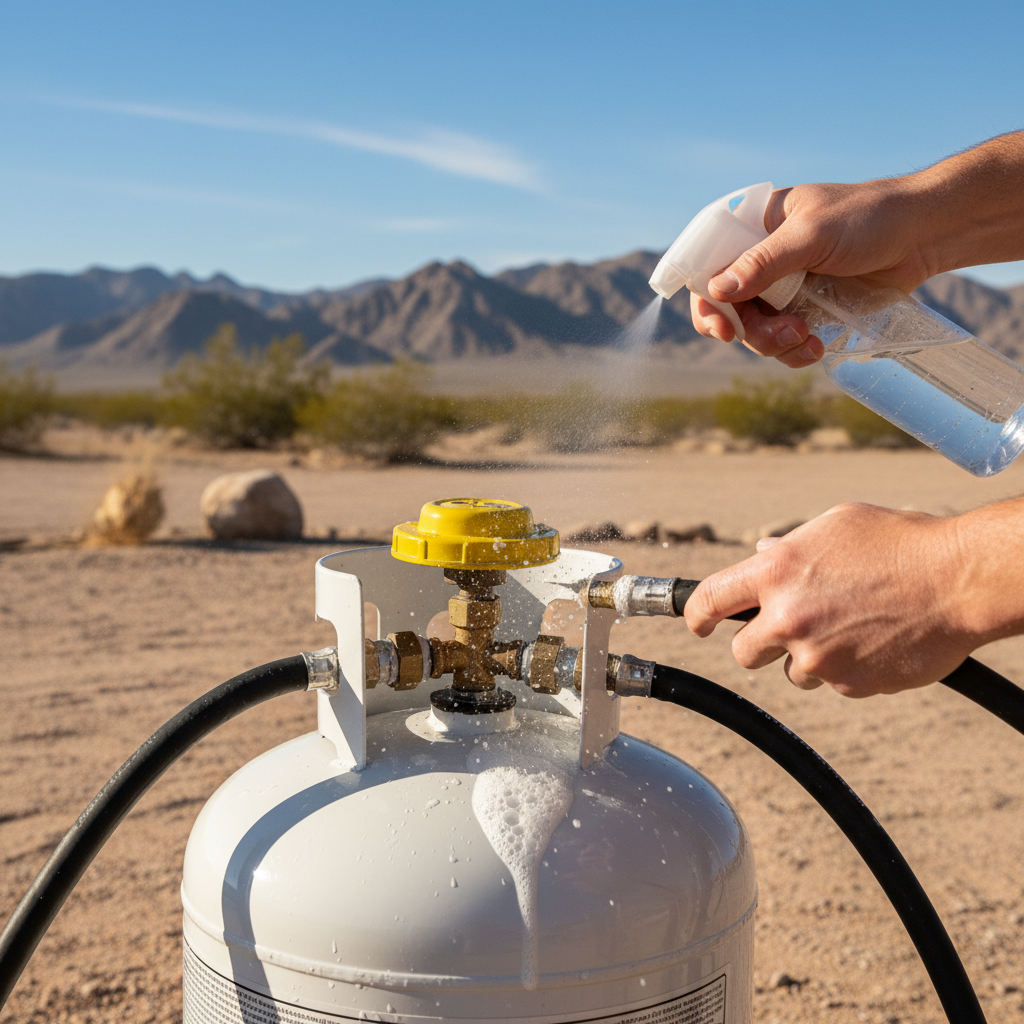
This is the test that would have saved us from our Arizona scare. Mix a few drops of dish soap with water in a spray bottle. With your propane system on, spray this solution on all connections, fittings, and hose joints.
Bubbles forming anywhere indicate a leak. Even tiny bubbles are worth investigating. We learned to look for bubbles that keep forming, not just the initial spray bubbles that pop quickly.
After our close call, we invested in a proper leak detection solution from the RV store. It’s more sensitive than dish soap and easier to see, but honestly, the homemade version works fine for regular checks.
Testing Your Propane Detector Systems
Your RV’s propane detector is your electronic guardian angel, but only if it’s working properly. These devices typically last 5-7 years, but they need monthly testing to ensure reliability.
Most detectors have a test button that should trigger an alarm. If yours doesn’t respond or sounds weak, replace it immediately. We learned this after discovering our detector had been running on borrowed time for months.
Here’s something many RVers don’t know: propane detectors should be mounted low (within 12 inches of the floor) because propane settles downward. If yours is mounted higher, it might not detect leaks effectively.
Understanding Detector Alerts
Different beep patterns mean different things. A continuous alarm usually indicates propane detection, while intermittent beeps often signal low battery or malfunction. Keep your manual handy – we learned this during a 3 AM false alarm that had us evacuating our rig until we figured out it was just a dying battery.
Replace detector batteries yearly, even if they seem fine. We do ours when we change clocks for daylight savings – easy to remember and ensures we’re never caught off guard.
Regulator Inspection and Maintenance
The regulator is where our Arizona adventure went wrong, and it’s one of the most critical components in your system. This device reduces high-pressure tank gas to the low pressure your appliances need.
Signs of regulator problems include inconsistent flame sizes, appliances that won’t stay lit, or a sulfur smell around the tank area. The regulator should be mounted vertically with the vent pointing downward – if it’s crooked or damaged, replace it.
We inspect ours monthly for cracks, especially around the diaphragm area. A failing regulator can cause dangerous pressure fluctuations that affect all your appliances.
When to Replace Your Regulator
Regulators don’t last forever. Most should be replaced every 10-15 years, but harsh conditions can shorten their lifespan. Signs it’s time for replacement include rust, visible damage, or performance issues that cleaning doesn’t resolve.
We carry a spare regulator after our Arizona experience. It’s one of those components where having a backup makes sense, especially when you’re boondocking far from RV supply stores.
Appliance-Specific Safety Checks
Each propane appliance in your rig deserves individual attention during your monthly RV propane safety routine. We’ve learned that different appliances show different warning signs when problems develop.
Water Heater Inspection
Check the exterior vent for obstructions like spider webs, leaves, or debris. A blocked vent can cause dangerous carbon monoxide buildup. We learned this lesson when our water heater started acting up in New Mexico – turns out a desert mouse had made itself at home in our vent.
Inside, look for rust, corrosion, or white deposits around connections. These could indicate moisture issues or small leaks that need attention. Also, if you’re following our RV water winterization guide, remember that propane appliances need special attention during freeze protection.
Furnace and Refrigerator Checks
Your furnace should light quickly and burn with a steady blue flame. Yellow flames or delayed ignition can indicate adjustment or cleaning needs. We clean our furnace filter monthly and check the exterior vent quarterly.
RV refrigerators on propane mode need good ventilation. Check that exterior vents are clean and unobstructed. Poor airflow can cause inefficient operation and potential safety issues.
Just like we learned with our RV kitchen essentials, having the right tools makes appliance maintenance much easier. A good flashlight, basic hand tools, and cleaning supplies should be part of your maintenance kit.
Troubleshooting Common Propane Problems
Over our years on the road, we’ve encountered most common propane issues. Here’s what we’ve learned about identifying and solving problems before they become emergencies.
Low Pressure Issues
If appliances won’t stay lit or flames are weak and yellow, you might have pressure problems. Check that your tank valves are fully open – seems obvious, but we’ve made this mistake after tank swaps.
Sometimes the issue is an automatic shutoff system that’s been triggered. This safety feature stops gas flow if it detects a rapid pressure drop (like a hose coming loose). Turn off all appliances, close tank valves for a few minutes, then slowly reopen them.
We’ve also learned that extremely cold weather can affect propane pressure. In those situations, keeping one tank inside the heated RV compartment (if safely possible) can maintain better flow.
Dealing with Stubborn Tank Valves
Tank valves that are hard to turn or won’t seal properly need attention. Never force a stuck valve – you could damage the threads or create a dangerous situation. A penetrating oil designed for propane systems can help, but sometimes professional service is the safer choice.
We keep a tank valve wrench in our toolkit specifically for this purpose. It provides better leverage than trying to turn valves by hand and reduces the risk of cross-threading.
Emergency Procedures Every RVer Should Know
Despite all our safety checks, emergencies can still happen. Knowing how to respond quickly and safely is crucial for protecting yourself and your fellow campers.
If You Smell Gas
First rule: no flames, sparks, or electrical switches. That includes light switches, cell phones, or anything that could create ignition. Get everyone out of the RV immediately and move upwind from the vehicle.
Turn off propane at the tank if you can do so safely from outside the RV. Don’t go back inside until the area has been thoroughly ventilated and the leak source identified and repaired.
We keep our tank shut-off locations clearly marked with glow-in-the-dark stickers. In an emergency, you don’t want to be fumbling around trying to remember which valve does what.
Creating an Emergency Action Plan
Discuss emergency procedures with your travel partner before you need them. Know where your fire extinguisher is located (we keep two onboard) and make sure everyone knows how to use them properly.
Keep emergency contact numbers handy, including local fire departments and RV service centers in areas where you commonly travel. We learned this lesson during our rail-and-road reset adventure when we needed emergency service in an unfamiliar area.
Professional Inspections: When to Call the Experts
While monthly owner checks catch most issues, professional inspections are still important. We recommend annual professional propane system inspections, especially for older rigs or if you’ve experienced any problems.
Certified RV technicians have specialized equipment to detect leaks and pressure issues that might not show up in basic tests. They can also perform adjustments and repairs that shouldn’t be attempted by owners.
Look for technicians certified by NRVIC (National RV Inspectors Association) or similar organizations. Just like when we were researching our 4-week budget-smart RV buying plan, getting qualified professional help is worth the investment.
Signs You Need Professional Help
Call a professional if you detect any leaks, notice appliance performance changes you can’t explain, or if your system has been in an accident or extreme weather event.
Also, if you’re not comfortable performing any of these safety checks yourself, there’s no shame in having a professional handle them. Your safety is worth more than the service call cost.
Keeping Your RV Propane System Road-Ready
Regular RV propane safety maintenance isn’t just about preventing disasters – it’s about ensuring reliable operation of systems you depend on daily. Our monthly routine has prevented several minor issues from becoming major problems and road trip disruptions.
Remember, propane systems are generally very safe when properly maintained. The key is staying proactive rather than reactive. Just like we learned with our awning maintenance experiences, a little prevention goes a long way toward avoiding expensive repairs and safety issues.
Keep a maintenance log noting inspection dates, any issues found, and repairs made. This documentation helps track patterns and can be valuable if you need professional service or warranty work.
The peace of mind that comes from knowing your propane system is properly maintained is invaluable. Whether you’re boondocking in remote locations or staying in developed campgrounds, you’ll sleep better knowing you’ve taken steps to keep your rig safe.
Stay safe out there, and remember – when it comes to propane safety, there’s no such thing as being too careful. That Arizona morning taught us that lesson in a way we’ll never forget, but it doesn’t have to be a lesson you learn the hard way too.