How to Build a National Park Hiking Plan with a Real Turnaround Time
Part 3 of 7 in the National Park Planning Series.
A trail name and distance can make a hike look settled while leaving the most important decisions unresolved. Difficulty, elevation, surface, exposure, heat, altitude, weather, water availability, parking and daylight all affect whether the plan fits the day.
Use current official trail information
Check the park’s current trail description, alerts and closure notices. Record the stated distance, route type, difficulty and estimated time, then note the conditions that could make the outing slower or more demanding.
Plan for the actual group
A trail should fit the slowest reasonable pace, mobility needs, experience and health considerations in the group. Published estimates are not promises. Heat, elevation and uneven ground can change the day quickly, and the return usually deserves at least as much respect as the walk out.
Set a turnaround time before starting
Choose the time the group will turn back even if the intended destination has not been reached. Base it on daylight, weather, park guidance, expected pace and a conservative return margin. A turnaround time is not a prediction of failure. It is the part of the plan that protects the trip back.
Include the trailhead plan
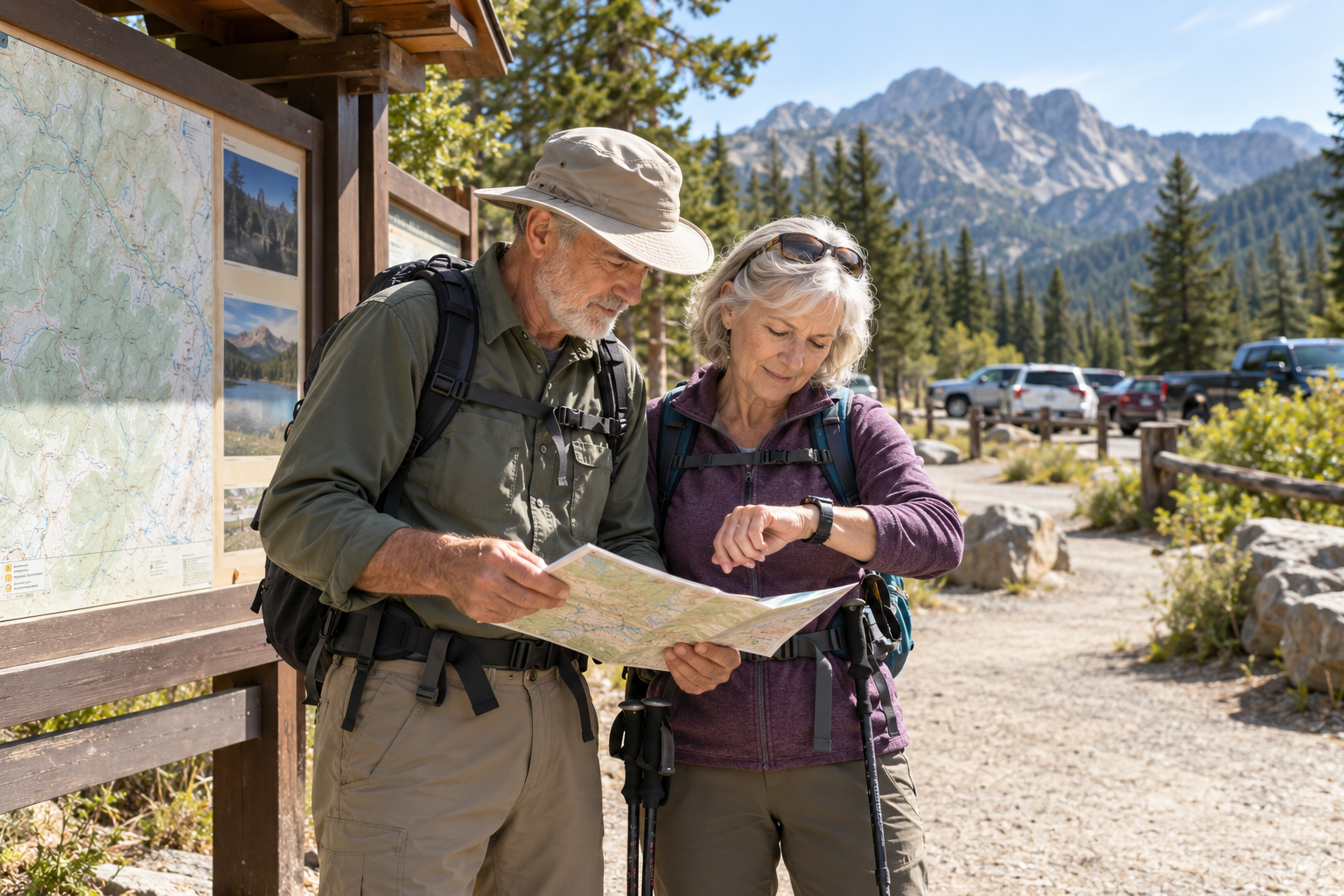
Record the correct trailhead, parking area, shuttle stop or reservation requirement. Save the official map offline. In parks with limited parking or shuttle-dependent access, arriving at the park does not guarantee immediate access to the chosen trail.
Match packing to the trail and park
Water, food, layers, sun protection, navigation, a headlamp, first aid and wildlife precautions should reflect current conditions and park advice. “Short trail” is not a packing category. A delayed return can turn an optional layer or light into essential equipment.
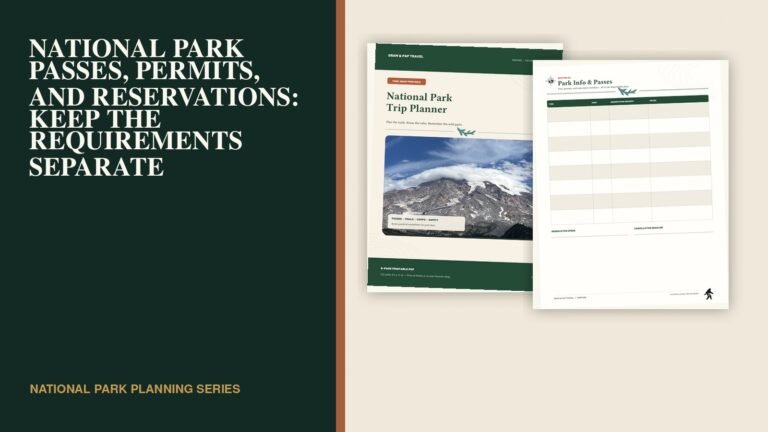
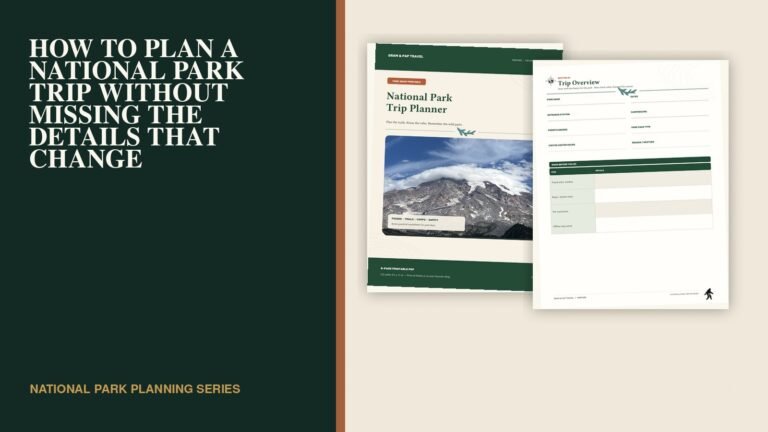
The hiking page in the Gram & Pap National Park Trip Planner keeps trail distance, difficulty, estimated time and notes beside the day’s turnaround time and trailhead information.
Let the trail remain optional
Weather, smoke, closures, fatigue or parking may change the plan. The goal is not to force a checked box onto the day. It is to have enough information to choose a suitable trail—or choose another day—with a clear head.
Planning note: Park rules, reservations, access, roads, trails, weather, wildlife guidance and campground operations can change. Confirm every time-sensitive detail with the current official National Park Service and reservation sources for the exact park and dates.