How to Organize RV Trip Planning in One Place
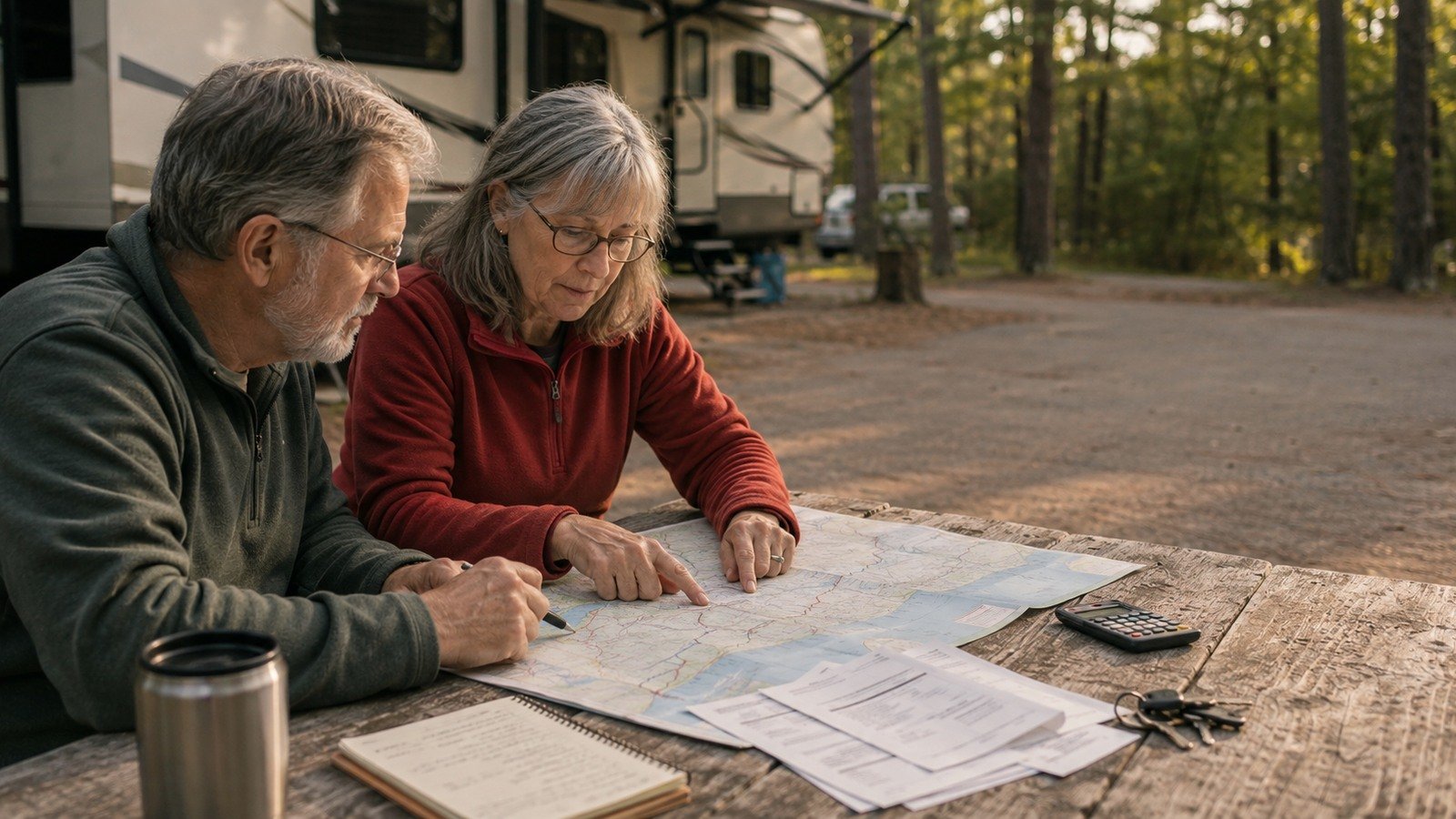
RV trip planning usually starts innocently enough. Somebody mentions a place they would like to see, somebody else checks the mileage, and before long there are campground tabs open on two phones and a confirmation email nobody remembers receiving.
The problem is rarely a lack of information. It is that the useful information ends up scattered among maps, apps, email, screenshots, notebooks and whatever scrap of paper was closest when the campground called back.
A good RV planning system does not replace all those tools. It gives the important results somewhere to land.
Start with the trip, not the route
Before mapping every turn, write down the handful of decisions that shape the rest of the trip:
- Where are you going, and on what dates?
- Who and what are traveling with you?
- What kind of trip is this supposed to be?
- Which stops matter most?
- What would make you change the plan?
That last question earns its place. Weather changes, campgrounds close, and sometimes the stop that looked sensible from the kitchen table looks considerably less sensible while towing through it.
A one-page trip overview gives both travelers the same starting point. It also makes later decisions easier. If the goal is a relaxed week beside a lake, a route requiring three punishing travel days is arguing with the trip before it begins.
Let digital tools do the searching
Apps are excellent for finding RV-safe routes, comparing campgrounds, checking weather and locating fuel. Use them for what they do well. Once a decision is made, record the part you will actually need.
For a travel day, that means the starting point, destination, estimated mileage, reasonable drive time and planned fuel or rest stops. For a campground, it means the dates, site number, price, confirmation number, phone number, hookups and any arrival instructions.
You do not need to print the internet. You need a dependable summary of the choices you already made.
Separate packing from departure
These are two different jobs. A packing list answers, “What needs to come with us?” A pre-departure checklist answers, “What must be secured, disconnected, raised, retracted or checked before this rig moves?”
Keeping those lists separate makes both of them easier to use. Coffee belongs on the packing list. The awning belongs on the departure checklist. Both are important, but forgetting one produces a grumpy morning and forgetting the other can produce a very expensive afternoon.
Give money and meals a place before leaving
Fuel, campground fees and food are easy to underestimate when they live only in your head. A simple budget does not need to predict every dollar. Its job is to make the major categories visible before they begin competing with one another.
Meal planning works the same way. You do not need a rigid menu. Seven rough breakfasts, lunches and dinners are enough to build a sensible grocery list, avoid hauling duplicate ingredients and leave room for the local restaurant somebody recommends after you arrive.
Keep the information you may need quickly
Roadside-assistance numbers, insurance contacts, the RV’s VIN, tire information and the campground address are easy to find when nothing is wrong. They become remarkably elusive when plans get interesting.
Keep one information page in the tow vehicle or RV where both travelers know to look. Do not include sensitive financial information or anything you would not want visible if the page were misplaced.
Use one small system for the whole trip
This paper-first approach is why we made the Gram & Pap RV Trip Planner. Its ten printable pages give the route, reservations, packing, departure checks, budget, meals, contacts and trip notes one shared home without trying to become a hundred-page binder.
Print a fresh set, fill in the pages the trip needs and keep them together in a thin folder or clipboard. The planner is not there to make the trip rigid. It is there to hold the details so you do not have to.
Finish with five useful minutes
After the trip, write down the favorite stop, best meal, biggest surprise and one lesson for next time. That last page turns one trip into better preparation for the next.
The best planning system is not the one with the most features. It is the one you will still use when departure morning is busy, the campground office is closing, and somebody asks where the confirmation number went.