
The 1-Hour Buyer’s Brain Dump
A Quick Self-Assessment for First-Time RV Shoppers
Thinking about an RV: it should feel exciting, not overwhelming. This quick 60-minute exercise helps budget-minded, slow-paced travelers capture travel goals, health considerations, must-haves, and deal-breakers before shopping for their first RV. With a clear set of prompts, you can walk away with a practical plan you can hand to a dealer or private seller.
What you’re doing in 60 minutes
- Clarifying travel goals: types of trips, on-road vs in-park stays, seasons, and typical trip length.
- Assessing health and comfort: accessibility needs, mobility, sleep preferences, and daily routines on the road.
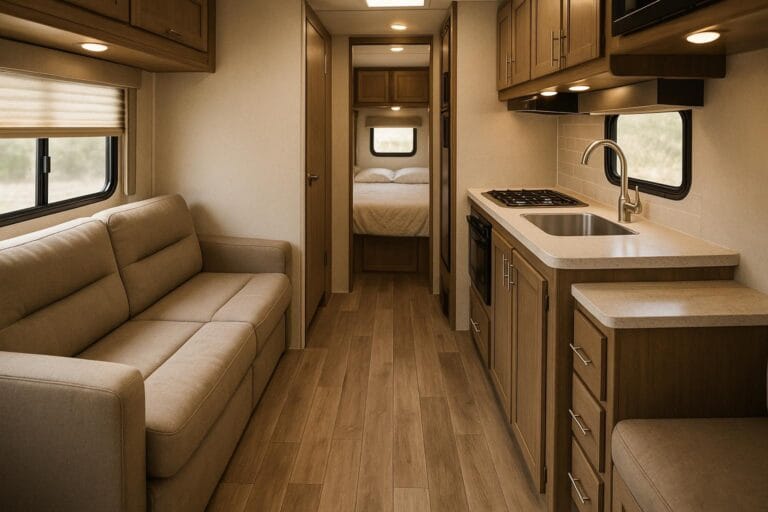
- Identifying must-haves: bed size, kitchen layout, storage, bathroom configuration, and tow/haul capabilities.
- Defining deal-breakers: weight limits, fuel efficiency, hitch type, or location-specific constraints (climate, access).
Prompts you can fill in right away
Use these prompts to fill your worksheet. For example, start with a rough travel plan and adjust as you learn what’s possible in your budget.
- Travel goals: What are your typical trips (length, terrain, and season)? Where would you love to go within the first two years?
- Health considerations: Any mobility or accessibility needs that a floor plan must support?
- Must-haves: Which features are non-negotiable (bed size, a full kitchen, accessible bath, storage for gear)?
- Deal-breakers: What constraints would immediately rule out a trailer or motorhome (weight, towed vs motorized, warranty concerns)?
Want an easier start? See our budget-first RV research post for a framework to price out your plans before you fall in love with glossy brochures.
As you draft, think about how you’ll live in the vehicle. If you’re a longer-term traveler or a family with gear, space and comfort often beat flashier features. For many first-timers, a balanced approach—strong basics with room to upgrade—feels best.
How to turn your worksheet into a buying plan
With your answers in hand, you can compare options more quickly. A few practical steps:
- Group vehicles by your top three must-haves and rank each option by how well it meets them.
- Schedule showroom tests with dealers or ask sellers to demonstrate a floor plan’s comfort during a typical night’s sleep.
- Consider cost of ownership beyond price tag: insurance, maintenance, and fuel or energy needs for boondocking.
If you’re debating new vs pre-owned, see our New or Pre-Owned post to compare pros and cons.
Once you’ve got a clear sense of what really matters, the next step is to turn that dream into a practical plan. Our guide on From Dream to Driveway can help you translate your goals into a path forward, including a realistic timeline and the checks you’ll want to complete before you buy.
For a quick buying checklist, see our 7-Point In-Person RV Shopping Checklist.